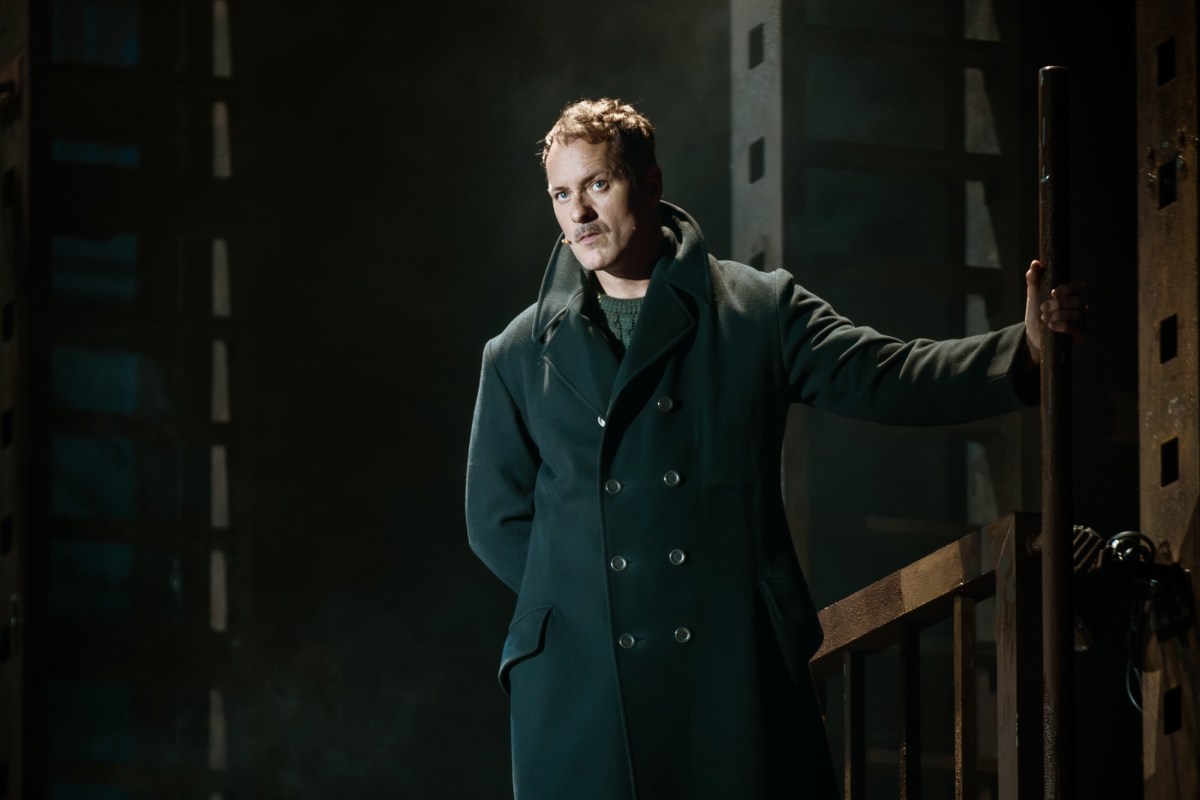
The Last Ship has been afloat for more than a decade, through Broadway, the UK and international productions, with multiple book rewrites, directors and cast changes. Yet even this latest, lavishly reworked incarnation, in the West End for just two weeks, still seems to be searching for its destination.
That is a real shame because there are some brilliant elements here. It certainly looks spectacular with a state-of-the-art video wall set by 59 Productions that is an extraordinary piece of theatrical design. On stage, there is towering steelwork, ladders and lifts, and the huge ship Utopia, the final ship to be built at the historic Wallsend shipyard.
It is a monumental presence, and a wonderful metaphor too, for the importance of the ship building industry to the north of England for generations. It really is a visually stunning achievement of considerable sophistication.
The Last Ship review – quick links
Sting’s shipyard musical
The Last Ship is an intensely personal passion project for Gordon Sumner, better known of course as Sting. He grew up in the Tyneside community and has always said this show is a tribute to people and place that shaped him.
This current London iteration is a revamped production, directed by Leo Warner and with a new book by Barney Norris, following earlier versions by Lorne Campbell, John Logan and Brian Yorkey. It has also travelled internationally, including stops in Amsterdam, Brisbane, Paris and New York, before finally arriving here in London. And it has already had time on UK stages, from its first outing as a concert version at Gateshead in 2015, to a 2018 full production in Newcastle that toured the UK and Ireland.
This isn’t a new show struggling to find its sea-legs. It should be well and truly bedded down by now. Yet despite all the rewrites and changes of creatives, it is a show still struggling to find its emotional heart and to convey its narrative with clarity and conviction.
The loss of industry
The main narrative thread talks to the Thatcherite closure of key traditional industries, most notably mining and ship building, and the impact this has on communities. This political storyline is overlaid with the personal stories of the locals and the challenges they are facing.
Sting is central to this, playing the yard’s gritty foreman, Jackie White, who says earnestly ‘class struggle is means of dialectic revolution’ espousing good Marxist ideology.
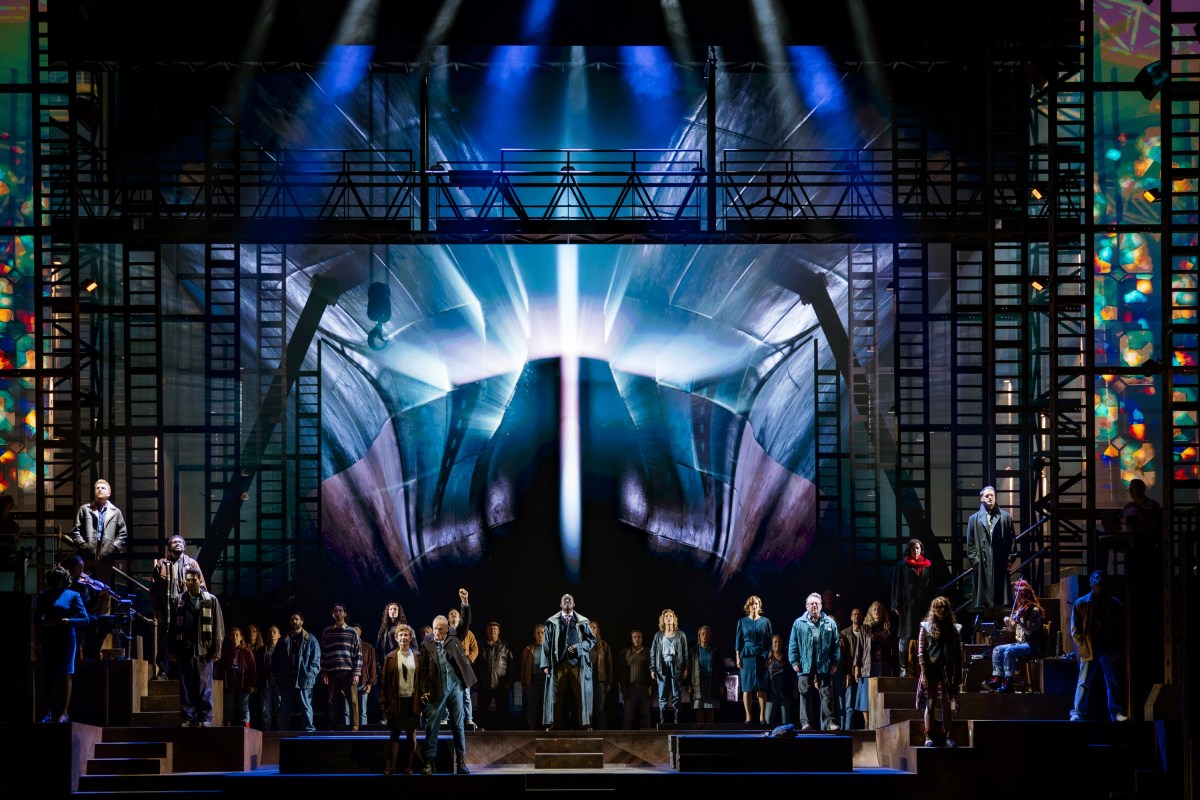
Then there’s his care-worn wife Peggy, played with real feeling by Jackie Morrison; Gideon (played by Declan Bennett in good form), a local who has been away for 17 years and returns unexpectedly; and Meg, his old love, sung in fine voice by Frances McNamee. There’s also a strange character, the Wallsend Ferryman, played on opening night by US reggae star Shaggy, but it will be local actor Lejaun Sheppard for the rest of the run.
There are some powerful elements here, but they just never quite come together. Jackie’s battle to save the yard and Gideon’s personal story seem to remain strangely disconnected, while the wider social drama keeps pulling the show in other directions. There is plenty going on but it still lacks any sense of urgency or narrative momentum, making the whole seem considerably less than the sum of its parts.
The mission to finish the last ship
This unfortunately becomes more pronounced as the story progresses. The ensemble does a good job of creating the sense of an embittered community living under intense pressure. Yet the workers’ decision to finish ‘the last ship’ themselves after the shipyard has been closed is symbolically clear but dramatically unconvincing. This should stand strong as a stirring act of collective determination and defiance, but it just feels contrived.

Sting’s score is packed with songs but few are really memorable and they come so quickly, one on top of the other, that it’s hard to really grasp them. Island of Souls makes for a powerful opening and August Winds and When We Dance have deep appeal. But with 27 numbers including reprises, they just all merge into a rather bland mixture of folk, rock and maritime balladry.
It’s good to see the musicians on stage, perched amongst the set, but the music does tend to overpower the singers at some points, making the lyrics difficult to hear clearly.
The real star in The Last Ship is the production itself. The combination of physical set, video wall, industrial sound and lighting creates a constantly shifting landscape, culminating in a final transformation that is genuinely impressive. And seeing Sting on stage is clearly appealing, especially the first moment where he removes his flat cap and faces the audience – cue loud applause!
After 13 years, multiple versions and an international journey, The Last Ship has arrived as an accomplished theatrical spectacle; it now just needs to find its storyline and tell a more coherent and convincing narrative.