There is much to admire in this new revival of Anton Chekhov’s The Cherry Orchard, adapted by Conor McPherson and directed by Ian Rickson. They have a deep understanding of each other’s approach, having first worked together 30 years ago, and they worked together on another Chekov play, Uncle Vanya, back in 2020, also at the Harold Pinter Theatre.
The most rewarding aspect of this production is its considered and intelligent balance between comedy and the very human tragedy that lies at its heart. Yet despite this, and the brilliant work of a strong ensemble led by Kristin Scott Thomas and Stephen Mangan, the play still feels strangely remote.
These people may be facing the end of their world as they have always known it, but the emotional restraint makes it feel like it’s all at one step removed.
The Cherry Orchard review – quick links
A distant and cool Kristin Scott Thomas
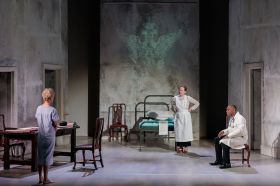
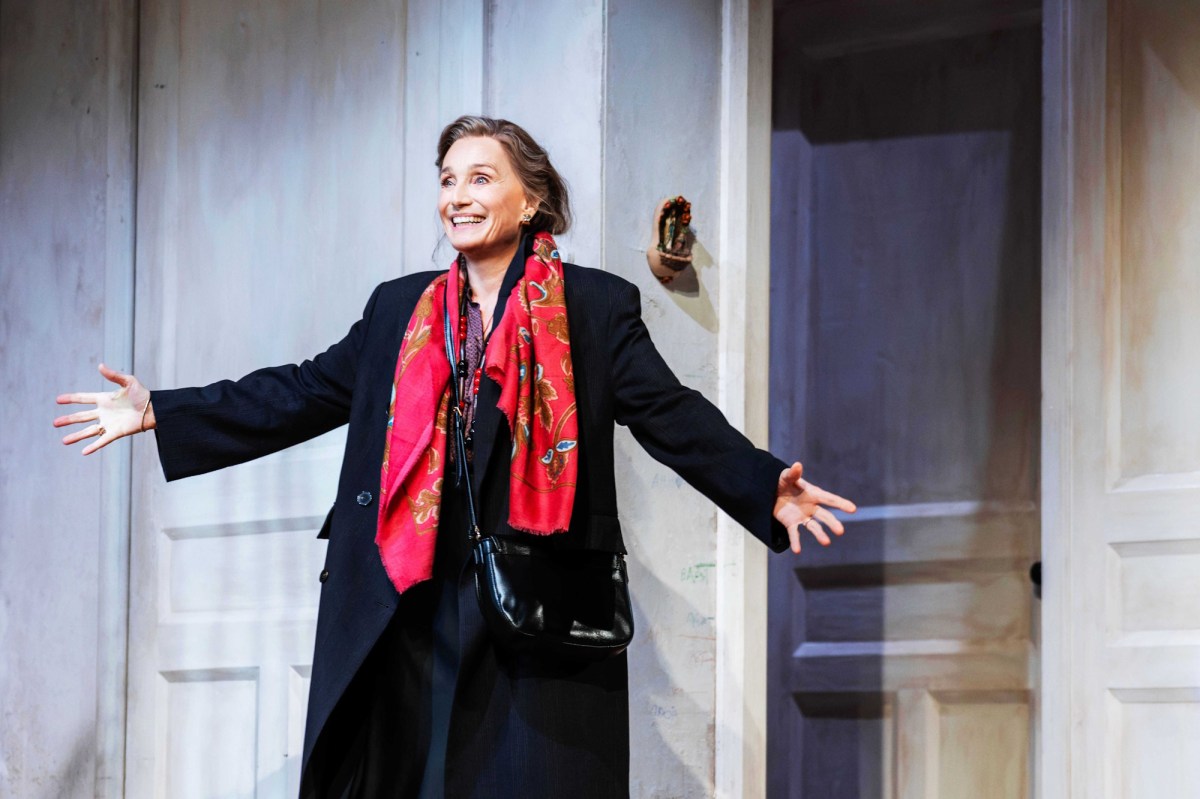
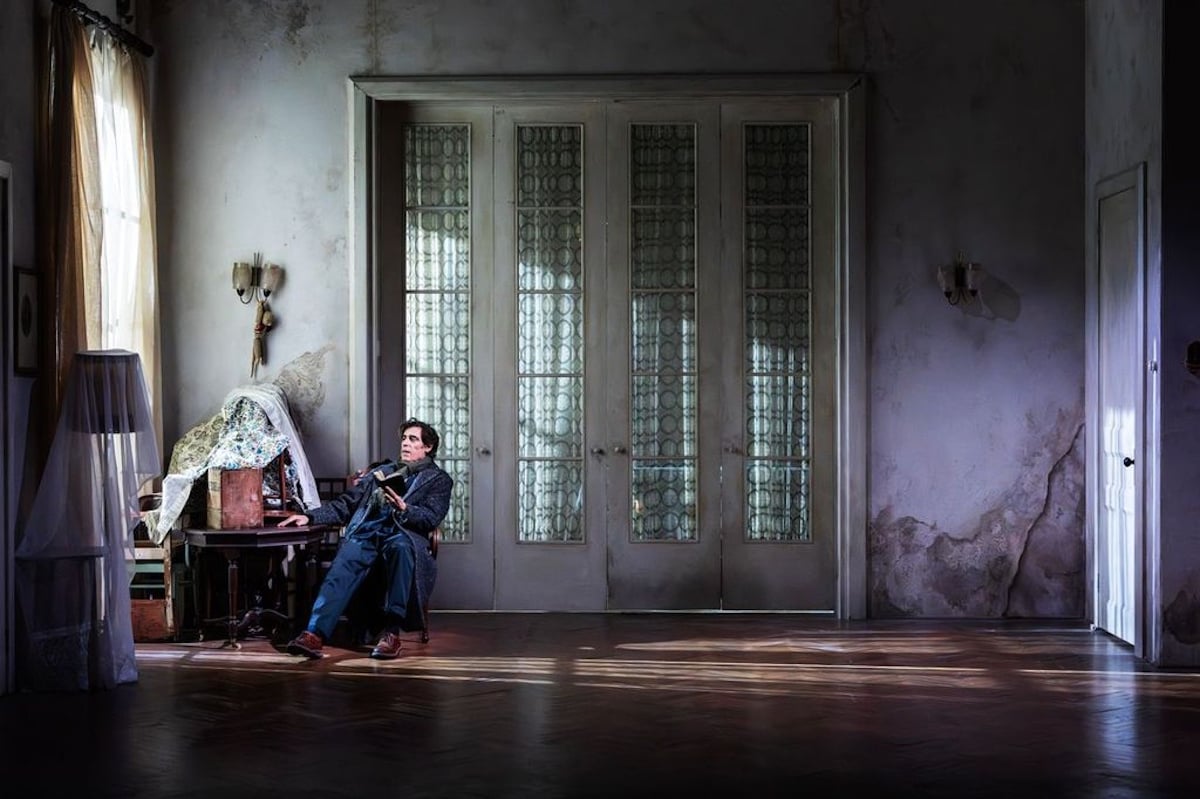
Kristin Scott Thomas is a delight as Lyubov Ranevskaya, the matriarch facing financial ruin and about to lose the family home with its vast cherry orchard. There is a fatalistic sense of the inevitable here as she clings on to the past, the elegant aristocrat worn down by life. Chloe Lamford’s wonderfully shabby set helps tell that story, aided by Bruno Poet’s sensitive lighting design.
Ranevskaya may still refer to the farmers as ‘peasants’ but she also fulfills her inescapable duty of noblesse oblige, giving her last gold coin to a beggar woman clutching a baby. She remains calm and aloof, refusing to show her desperation. Even the memory of her young son’s death, a tragedy that continues to cast long shadows, is dealt with dispassionately.
The emotional restraint is portrayed as strength, and Scott Thomas is the perfect actor to convey that, but it does remind the audience that they are merely spectators. We can’t fully share their loss and empathise with their anguish if we can’t feel their pain. That said, it’s a delight to see her on stage in the West End with her glacial elegance and unmistakable voice.
Strong ensemble performances
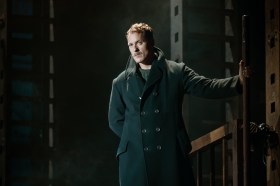
Stephen Mangan is wonderful as Lopakhin, the son of a former serf who has built a successful business, a modern day self-made man. Lopakhin can see the answer to Ranevskaya’s financial problems and tries eagerly to convince her, despite her reluctance to face reality. Mangan captures his character’s energy and awkwardness with his characteristic charm and vibrant stage presence.
The supporting cast brings welcome texture to the household. Vinette Robinson shines as Ranevskaya’s adopted daughter Varia, a woman who knows how to live with disappointment; and Peter Wight is highly amusing as Uncle Leo, a man who is clearly used to getting his own way and would rather be playing billiards than dealing with real life.
Ruby Bentall brings humour and pathos to Sharlotta, the family nanny with a sad and complicated backstory. When she says ‘I don’t exist’ it tells us everything about her character. Meanwhile, Karl Johnson clearly has fun playing Firs, the disgruntled old manservant who makes the biggest impact in the play’s closing moments.
Anton Chekhov’s achievement as a writer was in finding comedy in human folly without negating the very real anguish and sadness that lies beneath it. His characters talk around their problems, clinging to illusions of past lives as everything disintegrates around them.
The comedy should sharpen the pathos, exposing that yearning gap between what people see and what they refuse to see. That balance, that essential duality, doesn’t quite work in this production of The Cherry Orchard. For all its thoughtful performances and its strong depiction of a family, and a society, in transition, the play struggles to feel really enduring and universal.