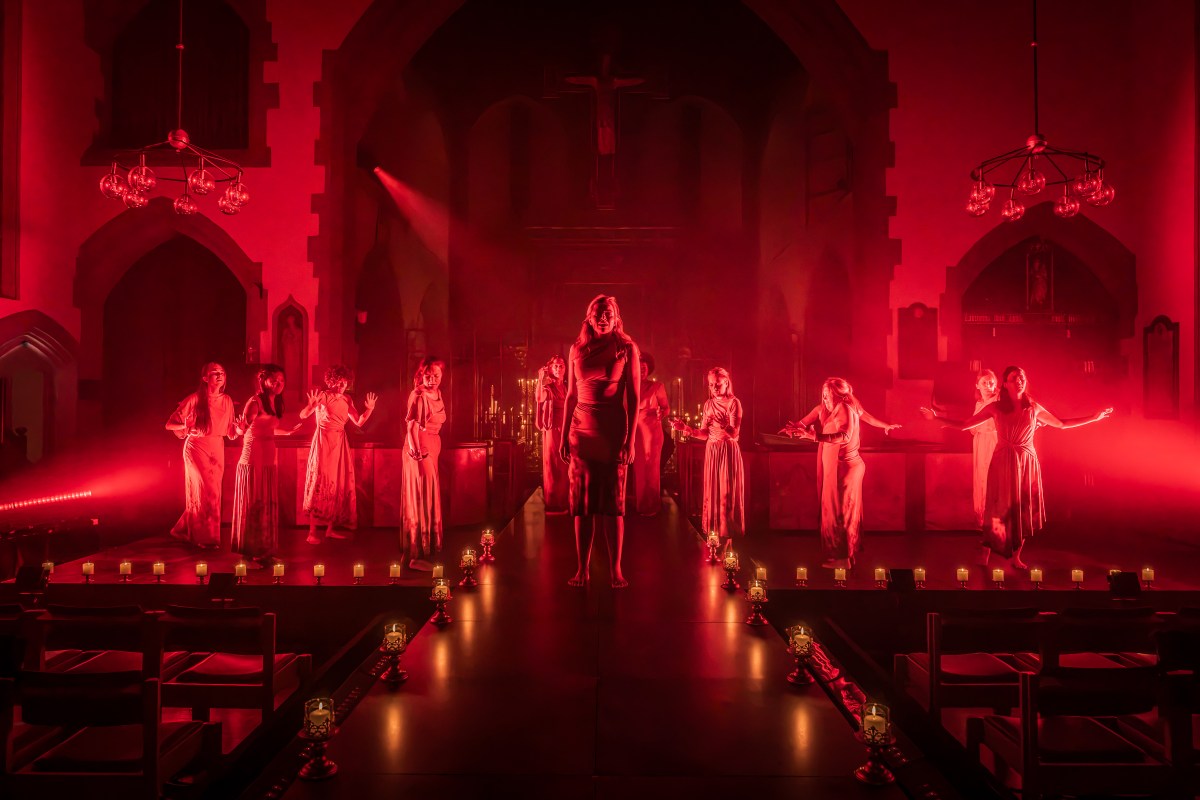
Staging TS Eliot’s verse drama Murder in the Cathedral must surely be a daunting undertaking for a small independent theatre, but Richmond’s Orange Tree Theatre has risen to the challenge with a masterful revival. Staged across the road from the theatre in the sacred space of St John the Divine Church, the drama of Thomas à Becket unfolds beneath a huge cross, while the air is thick with the fragrance of frankincense.
Written between the wars, when world events were challenging many people’s faith, Eliot’s play explores worldly and spiritual authority, doubt, temptation and martyrdom through a distinctive mix of verse and prose. Directed with assurance by Tom Littler and Francesca Ellis, this production blends the text with live choral music performed by four singers and a 16-voice women’s community choir.
At its heart is David Suchet as Thomas à Becket, Archbishop of Canterbury, whose return from seven years of exile in 1170 leads to his murder by four knights acting in the name of King Henry II. The play follows Becket’s final days, tracing his encounters with temptation before allowing the knights to offer their own justifications for the killing.
Murder in the Cathedral review – quick links
David Suchet’s masterful turn
Suchet’s performance is distinguished by its restraint as much as its authority in a brilliantly nuanced portrayal. Rather than presenting Becket as an uncomplicated man of god, he reveals a man wrestling with the implications of his convictions.
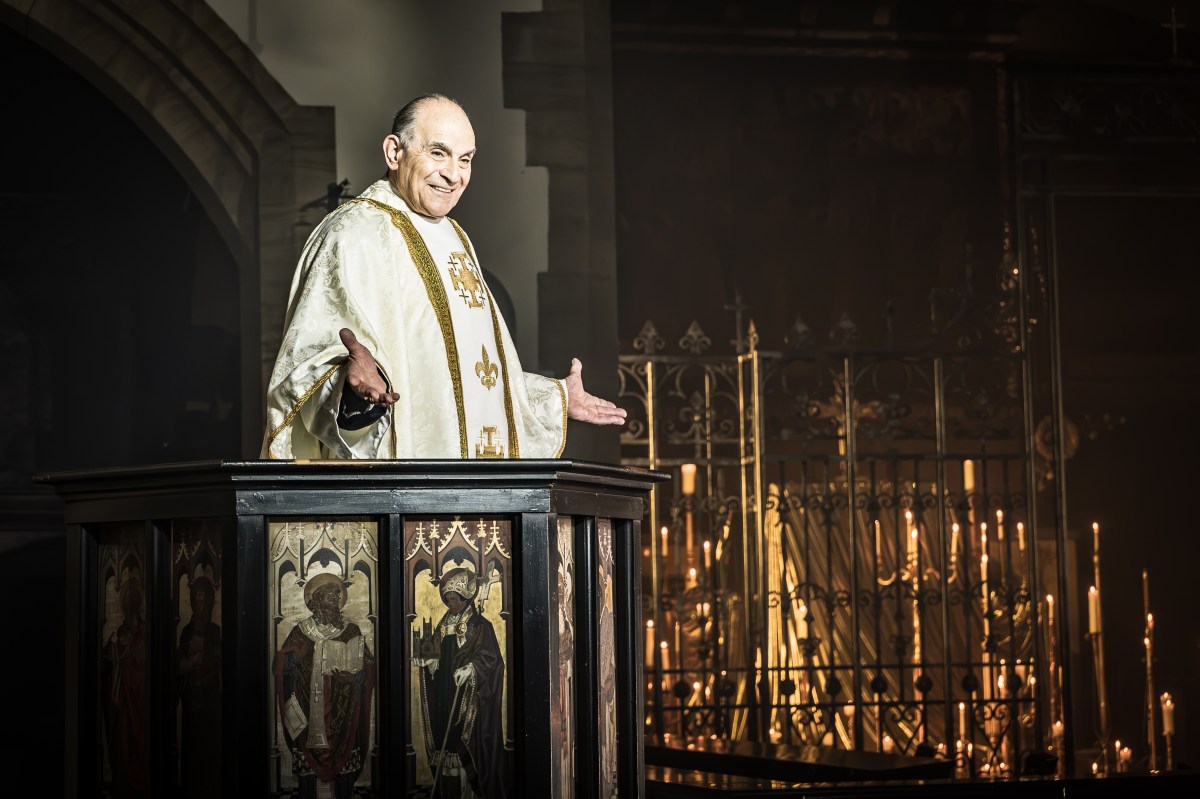
His fluid command of Eliot’s verse brings clarity without diminishing its formality, while subtle signs of apprehension and vulnerability complicate Becket’s apparent spiritual certainty. His eventual martyrdom feels like the outcome of an intense, deeply personal reckoning.
The Christmas Day sermon is a particular highlight, delivered from the pulpit with measured intensity and impressive clarity. Suchet resists imposing emotion where quiet conviction is more effective, allowing the text’s moral and spiritual complexities to emerge. Four days later, on 29 December 1170, Becket met his fate; he was canonised three years later.
A voice from the pulpit
The church itself becomes an essential part of the drama. Robert Jones’s design makes excellent use of the lofty, blue-ceilinged nave, with a full-length stage drawing the eye towards the altar and reinforcing the sense of ritual.
Peter Mumford’s lighting, with its long shadows, flashes of red and pools of candlelight, lends the production a haunting beauty. The candles flicker with a life of their own, echoing both the fragility of human existence and the persistence of faith.
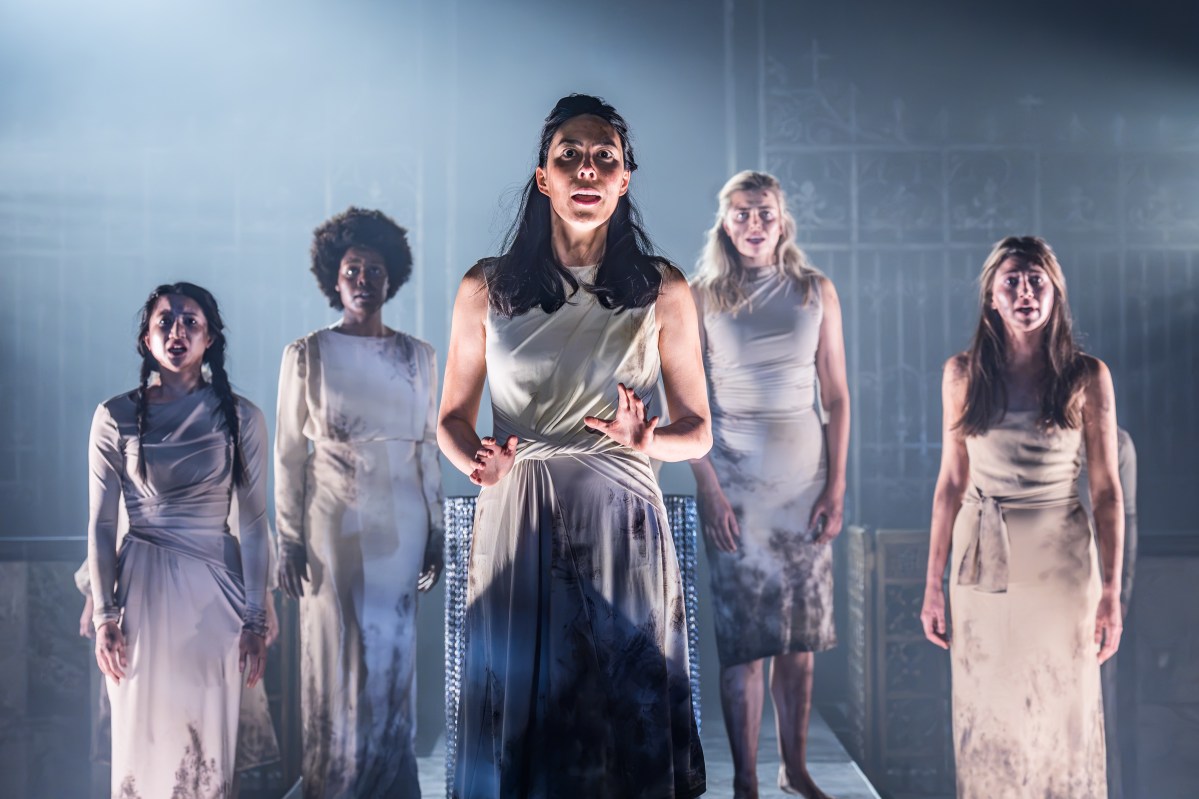
Equally important is the women’s chorus, whose singing gives deep emotionality to Eliot’s Poor Women of Canterbury. The chorus leaders have beautiful voices that resonate through the church, while Orlando Gough’s score and arrangements create harmonies that are both beautiful and unsettling.
Their singing conveys the community’s fear and powerlessness, providing a counterpoint to Becket’s increasingly solitary spiritual journey. Their lamentation is among the production’s most moving moments. As Becket says in Act Two, ‘humankind cannot bear very much reality’.
The politics of spirituality
The supporting cast captures a society caught between political authority and spiritual conviction. The tempters bring contrasting shades of persuasion and self-justification, while the knights embody the brutal consequences of competing claims to power.

Having the same four actors play both sets of roles adds depth to the production. David Yelland is particularly powerful as Fourth Tempter/Fourth Knight, and the three priests surrounding Becket are also strong. Cat Fuller’s costumes evoke the 1930s as well as the High Middle Ages, while a smart handheld microphone lets the knights address the audience with a distinctly contemporary edge.
Eliot’s text remains demanding, but this production trusts the text itself to reveal its own strength and its continuing relevance. David Suchet may be its intellectual and emotional core, but the achievement extends well beyond his distinguished central performance. The church, the candlelight and the women’s voices work together to make Eliot’s exploration of faith and sacrifice feel real and immediate.
Orange Tree Theatre’s Murder in the Cathedral ably demonstrates how a complex work can be brought beautifully and eloquently to life when all the elements are in such compelling alignment. As Becket says at the end of his Christmas sermon, ‘Keep these words in your heart and think of them at another time.’ This is absolutely a production you will keep in your heart.