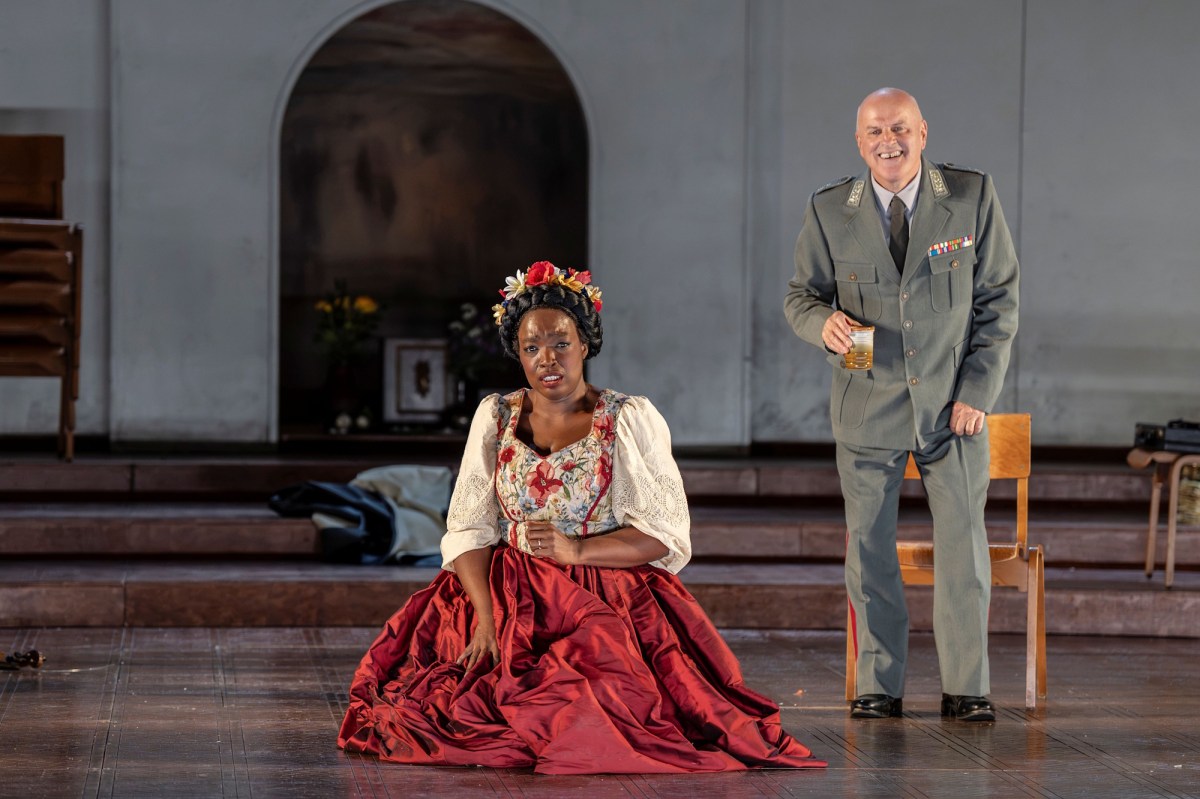
Giacomo Puccini’s Tosca is a volatile mixture of lust, jealousy, political corruption and violence, propelled by a score brimming with dramatic intensity. It’s also about the power of art and the need for resistance in the face of power.
In this new English National Opera production, director Annilese Miskimmon relocates the story from the streets of Rome to a concert hall in an unnamed European state living under authoritarian rule, where artistic expression is systematically suppressed and artists are pursued.
The premise undoubtedly has contemporary relevance, but the production struggles to translate its political ideas into convincing theatre; it also diminishes Puccini’s original opera.
ENO’s Tosca review – quick links
Surprising staging and pacing
The opening establishes the production’s central conceit of a concert hall within the theatre. As the opera begins, we see stagehands painting the backdrop. The concert hall is a place devoted to music and art but it has become an instrument of state control, with the performers intimidated, musical instruments confiscated or destroyed, and artistic treasures deliberately vandalised. This is an effective image of cultural repression, but the symbolism quickly comes to feel heavy-handed.
Rosanna Vize’s two-tier set is impressive at first but offers little visual variety, and staying with the same set means the individual acts lose their own character and individual atmosphere.
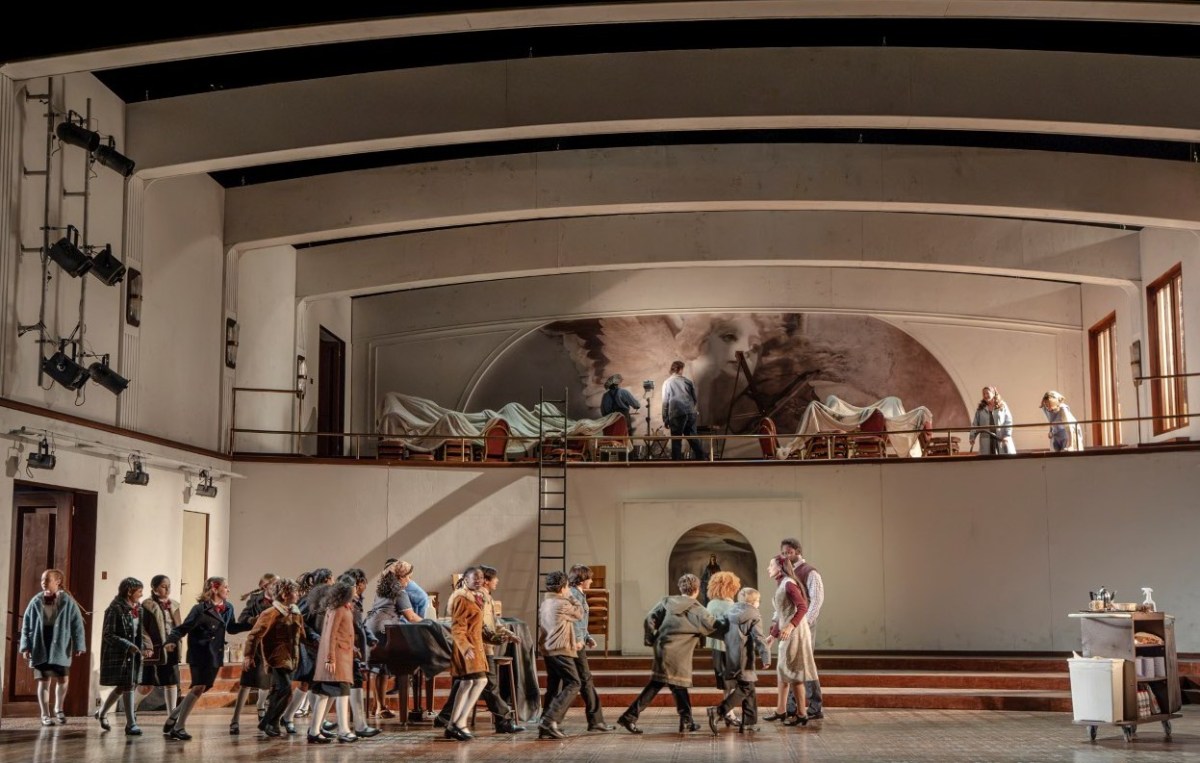
This is amplified by the uneven pacing and prolonged first half. Acts One and Two basically run together, giving a first half of almost 90 minutes; there’s then a 20-minute interval before an Act Three of only 25-minutes. This makes the evening feel very unbalanced.
Curiously, there is a curtain-down break of a few minutes between Acts One and Two, during which we assume stage hands are changing the set – but no. By the time we get to the interval, I’m hearing Bertie Wooster and his chums at the opera saying ‘There’s more?’
Curious dramatic choices
There are numerous directorial choices that seem designed to call attention to themselves rather than serve the story, interrupting the narrative arc and impeding the essential dramatic tension. One obvious aspect is the constant movement of performers forward and back across the stage, which just distracts from the intimate confrontations and genuine emotions at the heart of the story. And yes, there is a dramatic ending but critics have been asked not to say any more about that.
A more serious criticism can be made about the torture and interrogation of Cavaradossi that is staged with gratuitous violence. Rather than revealing the horror of Scarpia’s abuse of power, the brutality seems to become an end in itself.
It seems especially inappropriate to glorify the violence in a production with a large children’s chorus on stage made up of pupils from a London primary school. The audience age recommendation is (appropriately) 15 and above for this production.
An impressive performance by the ENO orchestra
The musical performance offers some rewards, although the ENO’s decision to sing the opera in English brings its own difficulties. Amanda Holden’s translation inevitably can sit awkwardly against Puccini’s musical phrasing, while indistinct diction and voices struggling to project over the orchestra make sections difficult to follow.
At this performance, there were multiple times where the sung words differed from the surtitles, rather undermining the very clarity that performing in English is intended to provide. There were also numerous problems with clarity and projection throughout, where the principals seem overwhelmed either by the orchestra or the voices of the chorus.
British baritone Christopher Purves is a real highlight, bringing considerable theatrical authority to conveying Scarpia’s cruelty and predatory menace. His commanding stage presence provides some welcome dramatic focus as the villain of the peace.
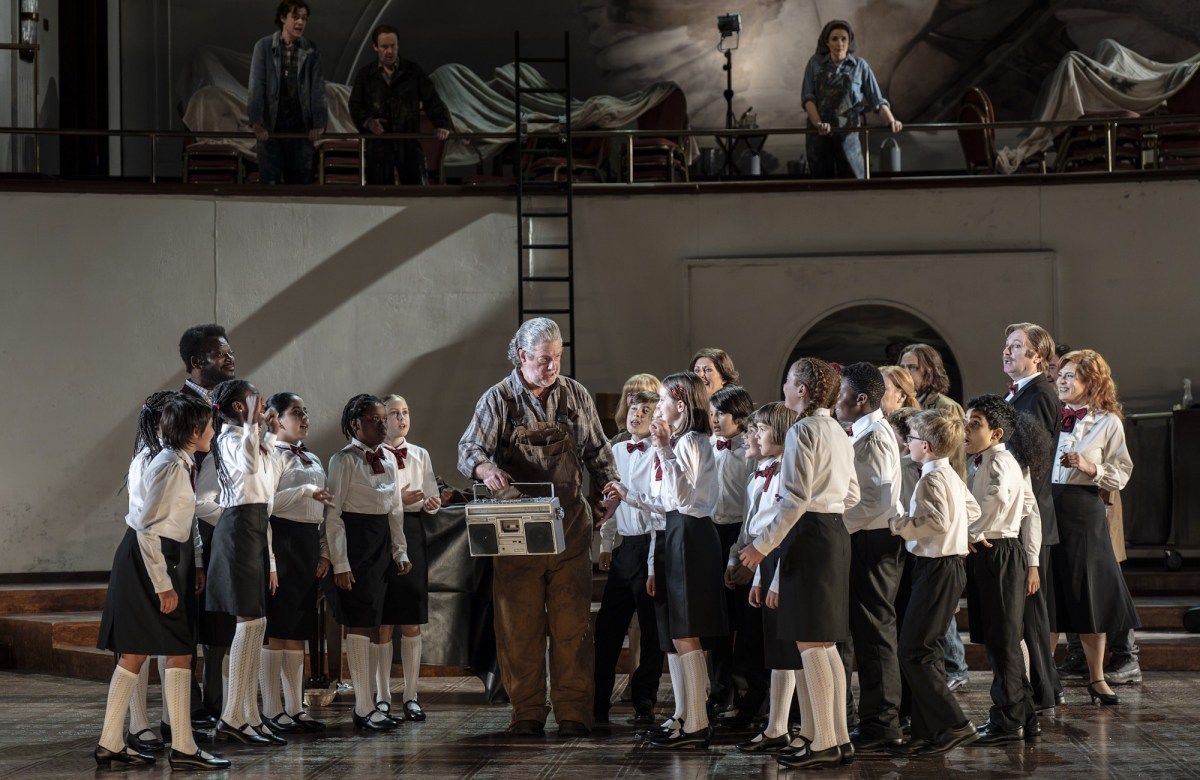
Grammy Award-winning French soprano Axelle Fanyo brought out Tosca’s determination and commitment, finding some good expressive depth in Vissi d’arte, but not entirely convincing in the role. American tenor Chaz’men Williams-Ali seemed very smooth as Cavaradossi, a role he has sung previously, but lacking a little of the vital ringing projection and lyrical freedom that Puccini’s writing requires.
The evening’s greatest strength came from those we never see, the excellent ENO orchestra under Conductor Ben Glassberg. This was a performance of impressive colour and intensity, revealing all of the score’s sweeping lyricism and finely judged dramatic details. The orchestra supplied plenty of passion and momentum, even if we didn’t always see that on stage.
It’s true that operas are always being updated or contemporised but this production just doesn’t do justice to the original. Tosca remains a compelling exploration of the relationship between political power and artistic freedom but the staging here repeatedly undermines the drama. With stronger vocal projection, more emphasis on the relationships, and less gratuitous violence, this could have been a more persuasive evening with the ENO.


