There are few historical mysteries more thoroughly mined by popular culture than that of Anastasia Romanov, the youngest daughter of Tsar Nicholas II who was supposedly murdered with the rest of her family in 1918. Her story has been resurrected repeatedly on screen and stage. The most famous is probably the 1956 film with Ingrid Bergman and Yul Brynner, simply titled Anastasia and based on the 1952 play by Marcelle Maurette.
Since then, there have been multiple plays, stories, a musical, and a Disney animation that was more of a fairy tale, complete with a talking bat. And even though we now have advanced DNA analysis telling us what really happened, the central premise remains irresistible: what if Anastasia really did survive?
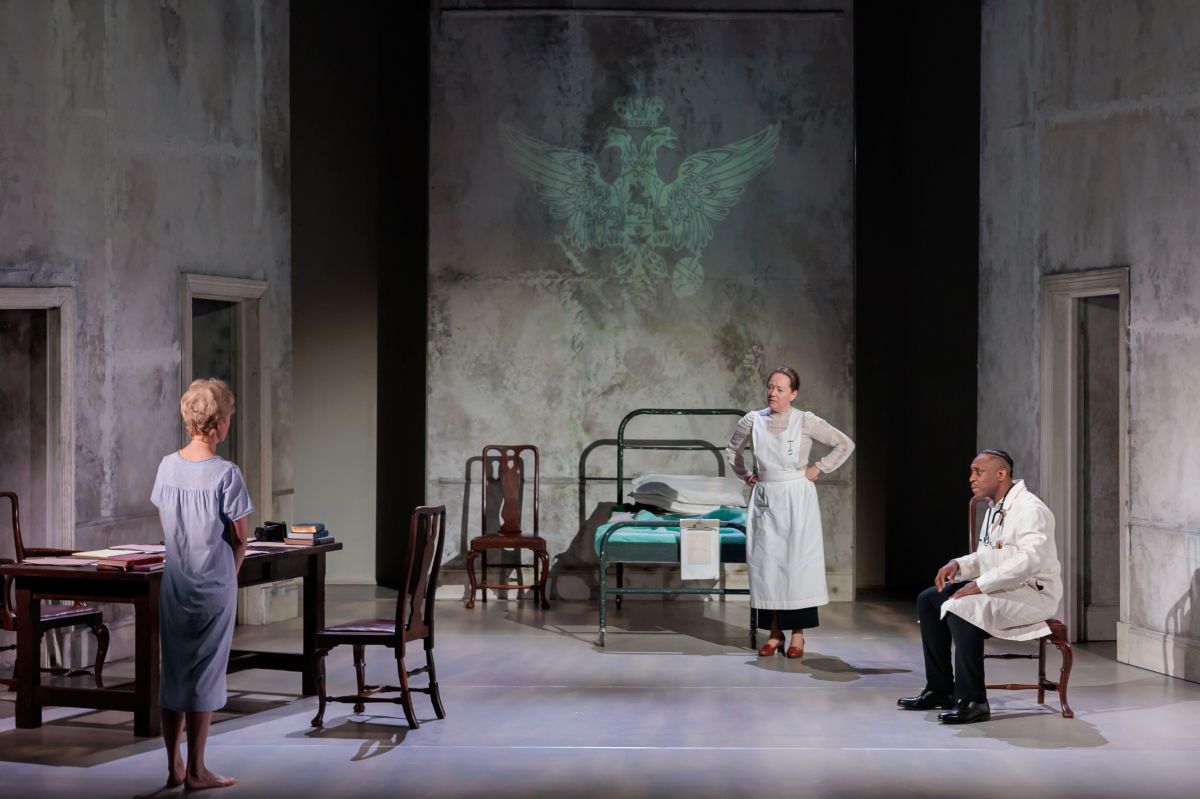
Royce Ryton’s The Anastasia File, written in 1978, opens with a young woman rescued from a canal in Berlin after an apparent suicide attempt. She is clearly traumatised and has suffered beatings and being stabbed but is unable, or unwilling, to say who she is or where she came from. Gradually, details emerge suggesting that she may indeed be the missing Grand Duchess.
The Anastasia File review – quick links
Who is this woman?
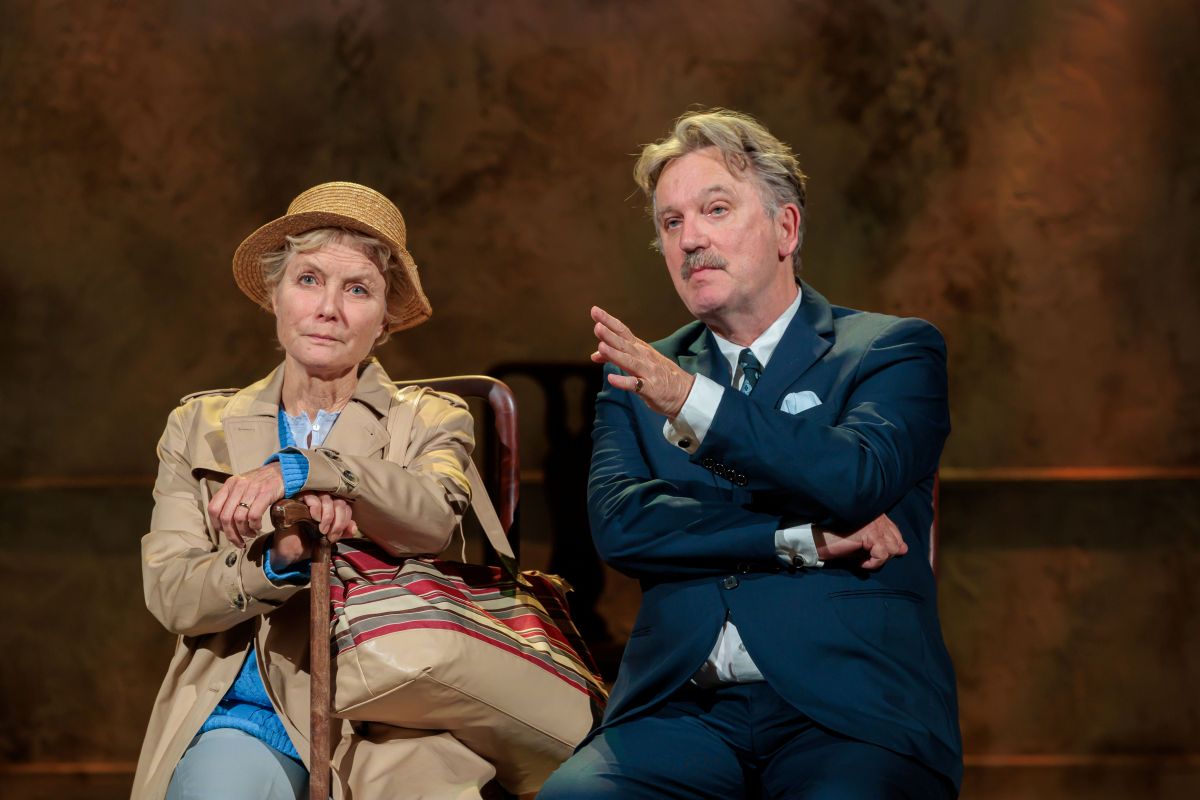
Jenny Seagrove, who has lived with the role through this production’s extended national tour, is very convincing in the lead role. Seagrove imbues her character with strength and dignity, even when she is scared and distressed. She does not appear to be a calculating imposter, of which there were many in the years after the Romanovs were executed, or a desperate victim. And she does a good Russian accent, sounding authentic throughout.
Simon Shepherd is equally strong as the police inspector drawn into her story. Who is this woman? Could she really be Anastasia? There is a considered ambiguity to his performance that feels very real. He has the mind of an experienced investigator but as the play progresses we see his professional scepticism being challenged by this intriguing woman. The chemistry and tension between Shepherd and Seagrove gives the play its emotional depth.
Their performances are complemented by good ensemble work from Ashley D Gayle and Rosie Thomson, who each play multiple roles, often switching characters with impressive speed. Thomson finds particular variety in her succession of characters, while Gayle brings energy and a touch of panache to his changes of accent and physicality. Their versatility is one of the production’s most enjoyable aspects.
Unravelling the mystery
The script is at times the play’s undoing, feeling remarkably heavy on dialogue and slow to make its narrative journey. The first act, in particular, labours to establish its competing versions of the truth, often telling us what we already know. This is a case where less could be more. There is plenty of dialogue but relatively little actual storyline and it takes too long to build the tension. The second act has more pace and emotionality as the relationships develop and the story progresses.
The production design doesn’t always help. The set is plain and some of the costume choices feel unconvincing. There is a deliberate theatrical economy here, but it can leave the story feeling a little cold and sparse.
What saves the production is the same thing that keeps conspiracy theories alive long after they have been disproven. It’s the possibility, however implausible, that perhaps we don’t really know the whole truth. It’s a shame that Royce Ryton’s script and Roy Marsden’s direction don’t quite play into that idea as strongly as they may have.
The Anastasia File is a very traditional theatre piece that needs a little more dramatic impact. Even so, Jenny Seagrove and Simon Shepherd make the central relationship absorbing, while Gayle and Thomson demonstrate the pleasures of ensemble craft.