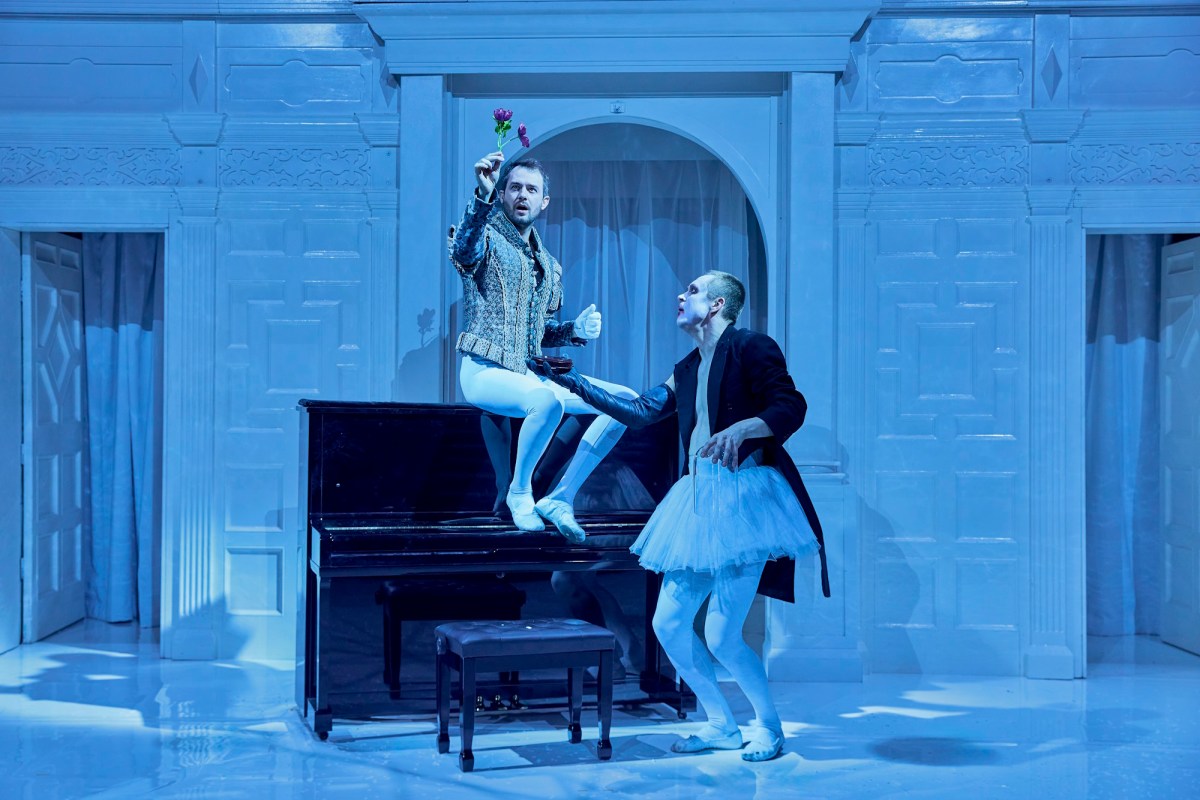
This fresh staging of A Midsummer Night’s Dream wastes no time signalling its intentions. Director Holly Race Roughan keeps Shakespeare’s mischief intact but steers it into cooler, stranger territory, letting comedy brush against something more unsettled. The result is a Dream that feels clear‑sighted and quietly bold, alive to the play’s unruly spirit.
This Athens is shaped less by its institutions than by the man who dominates it. Michael Marcus’s Theseus is overtly cruel – volatile, armed and entirely accustomed to being obeyed – and the atmosphere tightens the moment he steps onstage.
A Midsummer Night’s Dream review – quick links
Hidden menace
The usual patriarchal force behind Hermia’s predicament was softened by circumstance in the production I saw. (Egeus was read by an understudy with script in hand, doing commendable work but inevitably muting the confrontation.) Even so, Marcus’s Theseus supplies more than enough threat on his own.
Hermia’s refusal reads less as principled dissent than as a dangerous misstep before a ruler who could snap without warning, and the lovers’ flight feels like pragmatic self‑preservation.
This production of A Midsummer Night’s Dream is by Bristol Old Vic, Shakespeare’s Globe and Headlong, with Leeds Playhouse. The ensemble work is impressively cohesive, with each actor contributing to a world that feels fully lived‑in, even as the tone shifts under their feet.
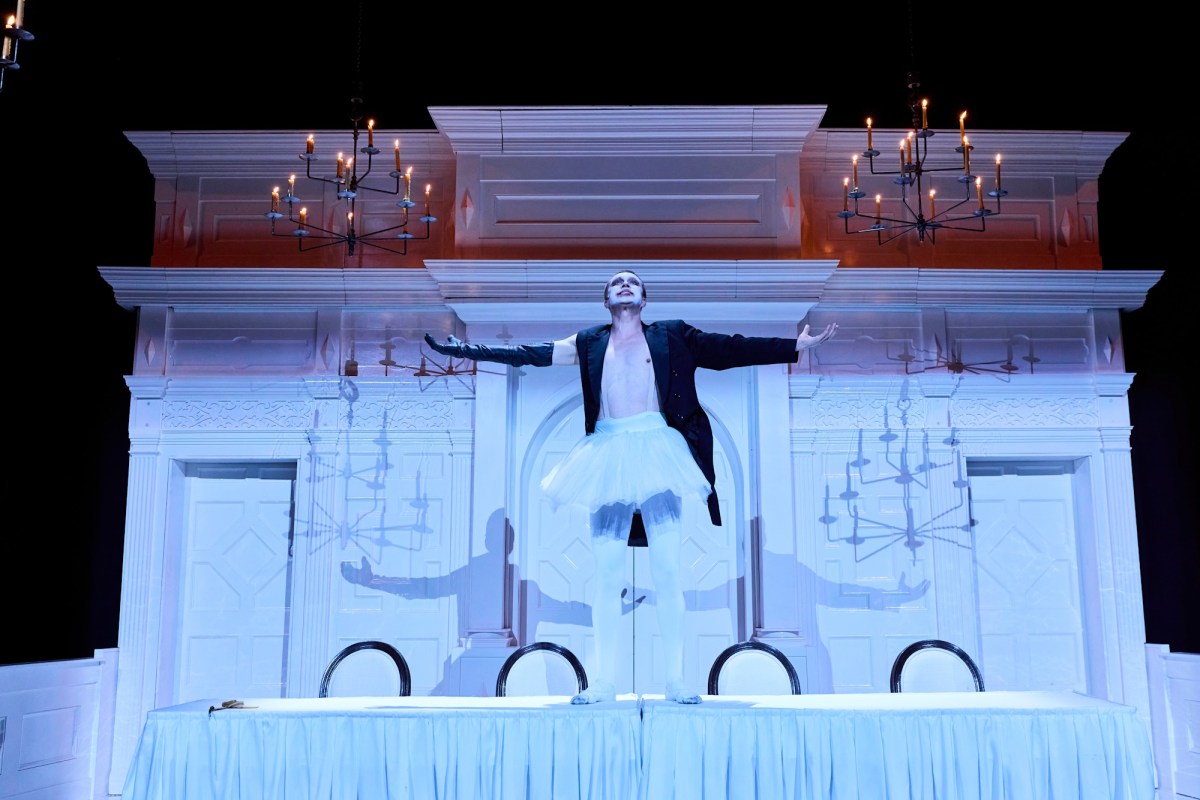
Sergo Vares’s Puck, white‑faced and tutu‑clad, moves with a mercurial sharpness, carrying a faint menace rather than the usual capricious charm.
For all its composure, the production isn’t afraid of pure silliness. It opens with Puck eating a banana in silence for an improbably long three minutes. Later, the Faeries whirl through a piano rendition of Billie Eilish’s Bad Guy, played live by Moth (David Olaniregun).
Roughan lets these moments sit alongside the more earnest passages without undercutting either. The oddness becomes a kind of release valve, making the production’s moments of devastating honesty land all the more sharply.
Sincerity amid the strangeness
The lovers maintain a recognisable humanity even at their most chaotic, and Roughan resists caricature, keeping their emotional logic intact as the enchantments escalate. Tiwa Lade has the rare gift of making Shakespeare feel effortless. Her Hermia is so precise and emotionally transparent that the language barrier simply dissolves – every shift of feeling lands cleanly, without the audience having to reach for it.
Danny Kirrane’s Bottom – here an executive chef with theatrical ambition – is sharp, funny and unexpectedly affecting. He reliably draws the biggest laughs of the night, but never at the expense of the character’s sincerity.
His blend of swagger, frustration, and vulnerability feels entirely contemporary, and he plays Bottom not as a caricature but as someone whose creative impulse has been dulled by routine and underappreciation. His brief collision with the extraordinary lends the character a surprising emotional clarity. His attempts to elevate the Mechanicals’ ramshackle play‑within‑a‑play feel are rooted in something sincere – a desire to be seen, to create, to matter – and the production gives that sincerity space.
ArtsHub: Macbeth review: Bristol’s Tobacco Factory explores the ordinary roots of evil
The line between chaos and control
Roughan’s direction balances restraint with sharpness. She embraces the play’s oddness without letting whimsy do the heavy lifting, using the supernatural to illuminate tensions already present in the human world.
She seems most interested in how thin the line is between chaos and control, and the production finds its pulse in that tension. The pacing is brisk, the tonal shifts assured, and the audience stays closely attuned – laughing, falling silent and leaning into moments of discomfort.
Design elements amplify these contrasts without overplaying them. Max John’s set shifts from the rigid geometry of the palace – all symmetry and controlled candlelight – into a forest of drifting curtains and wintry hues.
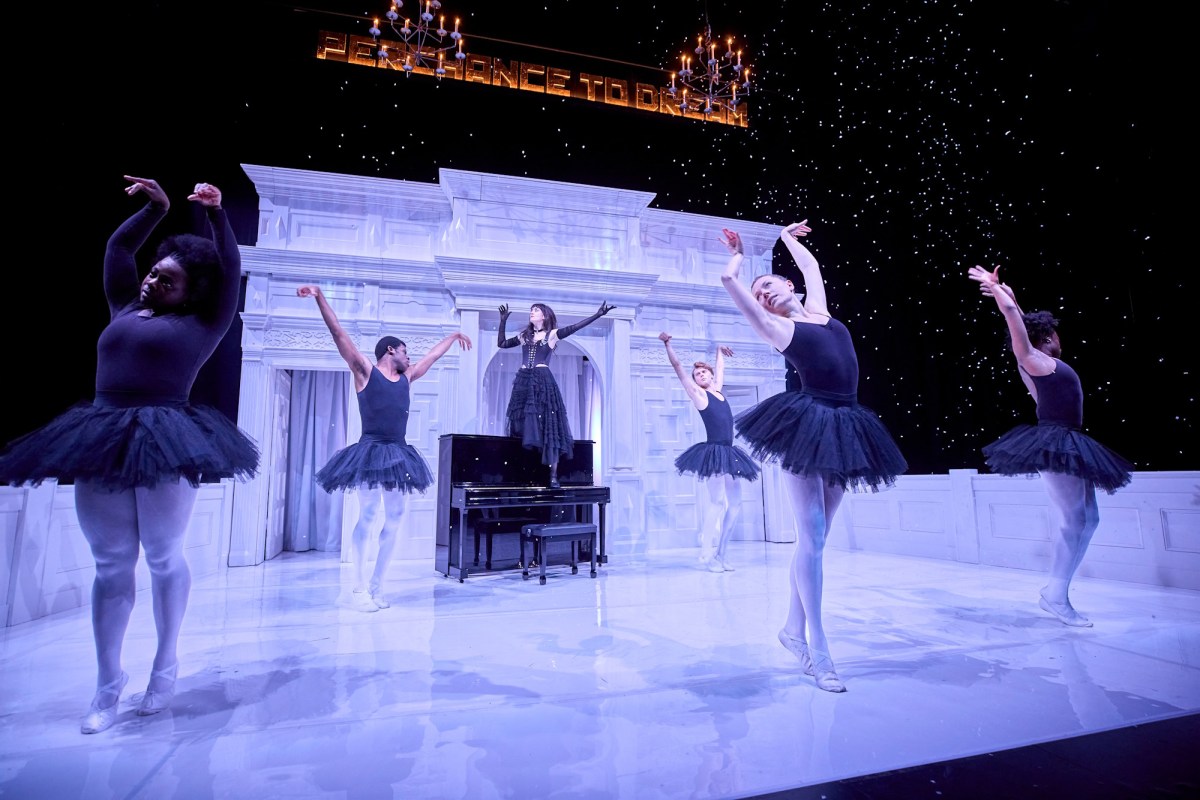
Costuming makes the divisions even clearer: the Athenians are in tailored, faintly militaristic clothing; Faeries in black‑tutu ballerina silhouettes; and the Mechanicals dressed with the charming roughness of amateur theatrics. It’s a precise visual language that supports the production’s movement between order and disruption.
Roughan’s A Midsummer Night’s Dream ultimately succeeds because it refuses to settle into one register. It’s playful, unsettling and unexpectedly tender, trusting the audience to navigate its shifts without signposting. By holding chaos and control so close together, it uncovers a cooler, more resonant kind of magic – one rooted not in spectacle but in human frailty and imagination. It lingers, quietly and unexpectedly, long after the revels end.