It should be as easy as sirens luring sailors to their doom on the rocks, enticing me into a new adaptation of The Odyssey, this time from Oppenheimer filmmaker Christopher Nolan.
I was a weedy, introverted yet overly excitable little kid – not much has changed – who spent a great deal of time in his bedroom nerding out to the gods, monsters, villains and heroes of assorted mythologies, including Celtic, Egyptian, Norse and Roman.
But the Greeks were dearest to my heart. I could easily list which merest of the mortals caught the Olympians’ eyes, for better or usually worse, and outline the parentage of even the most minor nymphs and assorted demigods.
I adored the fantastical films that brought them to moving life, quoting great swathes of Desmond Davis’ 1981 classic Clash of the Titans (which included a statuesquely arch cameo by Maggie Smith) and its forebear, Don Chaffey’s Jason and the Argonauts (1963).
Both harnessed the almighty power of stop-motion god Ray Harryhausen in bringing their monstrous menageries to wondrous life in a gloriously jerky way that’s rarely been bested by CGI, barring the Sam Neill-led Jurassic Park.
Unfortunately, wonder is not a currency that the far too self-serious Nolan deals in.
The Odyssey – quick links
Fact/fiction
Debate rages about whether Homer truly existed. All that matters is the stories do, in many forms, including the epic poems in dactylic hexameter attributed to his name: The Iliad and The Odyssey.
Distillations of oral storytelling, they fold factual places into their vast fictional tapestries, functioning as both breathtaking entertainment and moral guidance to living a decent life.
Odysseus (Matt Damon), the King of Ithaca, isn’t real. Nor is Helen (Lupita Nyong’o), the woman unfairly blamed for sparking the war between Troy (an ancient city with definitely attacked ruins resting in Çanakkale, Türkiye) and assembled Achaean (Greek) city states that also existed. It is almost certain that fewer gods were involved, however, and that most of the ‘heroes’ and ‘kings’ are made up.
The end of the Trojan War is detailed in The Iliad, as a pregnant-with-soldiers wooden horse penetrates the heavily fortified city, leading to a horrific sacking following a frustrating 10-year siege.
A cataclysmic clusterfuck, of course it truly cascades from the dick-driven Trojan Prince Paris (not shown here), who flit with Helen, much to the annoyance of her understandably grumpy husband, King Menelaus of Sparta (Jon Bernthal).
His brother, King Agamemnon of Mycenae (Benny Safdie), bizarrely facially obscured here by either a helmet or blocking throughout, as is Nolan’s kink, was also pretty pissed.
A lot of folks died. Many of them horribly. Some suffered worse fates before that. Sadly, Nolan doesn’t care about the tragic big gay love between Achilles and Patroclus (neither depicted), boooo, despite copious flashbacks.
Anyway, The Odyssey is, as you might guess from the name, more interested in what happens next.
The journey home
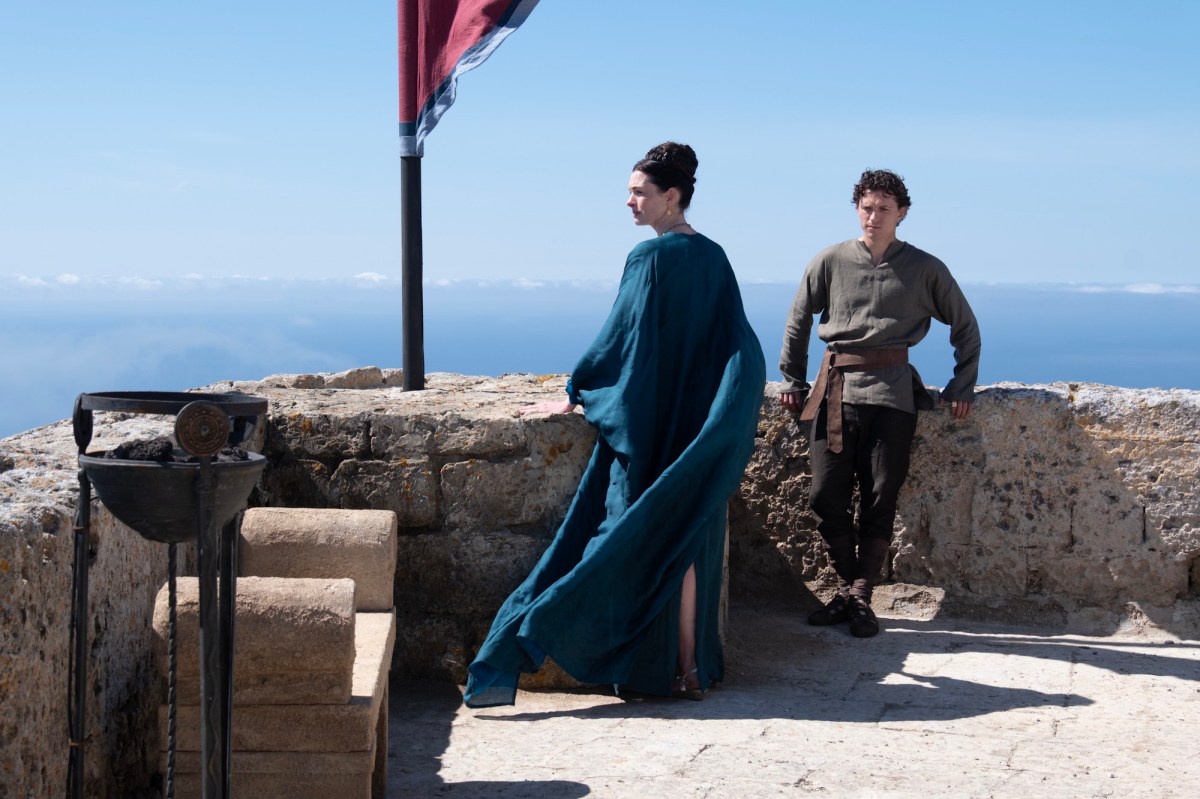
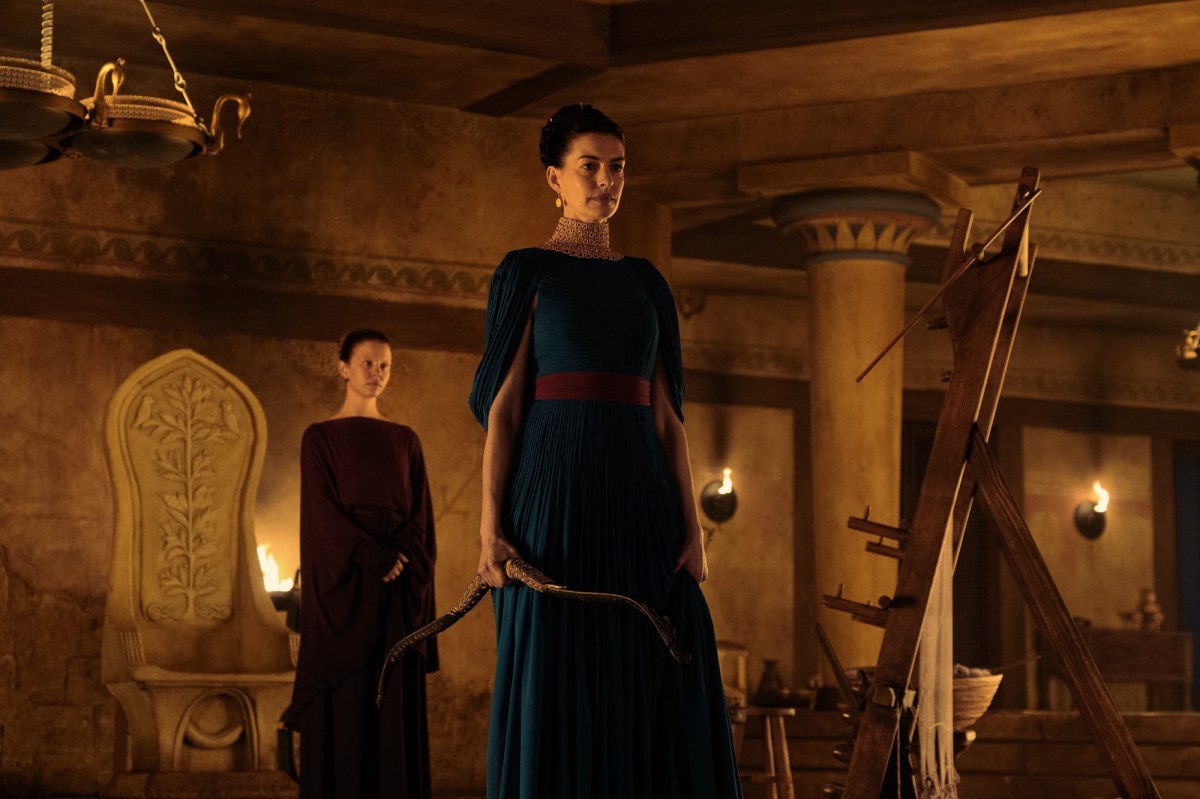
The poem follows another 10 years in which Odysseus tries to get home to his preternaturally patient wife Penelope (Anne Hathaway), while a bunch of caddish suitors camp outside their palace, insisting he’s dead and demanding her hand in marriage.
All the while, his son, Telemachus (a charming Tom Holland), who was but a gurgling babe when his dad left for Troy, tries to ascertain news of Odysseus’ survival and secure the throne.
Here’s the thing: of the two poems, The Odyssey has the most fantastical content. It is largely made up of series of chaotic misadventures on monster-laden islands on the long way round for Odysseus and his men. They include Himesh Patel’s Eurylochus, who enjoys the only witty line of the film, which appears lobbed directly at racist trolls.
Along the way, they infuriate numerous gods, including Poseidon and Helios, but do not expect to meet them.
Watch the trailer
Sisters are doing it for themselves
Nolan has long demonstrated a bizarre habit of minimising the fantastical in his storytelling while remaining far from reality.
While I rate two thirds of his Batman trilogy, I always found it egregious that he dispensed with the dark and unruly architecture of Gotham (it’s in the frigging name), an integral character of the mythos, in favour of the more generic modernity of Chicago. Likewise, the dulling of the Batmobile as a butt-fugly military tank. Dude, your hero is dressed like a bat, battling a maniac in a clown suit.
It’s a failing the po-faced director carries through to his drab and dreary Odyssey. He largely dispenses with the gods (the Titan Helios doesn’t even rate a name, inexplicably), though he does invoke the power of three, presumably to combat the accusation that his films are pathologically disinterested in women.
A captivating Charlize Theron lends wounded heart to the complicated sea nymph Calypso. A daughter of Atlas, she’s a lonely soul listlessly walking the sands of Ogygia when a wounded Odysseus washes ashore. One of the film’s more intriguing and haunting stretches tells of her lotus-blurred intentions towards the hero she can’t let go of.
Oppenheimer costume designer Ellen Mirojnick teases out Calypso’s immortal spirit with a stick-ish trident and fishnets worn as haute couture, one of the few neat looks in an underperforming field. (Props also to Agamemnon’s armour.)
The magnificent Samantha Morton portrays Circe, the witch who is the daughter of Helios and the Oceanid Perse. She causes the most chaos, with her transformative spells ensnaring Odysseus’s hungry crew. This sequence embraces icky body horror, injecting sorely lacking fantasy into this surprisingly blood-lite film. Morton, as ever, is at her best when playing dangerous women who suffer no fools.
Athena, the pantheon’s only big hitter who shows up, is played by Dune star Zendaya as the disguised goddess of wisdom. Granted, Zeus’s daughter plays equally coy in Homer’s text, though is far more active in the poem’s Ithacan conclusion.
But deploying Athena as the divine face of the horror endured by Troy’s mortal population is an enormous misstep in an anti-war narrative that feels as wrong-footed as the director substituting his own daughter for the slaughter of Hiroshima and Nagasaki in Oppenheimer.
Nolan does make one interesting tweak to Helen’s story, but the weight of that inference is lost in Nyong’o’s vanishingly short screentime. Helen was more impactful in her absence from the recent Malthouse stage production of Troy. A rushed reference to her sister, Clytemnestra, is as frustrating as the slapdash treatment of Elliot Page’s wily Sinon, borrowed from Virgil’s Aeneid.
Dull monsters
The thing is, if Nolan wanted to go ground-level, minimising the flashier gods – Zeus is naught but lightning, Poseidon roiling waves – then that’s immediately undermined by all the, you know, monsters.
Of course, they get Batmobiled, too.
While the cyclops Polyphemus’ literal side-eye induces queasiness, and it’s admirable that Nolan favoured a puppet and forced-perspective, like everything else in this far-too-dark film, miserably lensed by Interstellar cinematographer Hoyte van Hoytema, he’s drained of colour. A clay-ish grey glob of a guy, the sheepherder looks, for all the world, like Morph’s best mate, Chas.
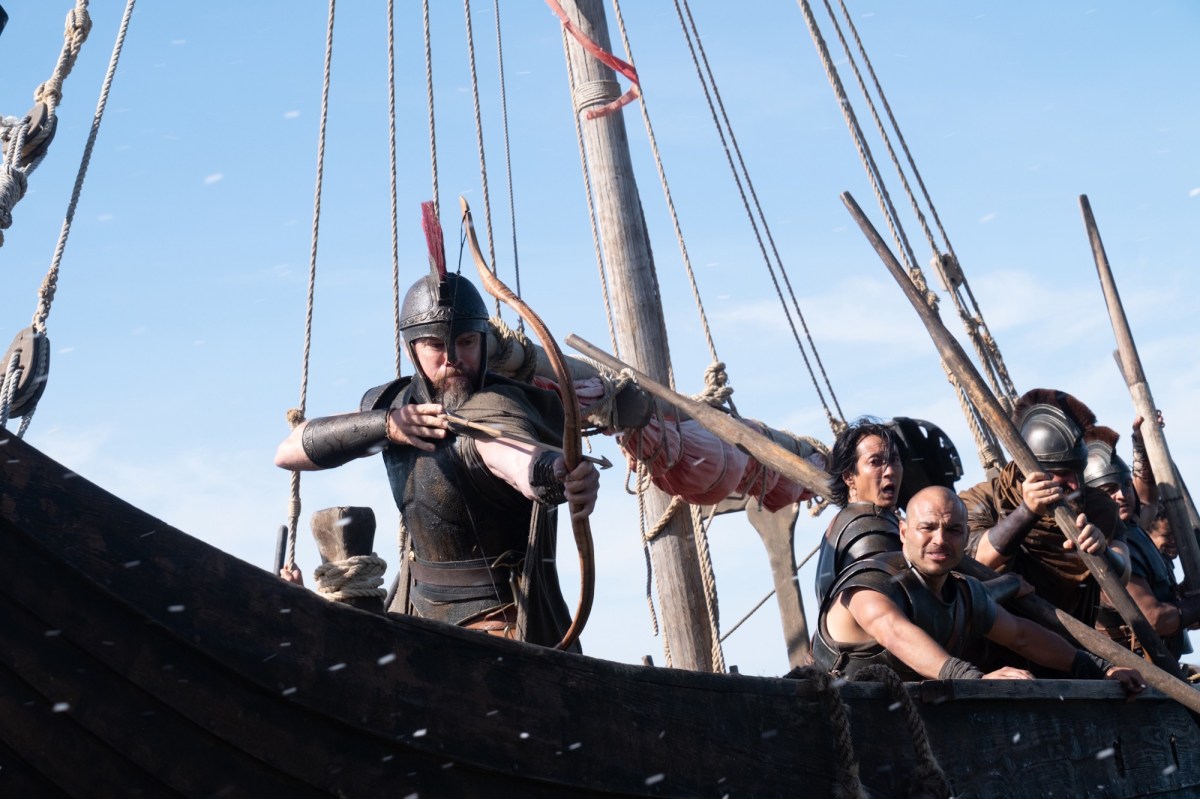
The tentacled Scylla resembles sprouting potato roots. All we see of Charybdis is her whirlpool. I’m not fussed about the historical accuracy of the giant Laestrygonians’ plated armour, even if it is a bit too Excalibur shiny, but why is all the man-eating left to Polyphemus? Though admittedly, the aftermath of their attack on the beach is the most enthusiastically bloody, with shades of Dunkirk.
After a while, watching soldiers disembark, wind up shit creek, then dash back to their slow-to-launch boats in greatly reduced numbers gets pretty tedious. Not something we should feel while watching this quest. The monsters really had to bring the wow.
Even the sultry Sirens are barely glimpsed, a perversely prudish flex that won’t assuage Nolan’s bad rap for delivering almost entirely sexless films.
Home time
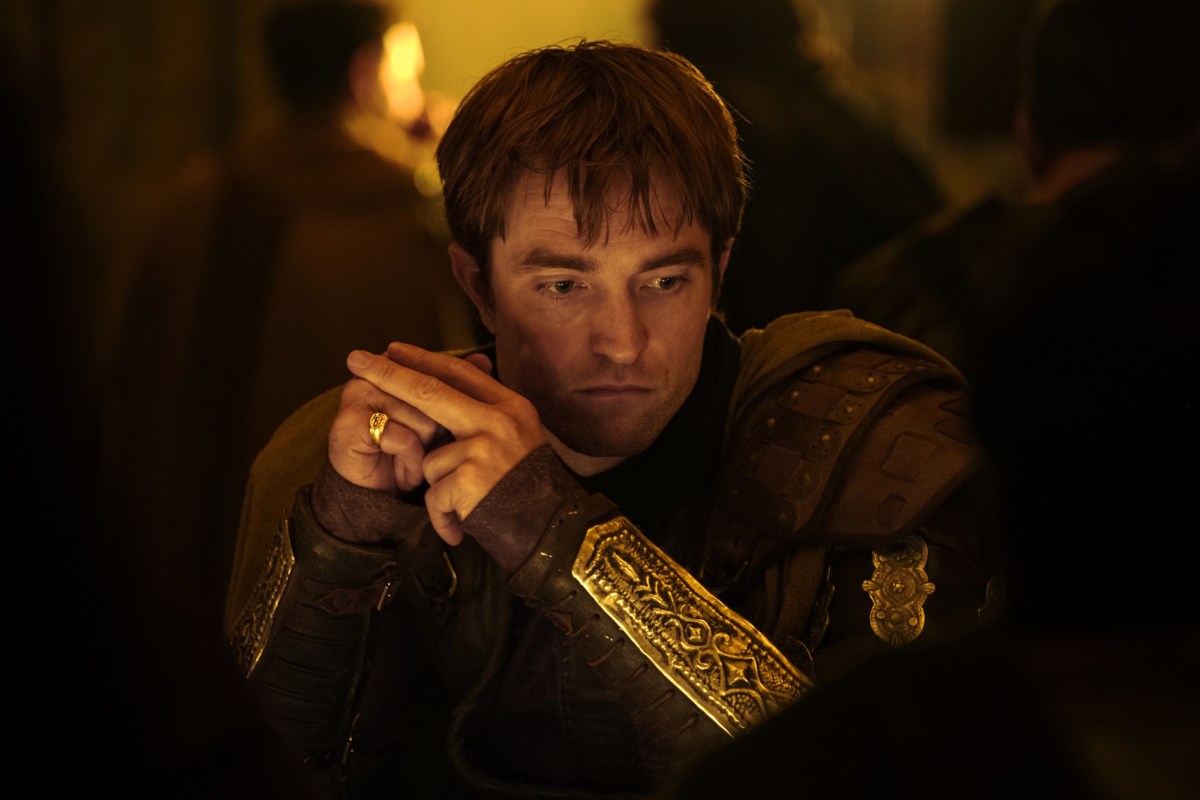
When The Odyssey finally winds its way home after a sluggish three hours of sea rinse and repeat, Hathaway’s distractingly breathy performance as the put-upon Penelope is off-putting. It’s a shame, too, that the film didn’t make more of Mia Goth’s slippery servant Melantho, who’s in the ear of the most conniving suitor, Antinous (Robert Pattinson).
Pattinson, Hathaway and Damon’s performances all pale in comparison to Marwan Kenzari, Juliette Binoche and Ralph Fiennes in Italian director Uberto Pasolini’s much stronger The Return.
There’s no room to breathe with Nolan’s waterlogged screenplay never pausing for dramatic effect. The cast heroically attempt to lend gravitas to his atrocious dialogue, which is about as far from poetry as it’s possible to be. It would be tough to swallow this rotting broth in any accent, let alone the corny mid-Atlantic one foisted upon almost everyone here, barring the one islander who’s actually speaking Greek, but somehow incomprehensible to Odysseus’ men?
Ludwig Göransson is one of the finest composers working today, but his always swelling score also crashes over to much, though granted, saves us from some of that heinous dialogue. Even the sets feel cramped and badly lit, with the sacking of Troy astonishingly small in scale and far less stressful to witness than Game of Thrones’ annihilation of King’s Landing.
Is it really too much to ask for a little oomph in our epics? Alas, like Charybdis’ loser energy, Nolan has drained all the wonder away from The Odyssey.