Few plays trust their audience with fear as unflinchingly as The Woman in Black. Stephen Mallatratt’s stage adaptation of Susan Hill’s Gothic classic has unsettled theatregoers for decades, and this touring production reaffirms that theatre is at its most frightening when terror is withheld, rather than indulged. Driven by two exceptional performances and shaped by rigorous restraint, the production allows its horror to seep under the skin rather than demand attention.
The Woman in Black – quick links
The Woman in Black: an exceptionally performed play within a play
The narrative rests on a deceptively simple framing device. In a near‑empty Victorian theatre, the ageing solicitor Arthur Kipps attempts to recount a traumatic episode from his past in the hope of finally laying it to rest. A professional actor is engaged to help shape the tale theatrically, and the two settle on a play‑within‑a‑play structure: the actor portrays the younger Kipps, while the older man narrates and inhabits the remaining characters. What begins as a controlled theatrical exercise gradually curdles, as the boundary between recollection and reality erodes beyond repair.
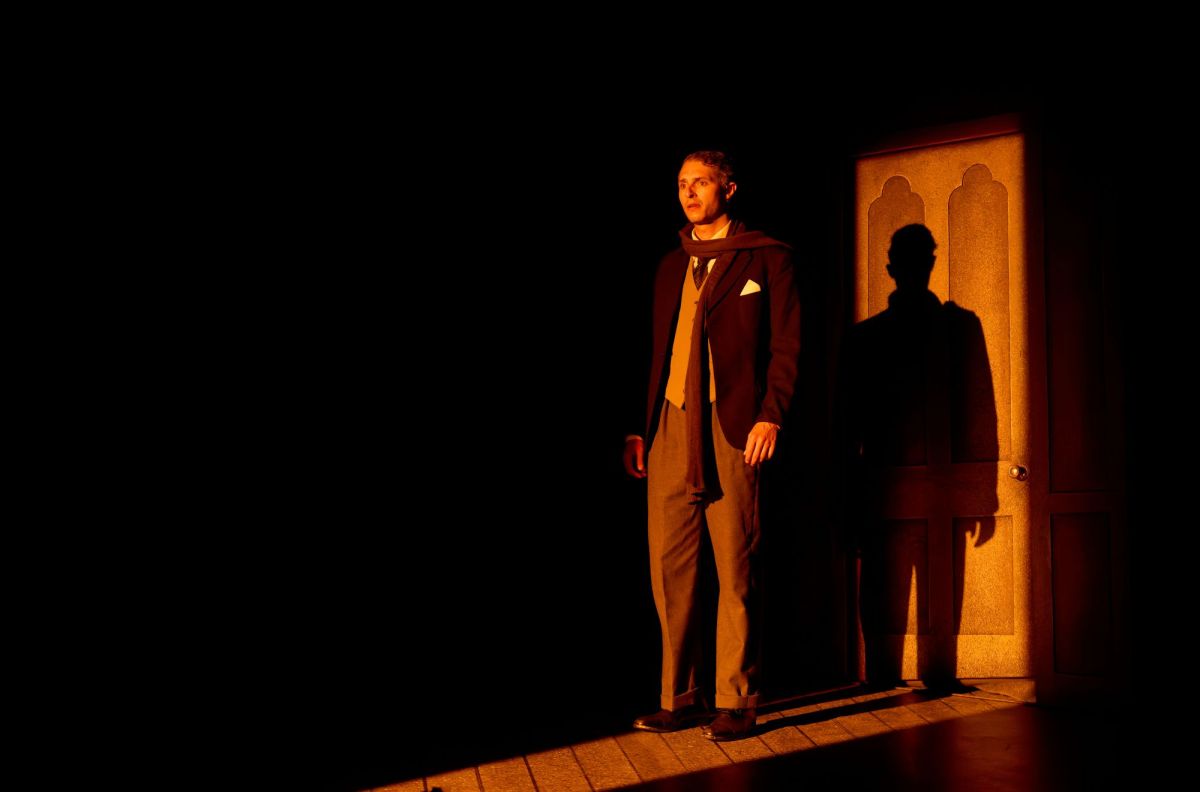
Any production of The Woman in Black lives or dies by its actors, and this one is exceptionally well served. John Mackay’s Arthur Kipps is a masterclass in precision, control and imaginative breadth. Initially awkward and constrained, he grows steadily into the storytelling, shifting between characters with deceptive ease. With only the most economical means – a change of posture, a subtle vocal adjustment, a single costume addition – Mackay conjures a gallery of sharply defined figures. His performance is exacting but never rigid, demanding close attention and rewarding it with extraordinary clarity and tension. It is a display of theatrical intelligence and versatility that feels increasingly rare.
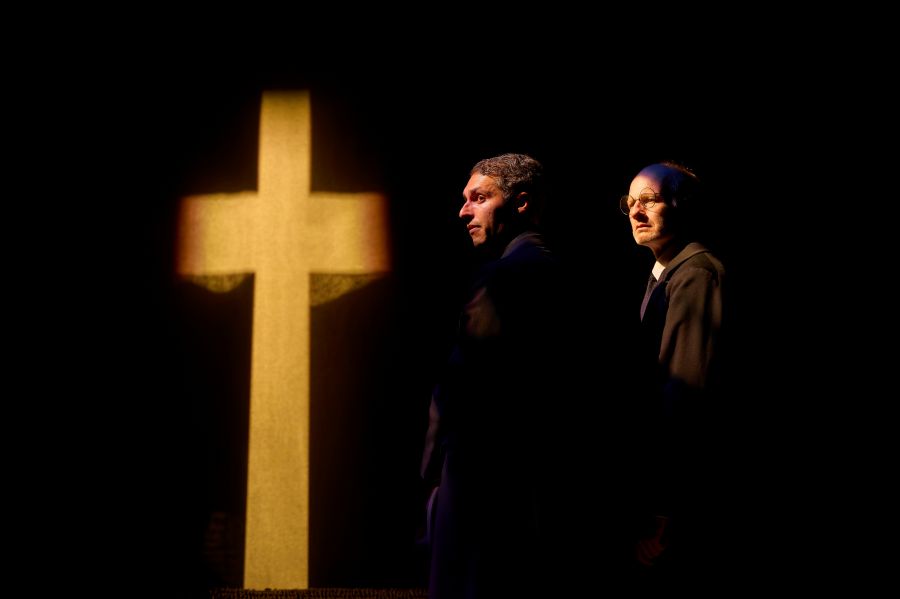
Mackay’s commanding presence is matched by Daniel Burke in a performance of intelligence and control. As the Actor – and by extension the younger Kipps – Burke brings clarity, discipline and emotional responsiveness to the role, allowing the production’s tensions to accumulate without excess. He captures youthful assurance with precision, charting a measured descent from curiosity to corrosive fear. The terror never feels rushed or overstated; instead, it builds patiently, shaped by Burke’s responsiveness to Mackay’s shifting authority. The chemistry between the two actors is central to the production’s success, grounding moments of dry humour while allowing dread to settle quietly around them.
The Woman in Black: directed with discipline
Robin Herford directs with rare discipline. The staging is stripped to essentials and used with incisive intelligence, guided by the logic of imagination rather than realism. Everyday objects transform fluidly into locations both mundane and ominous, while light and shadow carve spaces out of emptiness. The production shows absolute confidence in suggestion, requiring the audience to complete the picture themselves – often to unnerving effect.
One of the production’s most striking devices is its use of smoke to mimic the sea-fret that envelops Eel Marsh House, deployed with restraint and devastating effect. Used only twice, once in each act, the smoke floods the stage before spilling out into the auditorium, swallowing actors and audience alike. All visual certainty is erased; sound becomes dulled, displaced, and strange, and the narrative itself seems to vanish inside the haze.
Rather than functioning as atmosphere, the smoke becomes a sensory shroud, forcing Kipps – and the audience with him – to navigate the scene through sound alone. Most chillingly, this blindness is accompanied by the distant, looping echoes, creating an eerie environment in which perception is compromised and control is lost. The effect is overwhelming, disorientating and quietly terrifying.
The Woman in Black: embracing the darkness
Sound and lighting actively shape the tension. Silence is handled with as much care as sudden sound, and darkness is embraced rather than avoided, stretching anticipation to breaking point before release. The production understands – and exploits – the fact that what is half‑heard or almost‑seen can be far more disturbing than any full reveal.
Beyond its shocks, The Woman in Black carries unexpected emotional weight. Beneath the Gothic machinery lies a story about grief, guilt and the long shadow of trauma. Kipps’ desperate hope that retelling his story might grant peace lends the play a quiet tragedy that lingers beyond the final blackout.
Anchored by outstanding performances and guided by disciplined, intelligent restraint, The Woman in Black remains a masterclass in economical, unsettling theatre. It proves that when imagination is trusted, restraint – not excess – remains theatre’s most dangerous tool.