Before the bombs and the crossings, Nuri and Afra lived an ordinary life in Aleppo. He kept bees, she painted, and their young son played with earthworms in the garden. The Beekeeper of Aleppo, adapted by Nesrin Alrefaai and Matthew Spangler and directed by Anthony Almeida, charts how that life is shattered and how the couple wrestles with what remains.
It’s an uneven production that is at its strongest in stillness, exploring quiet gestures, splintered memories and the soft spaces where grief settles and refuses to shift.
The Beekeeper of Aleppo review – quick links
A portrait of grief
Nuri (Adam Sina) and Afra (Farah Saffari) sit in a damp British B&B, waiting for a Home Office decision that will determine their futures. Flashbacks lift us back into the life they once knew – full of friends, colour and easy affection – before folding into scenes of flight through Turkey and Greece. Time shifts cleanly, but what resonates is how memory bleeds into the present, uninvited and unstoppable.
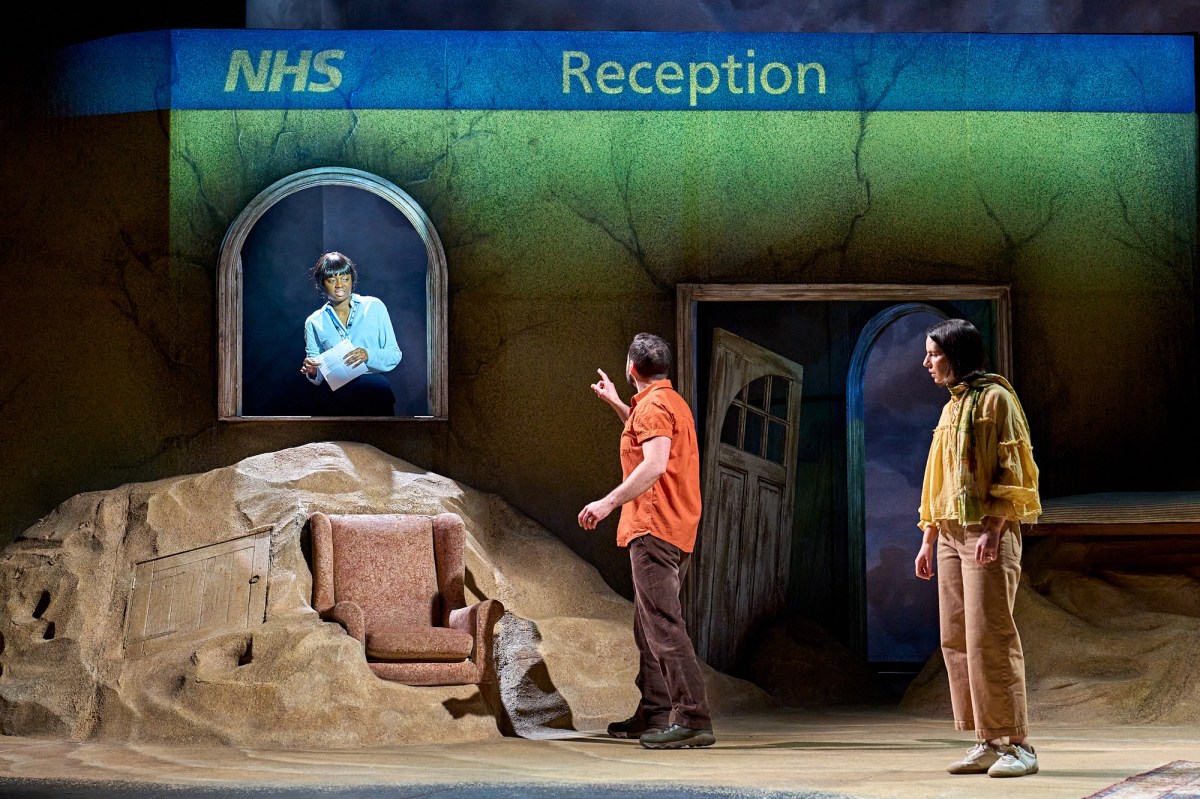
Sina and Saffari carry the central relationship with sincerity. Their performances are restrained, at times overly muted, letting the emotional distance between their characters emerge without overstating it. Their early scenes in Syria are alive with small, unmistakable intimacies; the later gulf between them feels sharper for having once been so small. Their work doesn’t command the stage, but it holds the story steadily enough to support what surrounds it.
Those surrounding moments frequently belong to Joseph Long, particularly strong in dual roles as Mustafa and the Moroccan Man. As Mustafa, he brings a gentle ache – steadfast, tender and weighted with losses. As the Moroccan Man, he shifts into dry humour and warmth without ever tipping into caricature. Long grounds the production whenever he appears, offering a quiet emotional clarity that the play often benefits from.
Princess Khumalo is equally compelling as Angeliki, a Somalian refugee whose child has been taken from her. Her grief is so tightly contained it seems to vibrate beneath the surface, and she gives the Athens camp scenes a painful truthfulness. She never pushes for effect, which makes her work all the more striking.
Not all casting choices are as successful. Mohammed, written as a seven‑year‑old boy, is played by adult actor Dona Atallah. Despite her full commitment, the mismatch in physicality and vocal quality is impossible to ignore. Because Mohammed is so entwined with Nuri’s inner world and the emotional arc of the story, this choice repeatedly unsettles the production. Scenes that should feel intimate or devastating instead become distracted by the disconnect, pulling the play off balance at crucial moments.
Less is more
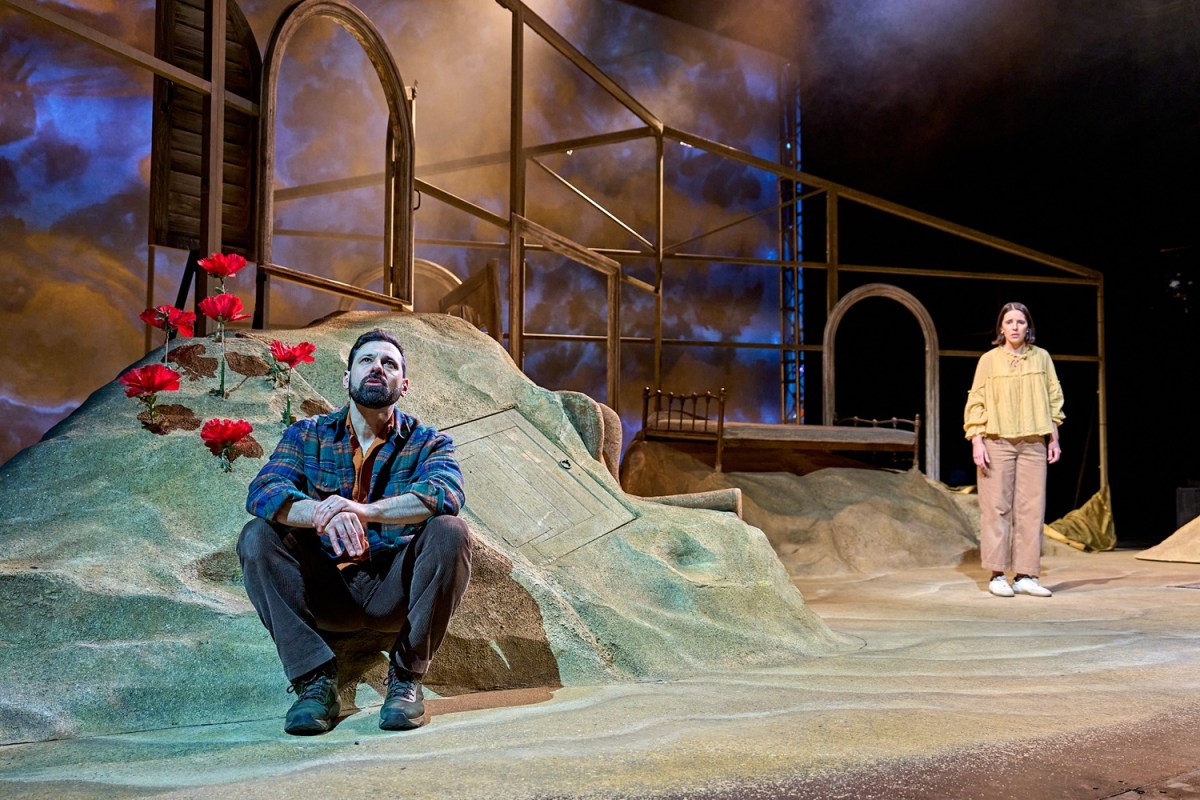
Almeida’s artistic instincts lean toward the theatrical – sometimes strikingly, sometimes at the expense of emotional precision. Ruby Pugh’s design, with furniture rising from dunes of rubble, offers a clean and evocative visual metaphor. Tingying Dong’s soundscape gives the production a taut undercurrent. But the piece is most confident when it resists embellishment.
A pause. A half‑remembered sound. A stillness heavy with what hasn’t been said. These are the moments that land.
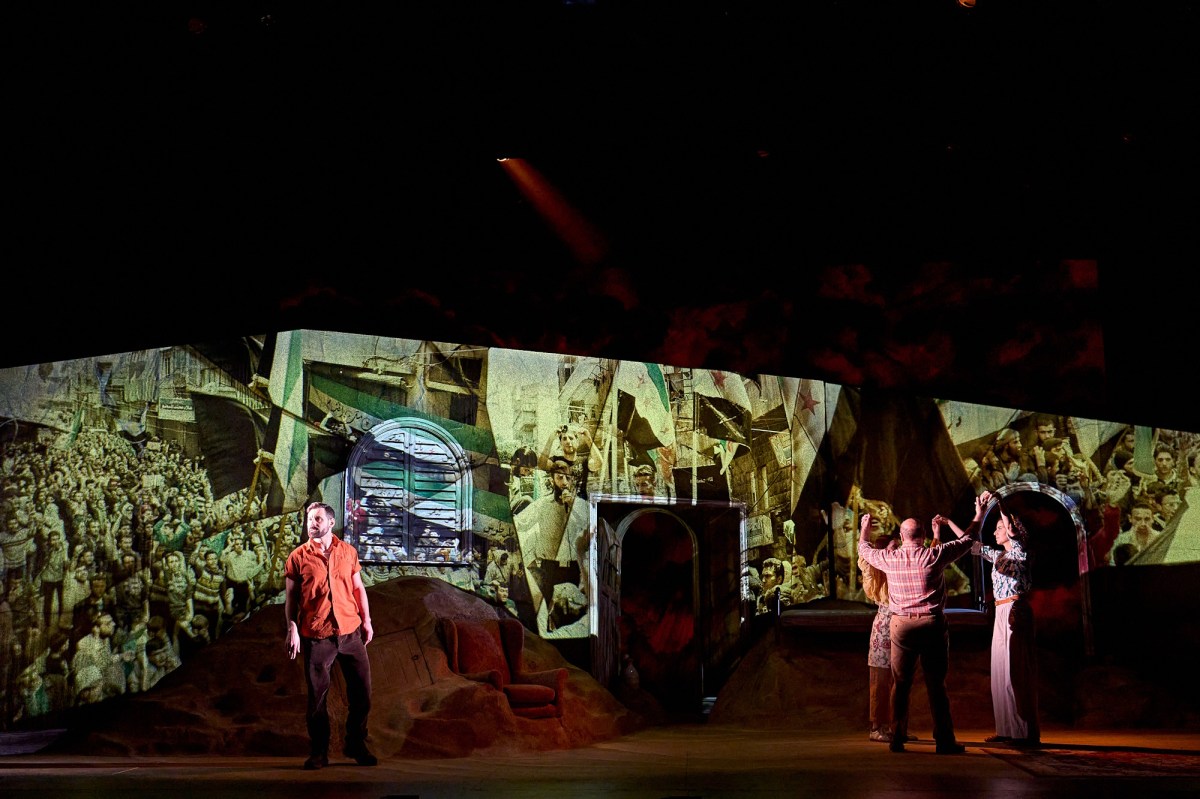
When the staging pushes harder – layering projections, movement and swelling sound – the emotional clarity begins to blur. The Act One capsizing sequence is the clearest example: a moment that should terrify instead becomes cluttered by technical excess. The fear is lost in the noise.
The Beekeeper of Aleppo remains a humane but inconsistent production. Almeida captures the disorientation of displacement – the bureaucratic coldness, the exhaustion and the fragile persistence of hope – with a careful eye, but not always with the control the material demands. And in a political climate where refugees are too often reduced to slogans or statistics, stories like Nuri and Afra’s matter deeply. When the production quietens and simply listens to itself, it becomes something honest, fragile and undeniably affecting.