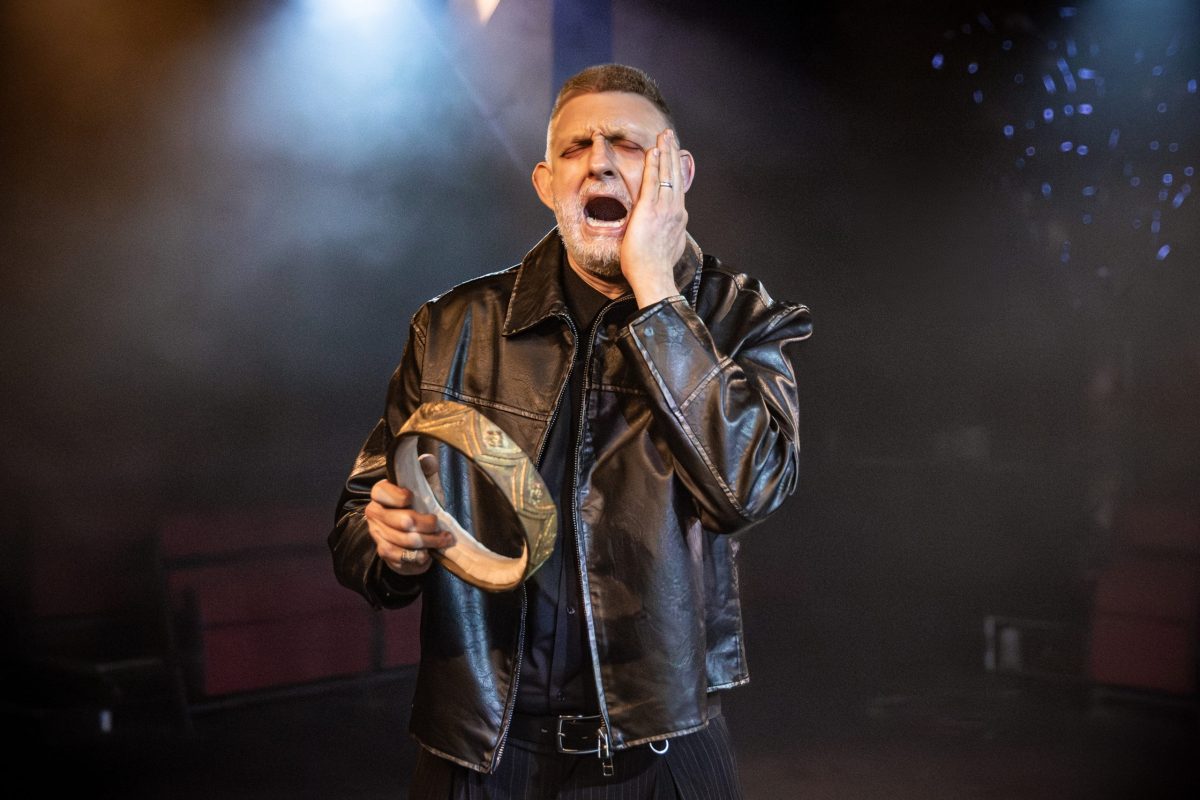
Stu McLoughlin’s Macbeth is far from the bloodthirsty tyrant familiar from traditional stagings. In Heidi Vaughan’s ensemble‑led production at the Tobacco Factory Theatres, he emerges as an unsettlingly ordinary man – someone whose ambitions and insecurities, quietly reinforced by those around him, snowball into catastrophe. It’s a tragedy shaped as much by complicity as intent, and this staging’s greatest strength lies in how recognisably human the roots of evil feel.
Vaughan frames Macbeth as the slow corrosion of a community rather than the rise of a singular villain. Her emphasis on networks of responsibility lends the production a contemporary charge: ambition flourishes here not only through decisive acts but through silence, indulgence and the subtle reinforcement of someone else’s desires.
It’s a clear conceptual frame, but one that never feels imposed. Instead, it shapes the story with naturalness, sharpening the play’s moral tensions while allowing the human drama to breathe.
Macbeth review – quick links
The quest for respect
At its core is McLoughlin’s quietly compelling Macbeth. He begins as a man driven by the desire to be respected rather than by destiny or greed. The witches’ prophecies tempt rather than condemn him, igniting ambitions that already simmer beneath the surface.
McLoughlin charts Macbeth’s descent with understated precision. Humanising him does not weaken the tragedy; instead, it underscores the unsettling idea that the banality of evil often begins with very ordinary feelings.
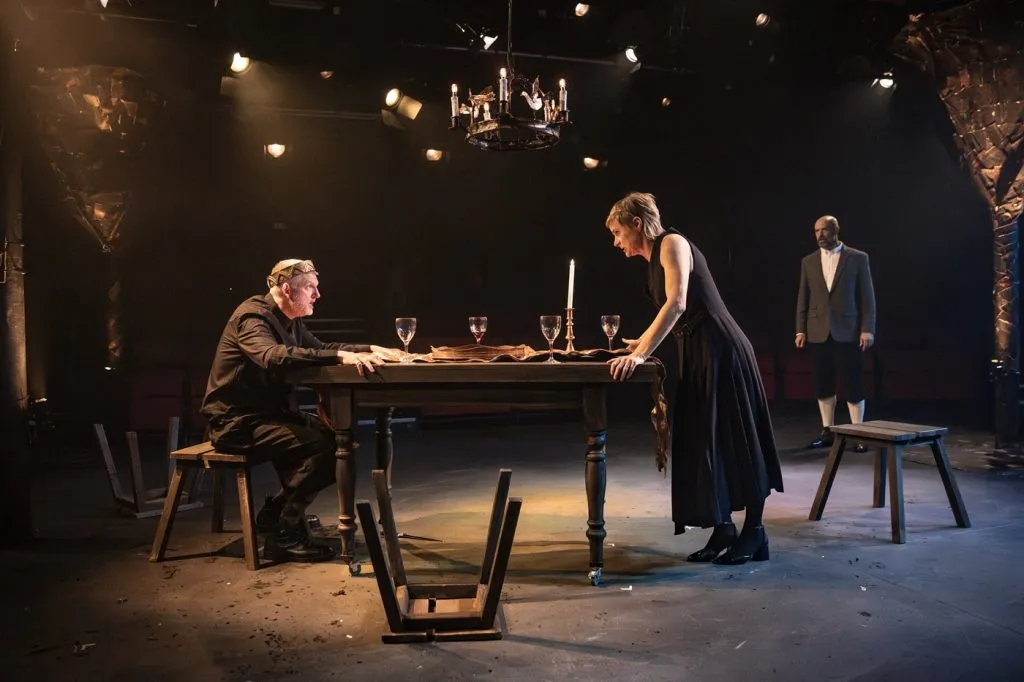
Opposite him, Patrycja Kujawska brings a tightly controlled, incisive presence to Lady Macbeth. Her clipped delivery gives her a measured dominance in the early scenes, particularly as she circles and presses against her husband, stitching their ambitions together.
As the play progresses, her composure fractures. The sleepwalking scene, performed just feet from the audience, has a raw, unravelled vulnerability. Together, the couple feel less like archetypes and more like two people slowly talking themselves into disaster – a partnership built on mutual justification rather than manipulation.
The ordinariness of evil
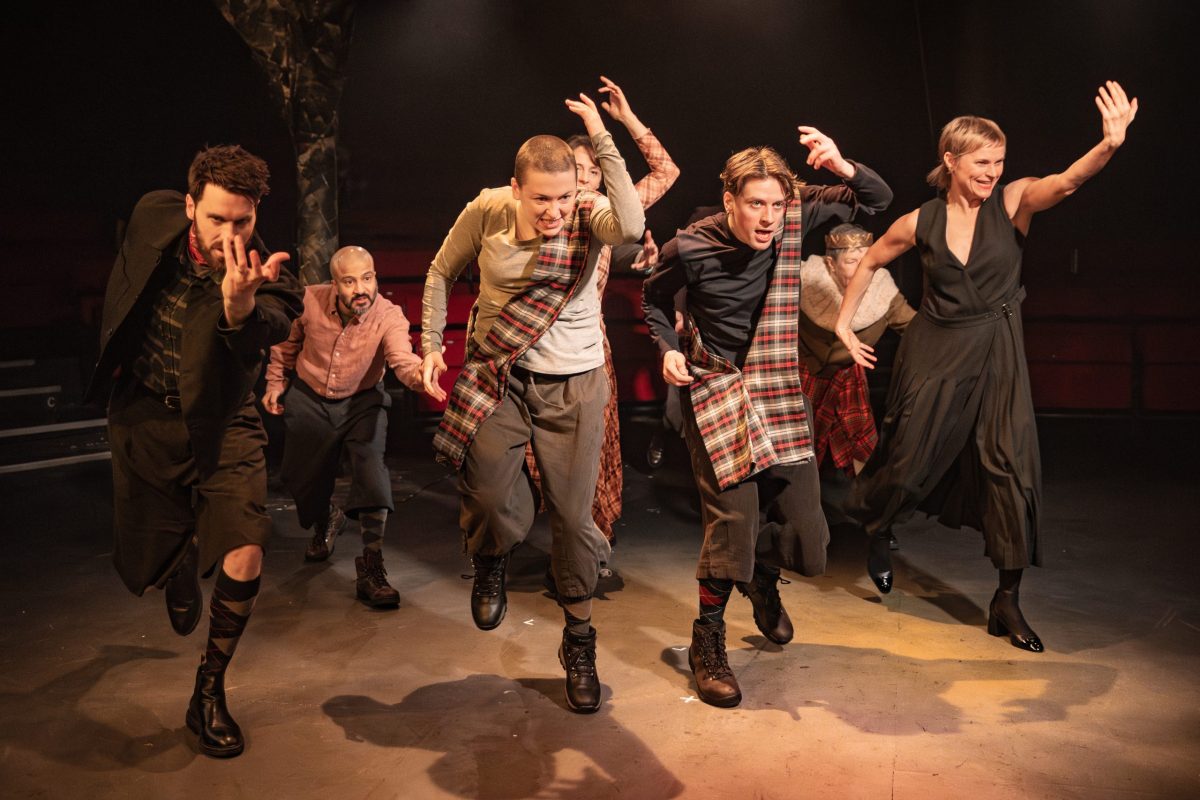
The ensemble sustain Vaughan’s collective vision with assurance. Saikat Ahamed’s Banquo is steady and watchful, a measured counterweight to Macbeth’s growing volatility. The company shift fluidly between roles – soldiers, courtiers, supernatural figures – maintaining a cohesive world within the intimacy of the theatre’s in‑the‑round space. Their physicality reinforces the production’s central idea: power is always relational, constantly shaped by who stands alongside whom.
Design elements remain intentionally minimal. Costumes sit in a contemporary, utilitarian register – tartan sashes, long shorts and walking boots. They’re not especially memorable, but nor do they distract; they keep focus firmly on the performances. The set is similarly spare, giving the cast full command of the tight space and avoiding any visual clutter that might dilute the human stakes.
If the production has a limitation, it lies in its overall impact. Vaughan’s interpretation is thoughtful, the ensemble cohesive and the performances assured, yet the evening rarely builds into something truly electrifying. It is engaging rather than transformative: a clear, intelligent reading of the play rather than one that redefines it.
Still, the staging’s insistence on the ordinariness of evil gives it a quiet, lingering relevance. In a world shaped by ambition, political manoeuvring and systems that allow harmful choices to spread, Vaughan’s Macbeth feels pointed and timely. It may not reinvent the tragedy, but it understands it deeply – and reminds us that ruin often begins not with grand gestures but with the small, familiar desires we’d prefer not to recognise in ourselves.