Yin Xiuzhen has spent more than 30 years trying to preserve the traces of lives that rapid modernisation erases. Heart to Heart at the Hayward Gallery, her first major UK exhibition, ranges from her earliest, concrete-encased clothes to monumental textile installations, revealing both the urgency and the limits of her long project.
Yin began making work in 1990s Beijing, as entire neighbourhoods disappeared beneath concrete and glass. Streets were widened, homes demolished, histories flattened. Rather than simply document the upheaval, she turned to what was left behind: worn clothes, roof tiles, old furniture, the small debris of daily life.
These were not neutral materials. They carried sweat, habit and memory. By stitching them together or sealing them in cement, she tried to give them weight again.
Yin Xiuzhen review – quick links
Preserving the past
Decades on, the early works in Heart to Heart still carry a quiet force. A small wooden trunk built by her father holds her childhood clothes, each item encased in concrete. The effect is blunt and moving: soft fabric fossilised inside the very substance remaking the city.
Nearby, traditional roof tiles and a cupboard lie under a layer of cement dust, as if time itself has settled on them. These pieces do not shout. They sit heavily in the room. You feel what is being buried. It acknowledges powerlessness without collapsing into it.
Clothing is present in almost all the works here. Growing up during a period of scarcity, Yin understood garments as precious, long-lasting things. In her practice they become a second skin, holding the imprint of absent bodies.
Building collective shelters
This idea expands in the long-running Portable Cities series, where miniature skylines fashioned from donated clothes sit inside open suitcases. Identity becomes baggage; cities become portable.
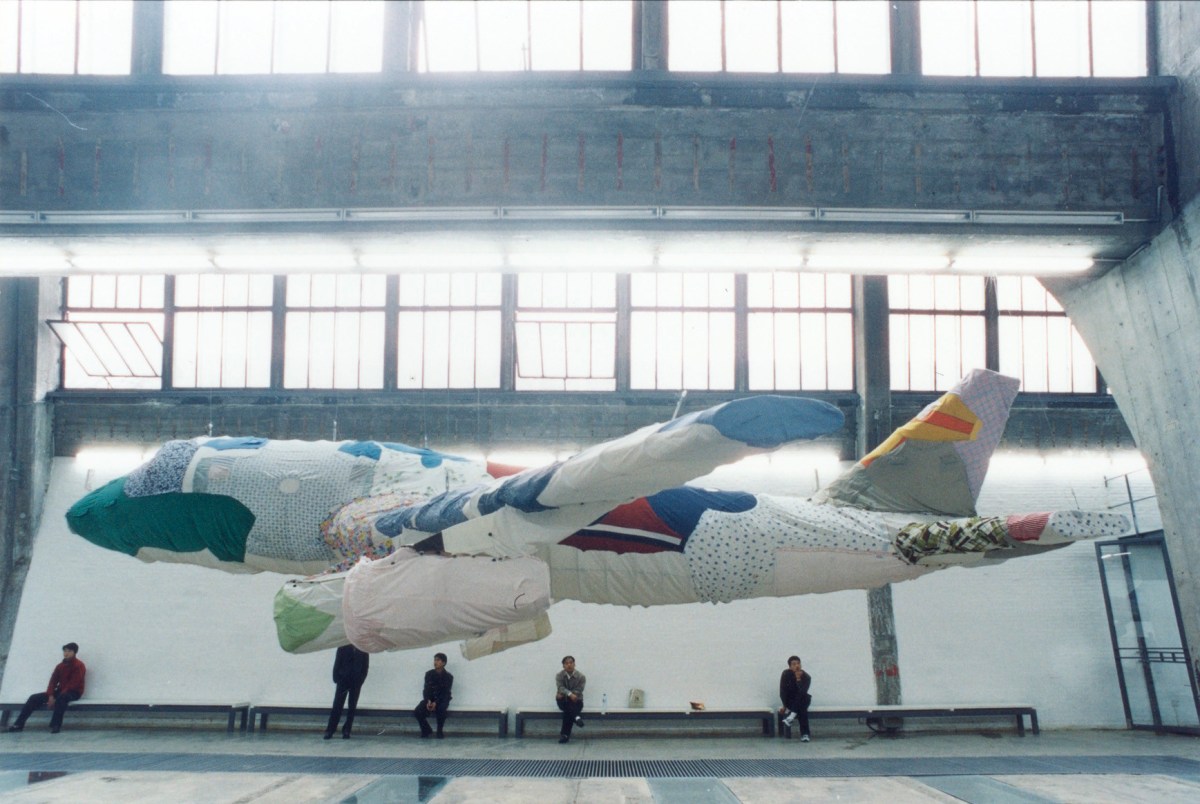
The image is clear and instantly readable. Perhaps too readable. The suitcase cities are neatly composed, their stitched towers charming rather than unsettling. A suspended aeroplane covered in old T-shirts hovers overhead. The materials carry heavy histories – migration, labour, global trade – yet the installations rarely disturb the room they occupy. The metaphor lands quickly and stays there. What began as resistance gradually becomes style.
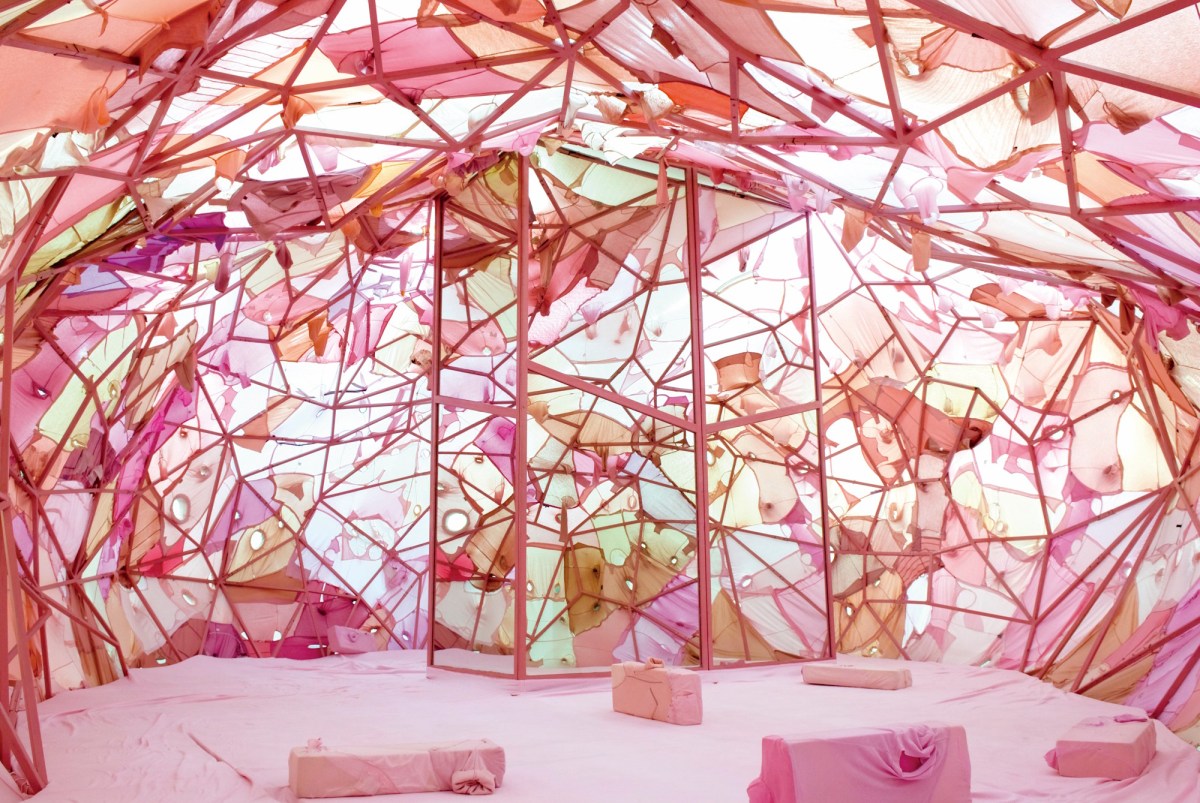
At the centre of the exhibition stands A Heart to Heart, a monumental, walk-in heart constructed from donated clothing. The work draws on the Chinese concept of xin, in which the heart and mind operate as one. Inside, the fabric walls absorb sound; the world outside softens to a low murmur. You are cocooned in clothing that once touched the bodies of strangers.
The symbolism is clear: surrounded by other people’s cast-offs, you are held by traces of lives you will never know, which form a kind of collective shelter. It suggests that we are steadied, even protected, by networks of strangers, whether we recognise them or not. Our humanity is universal. The gesture is generous but also explicit, leaving little room for doubt or discovery.
ArtsHub: Threads of Life review – Chiharu Shiota’s captivating webs of memory
This is the fault line running through the survey exhibition. The early works feel grounded in lived upheaval, referencing a Beijing in flux, and memory under threat. The later installations are larger, smoother and more internationally legible. The grief is still present, but it has been organised. When the work slows down and allows space for ambiguity, it lingers. When it leans on scale and repetition, it loses some of its heat.
Heart to Heart leaves you with respect rather than awe. It is the record of a long commitment to memory and human connection, and of the difficulty of keeping that commitment urgent over time – a reminder that even the most heartfelt gestures risk hardening into form.