You don’t enter Chiharu Shiota’s solo exhibition Threads of Life so much as submit to it. The upper galleries of London’s Hayward Gallery are spliced with thread pulled taut from floor to ceiling, turning brutalist concrete into something closer to a nervous system. It is immersive, yes – but not in the bombastic, selfie-bait sense. The effect is physical. Your stride shortens. Your voice lowers. You feel handled by the space.
For more than two decades, Shiota has refined this language. She abandoned painting in the 1990s, frustrated by its limits, and began what she calls ‘drawing in space’: saturating entire rooms with woollen thread, usually red or black. The material is humble, almost domestic. The impact is anything but. Thread becomes structure; tension becomes atmosphere.
Threads of Life review – quick links
The key to Threads of Life
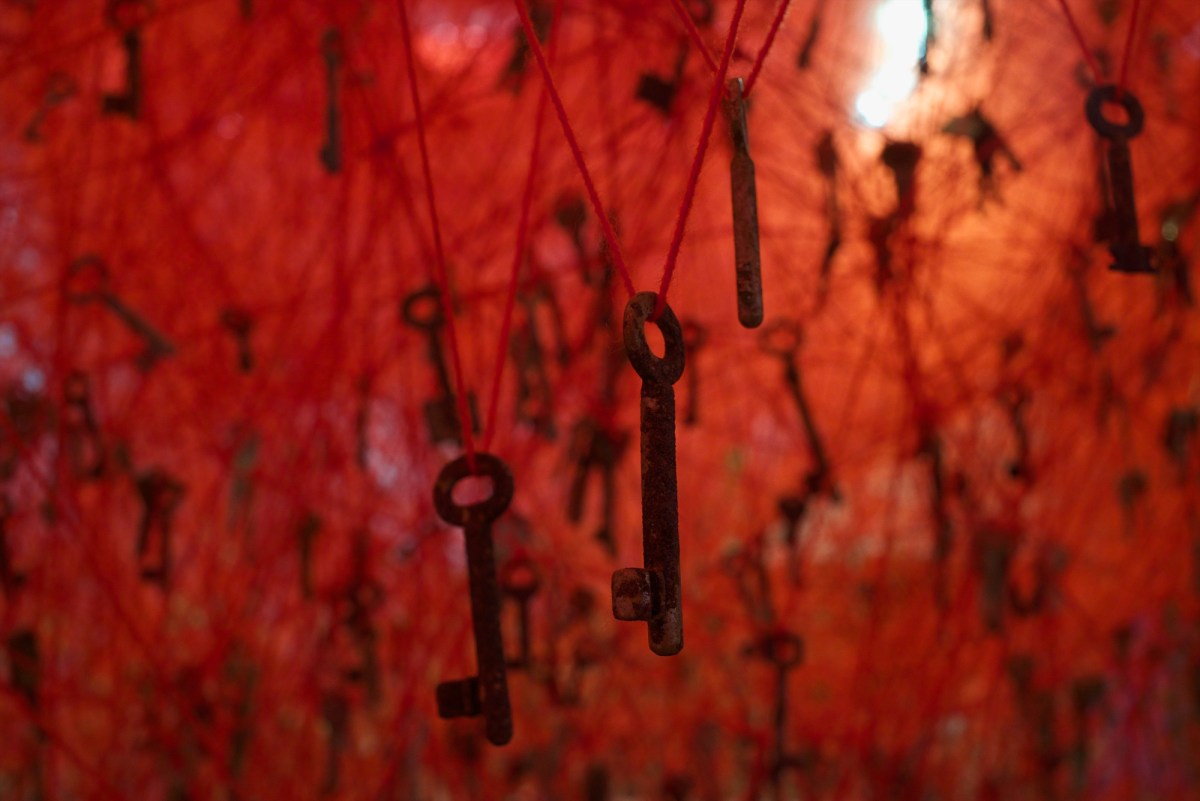
At the centre of the show is The Locked Room, an evolution of ideas first staged in The Key in the Hand, her installation for the Japan Pavilion at the 56th Venice Biennale in 2015. In this work, thousands of old keys hang in a dense scarlet web around a solitary door frame, left slightly ajar. Light catches on their worn teeth and brass bows; they glint faintly within the mesh.
Individually, keys are forgettable tools. Collectively, they form an archive of thresholds – homes entered, rooms locked, departures made in haste. Shiota has also previously spoken of keys absorbing the warmth of the hands that hold them, carrying layered memories before being entrusted to someone else. Suspended here, they feel less sentimental than forensic: evidence of trust, access, exile.
The red thread binding them together carries its own freight. In East Asian folklore, the ‘red thread of fate’ invisibly ties those destined to meet. Shiota stretches that myth beyond romance. Red reads as bloodline and circuitry, wound and lifeline at once. It is visceral without tipping into violence. Connection, in these rooms, is not a choice or a comfort but a condition.
ArtsHub: Bristol Light Festival review – turning the familiar into the unexpected
From the red of blood to the black of the night sky
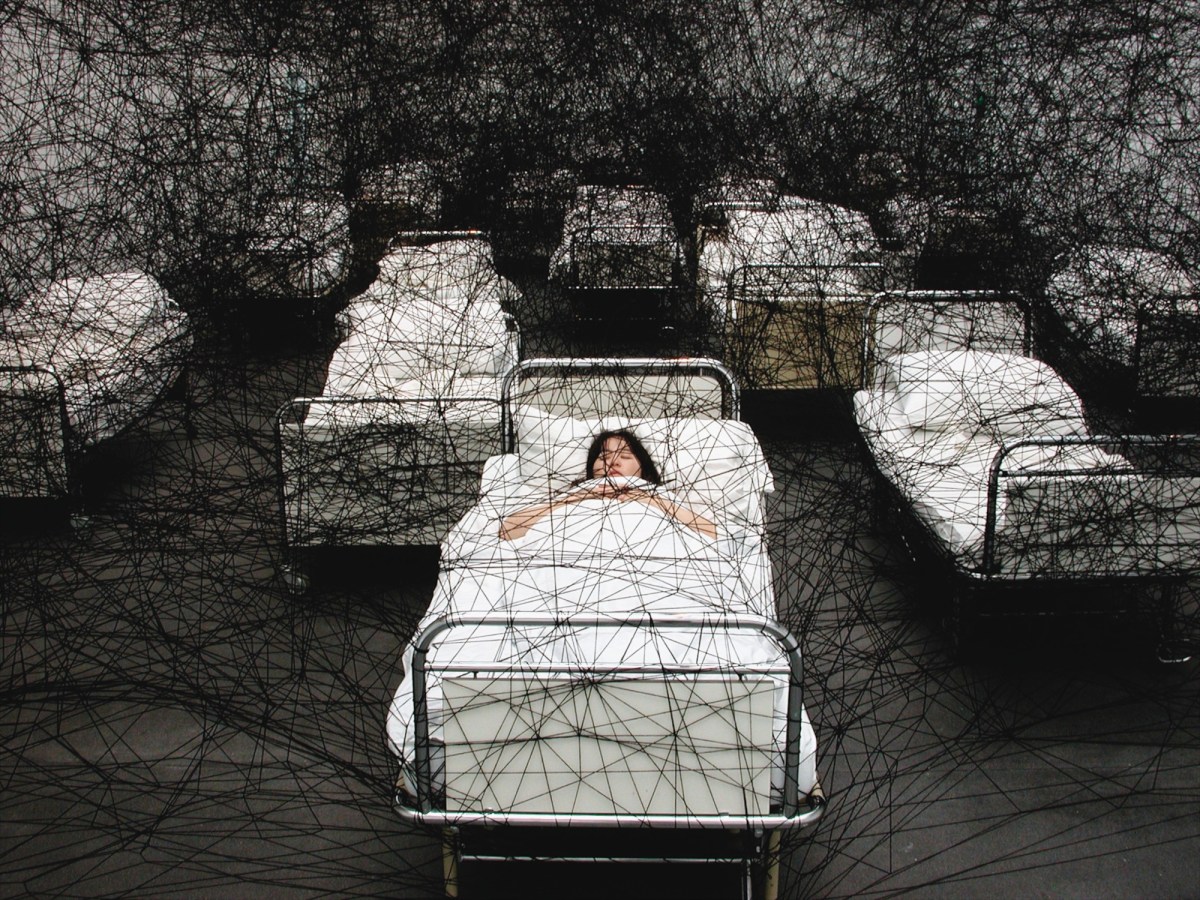
Black thread shifts the register. Shiota has described it as evoking the night sky or the cosmos, and in During Sleep that expansiveness turns inward. A canopy of dark filament hovers over a cluster of narrow white beds, periodically activated by live performance.
The image edges towards melodrama – hospital ward beneath a gothic web – but restraint prevails. The sheets are rumpled, tented in places, as if bodies have only just slipped out or lie concealed beneath the covers. For a moment you catch yourself looking for the rise and fall of breath. The beds remain empty, though not entirely vacant. The threads hold, taut and suspended. Sleep becomes a rehearsal for disappearance, a space where identity loosens its grip.
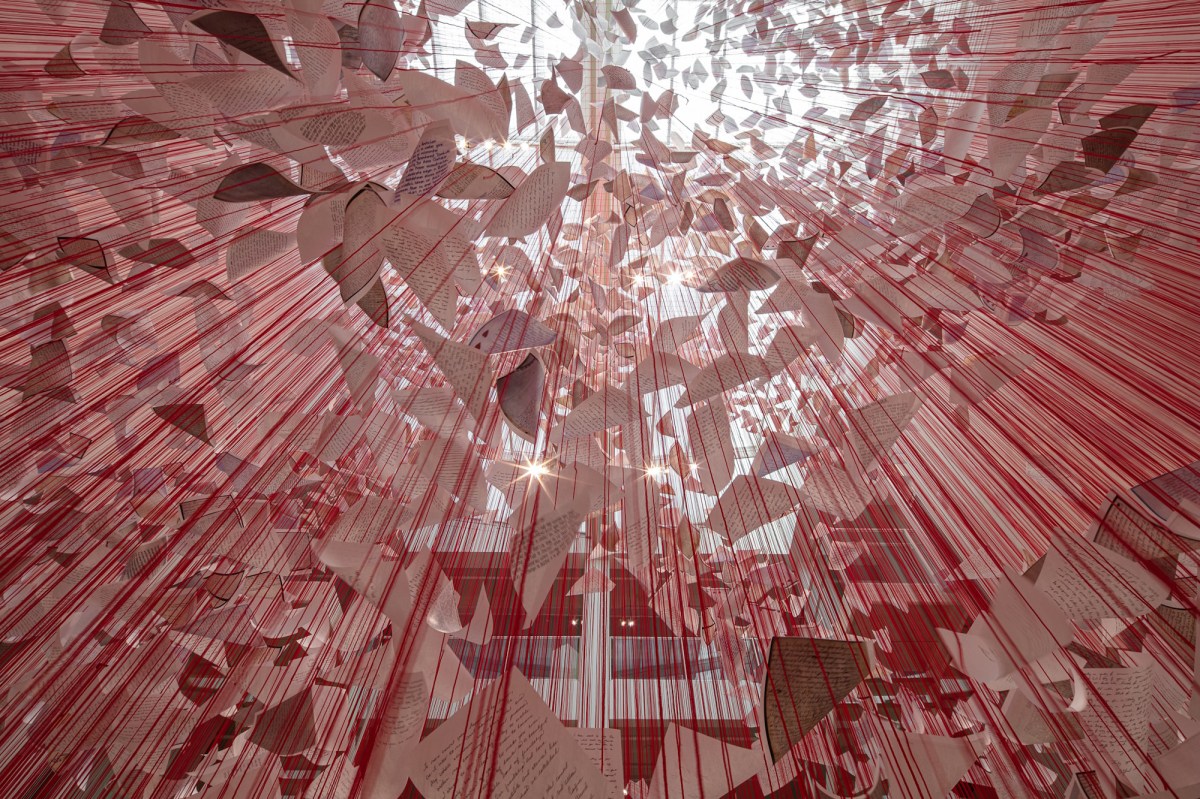
Thread is a limited vocabulary, and there are moments when the symbolism feels almost too legible. Yet constraint is also Shiota’s strength. She manipulates density, colour and tension so precisely that each gallery recalibrates the senses anew. The works resist spectacle even as they envelop you. They do not illustrate connection; they engineer it.
Stepping back into daylight, the city appears oddly unbound. Shiota’s webs offer no easy catharsis. Instead, they insist on the simple fact of entanglement – that attachment and loss are structurally intertwined, that memory clings to space long after we leave it. In an era saturated with immersive gimmickry, this is immersive art with tensile integrity: rigorous, intelligent and quietly affecting.