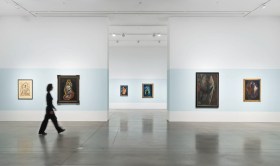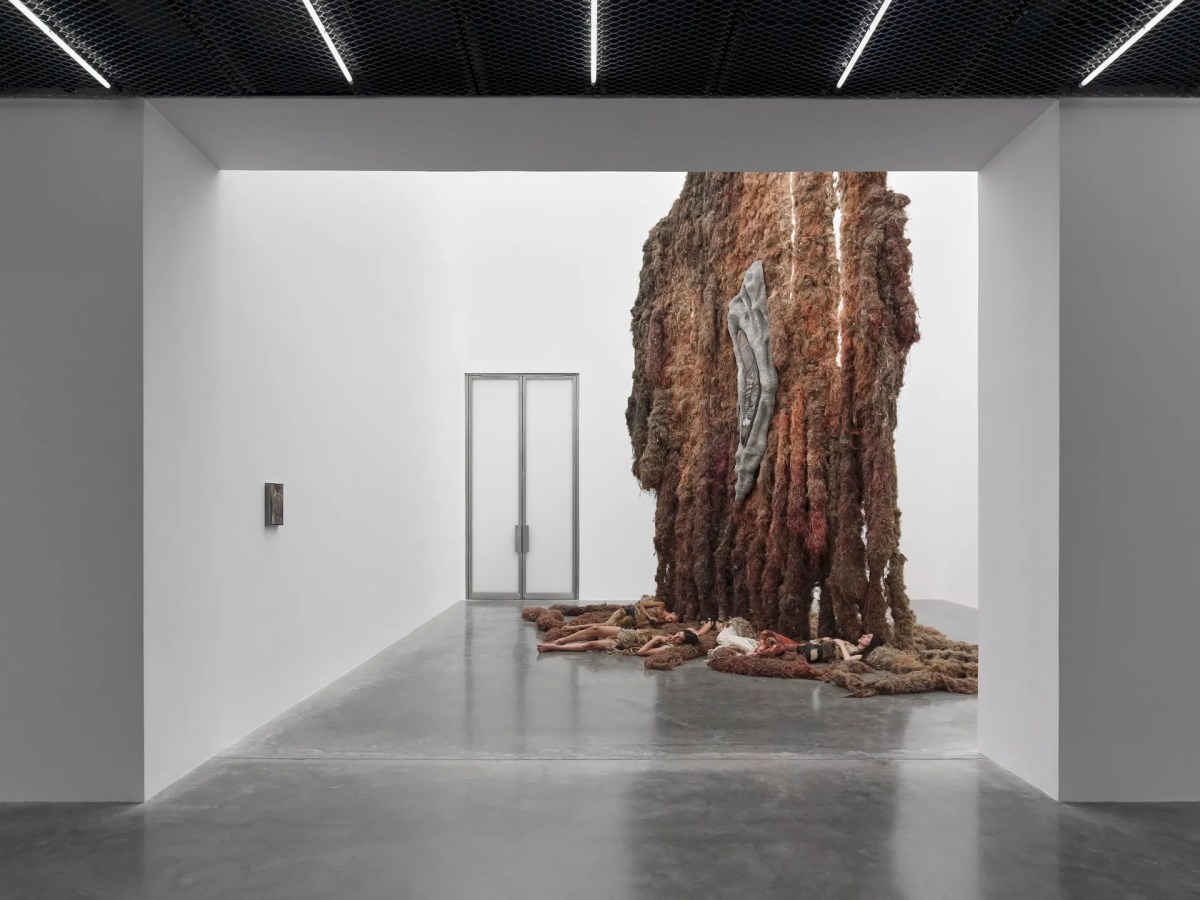
Hemp, sandstone, steel and living fungi coexist in Klára Hosnedlová’s exhibition Echo at White Cube Bermondsey. Across two expansive galleries, the Czech artist constructs an archaeo-futuristic alternative world, presenting sculptures that combine hand-worked hemp fibres, traditional embroidery, prodigious sandstone sculptures, industrial structures and living growth.
Hosnedlová, who studied painting at the Academy of Fine Arts in Prague, works at the intersection of craft, architecture and organic process. In Echo, her immense sculptures occupy a space suspended between construction and gradual transformation.
Klára Hosnedlová review – quick links
The suggestion of time
White Cube’s smaller gallery is dominated by a monumental tapestry made from raw hemp, flax and linen. Suspended from the high ceiling, the fibres fall in thick strands dyed in muted tones of rust, brown and copper. The dense, tangled mass reads ambiguously – perhaps a washed-up mat of seaweed, perhaps something excavated, or even a creature from The Dark Crystal waiting to stir.
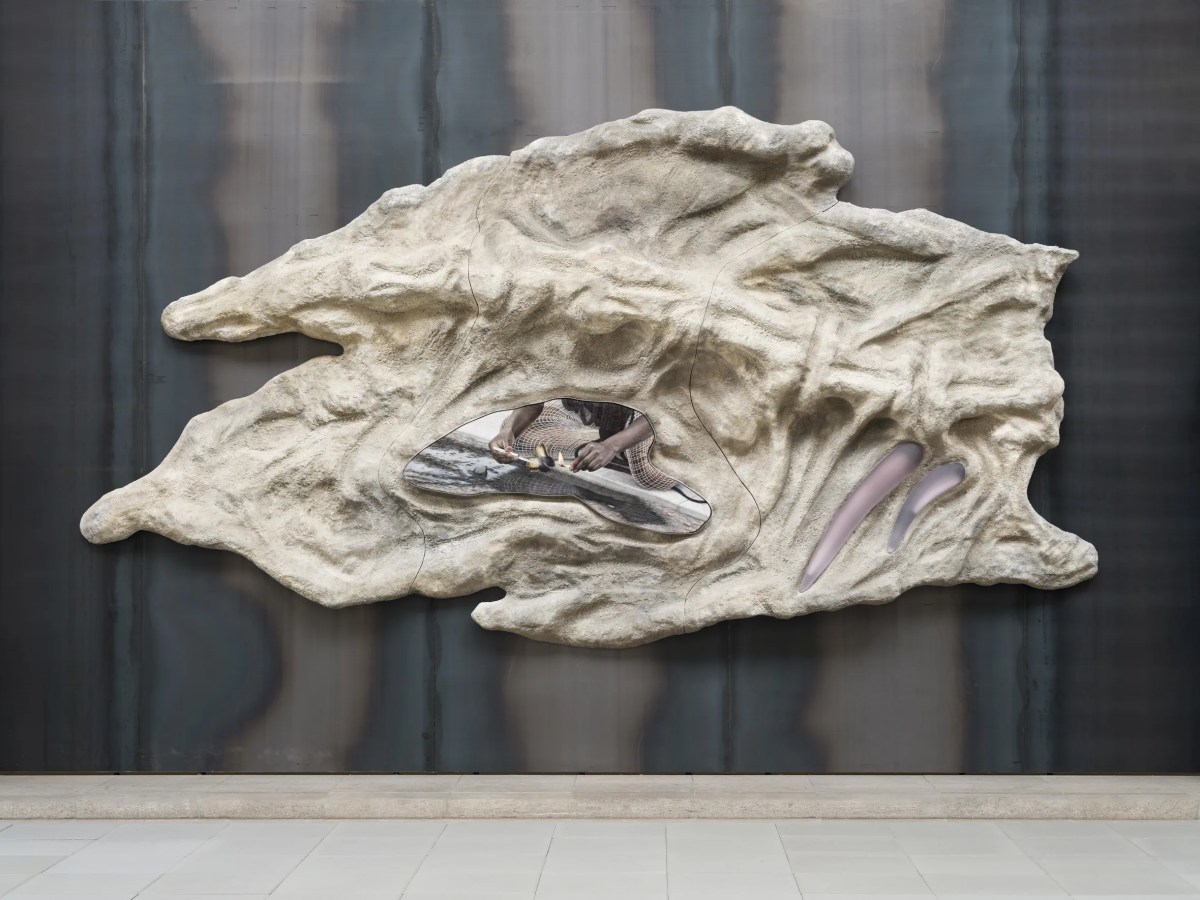
Set within this mass is a carved sandstone frame containing an embroidery of fingers holding a lit match. The image is small but striking. At first glance it is difficult to recognise as embroidery, appearing instead closer to a photorealistic oil painting. Fire appears here as both a technological beginning and a potential threat: a source of illumination that also carries the possibility of destruction.
Nearby, a second embroidered image shows a single textile fibre burning at one end, reinforcing the sense of suspended consequence. Against the weight of sandstone and the dense organic fibres surrounding it, the small flame feels unexpectedly fragile.
Organic matter and the monolithic
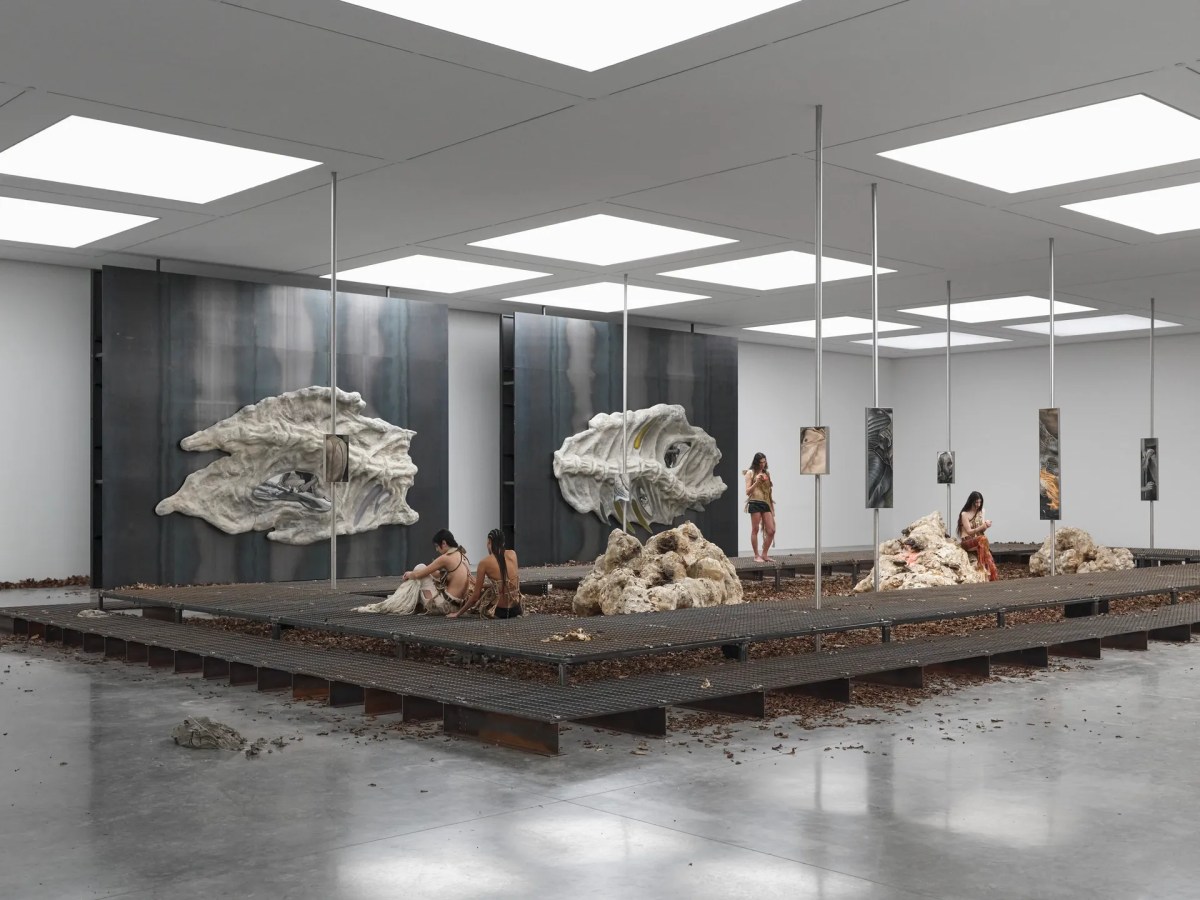
Hosnedlová’s installation expands in the larger gallery. A stepped platform made from industrial metal grilles occupies the centre of the room, recalling exposed infrastructure or the skeletal framework of a building. Steel screens, mineral-coated sculptures and tall stainless-steel poles surround the platform, giving the space the atmosphere of a stage set or experimental structure.
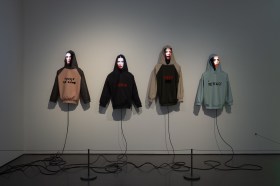
A glitching sound composition, co-created with Billy Bultheel, combines recordings of metallic scrapes and groans, hisses of white noise and stuttering, garbled vocals. Scattered across the platform are discarded garments created in collaboration with designer Emily Fuhrmann. These abandoned garments suggest a recent human presence, as though the space had been briefly inhabited and then abandoned.
At the centre of the platform, pale blocks wrapped in hemp host colonies of mushrooms. Their slow growth introduces a gentle, natural process into the otherwise harsh industrial environment. While steel and stone imply stability, the fungi quietly signal change, decay and renewal, making the installation feel more like an evolving system than a fixed arrangement.
ArtsHub: Threads of Life review – Chiharu Shiota’s captivating webs of memory
At times the installation edges towards spectacle, yet its slower processes – the gradual growth of fungi and the labour of embroidery – draw attention back to duration and care. At its strongest, Echo demonstrates how installation can operate simultaneously as sculpture, architecture and living system, balancing industrial scale with delicate gestures.
The exhibition’s title reflects this recursive structure. Like an echo carried across distance, Hosnedlová’s installations draw on elements from earlier projects and reconfigure them in new contexts. Materials and motifs reappear in altered forms, allowing each exhibition to extend the last.
Echo ultimately reflects on how materials hold time within them. Steel and stone promise permanence, yet fibres and fungi quietly undermine that certainty. Hosnedlová makes it clear that construction, decay and human traces are inseparable; what feels monumental is also impermanent, and her work continues to evolve long after it is first installed.