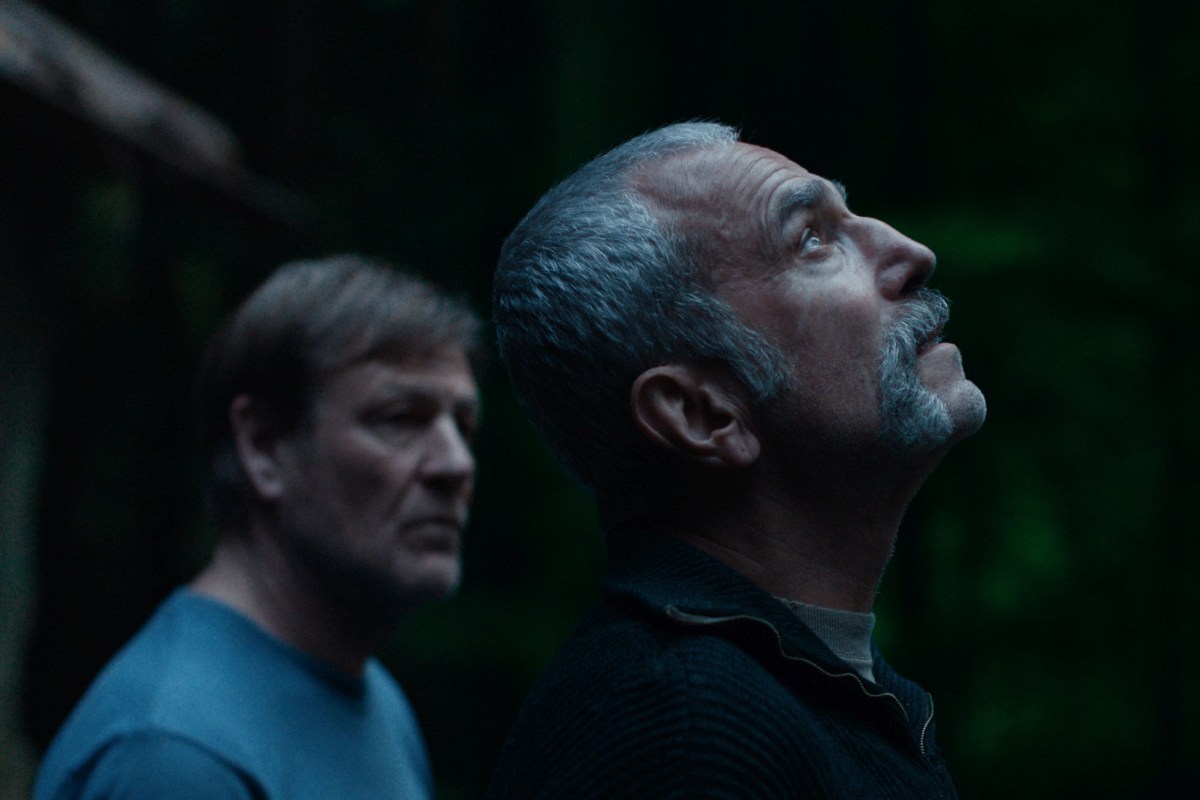
Eyebrows were pointedly raised when Ronan Day-Lewis’ debut directorial feature, Anemone, bowed at the New York Film Festival. Starring his suddenly un-retired daddy Daniel Day Lewis, with the knighted three-time Oscar winner returning from a seven-year absence following 2018’s Phantom Thread, Anemone ignited the familiar refrain of ‘nepo baby’.
Is that label fair? It’s not at all uncommon for kids to follow their parents into similar careers, but when it occurs in the movie industry, so-called nepo babies raise our collective ire. No doubt that’s because it’s a business endowed with rarefied privilege, one in which the ‘haves’ tend to jealously guard their power, drowning out a diversity of voices.
However, none of us can help being born with a certain surname, though we can certainly decide how and to whose benefit we leverage our hand-ups. So, should we narrow our focus to whether their work demonstrates merit, regardless of the doors held wide open for the nepo class, of which Ronan Day-Lewis belongs?
Whatever your stance, Anemone is likely to try your patience.
Anemone review – quick links
Wrapped in brown paper
Signs are not good from the off. Day-Lewis junior elects to open his miserabilist portrait of wounded masculinity with a brown paper side scroll, displaying the atrocities of the Northern Ireland Troubles in the style of a child’s crayon-scrawled drawings.
Only they aren’t convincingly childlike, with far too much detail in the menacing faces of combatants, pitted across that bloody divide between a still flexing British empire of colonial invaders and those who would die, and kill others, for a reunited Ireland. This opening credit artifice, a too-woolly fill-in for those not already in the historical know, is irksome, narratively, both cloyingly naff and tenuous at best.
This vagueness bleeds through Anemone. Opening on a suburban home in some indeterminate working-class corner of England in the 80s – the film was shot across Chester, Manchester and in Wales – we meet Sean Bean’s stoic Jem.
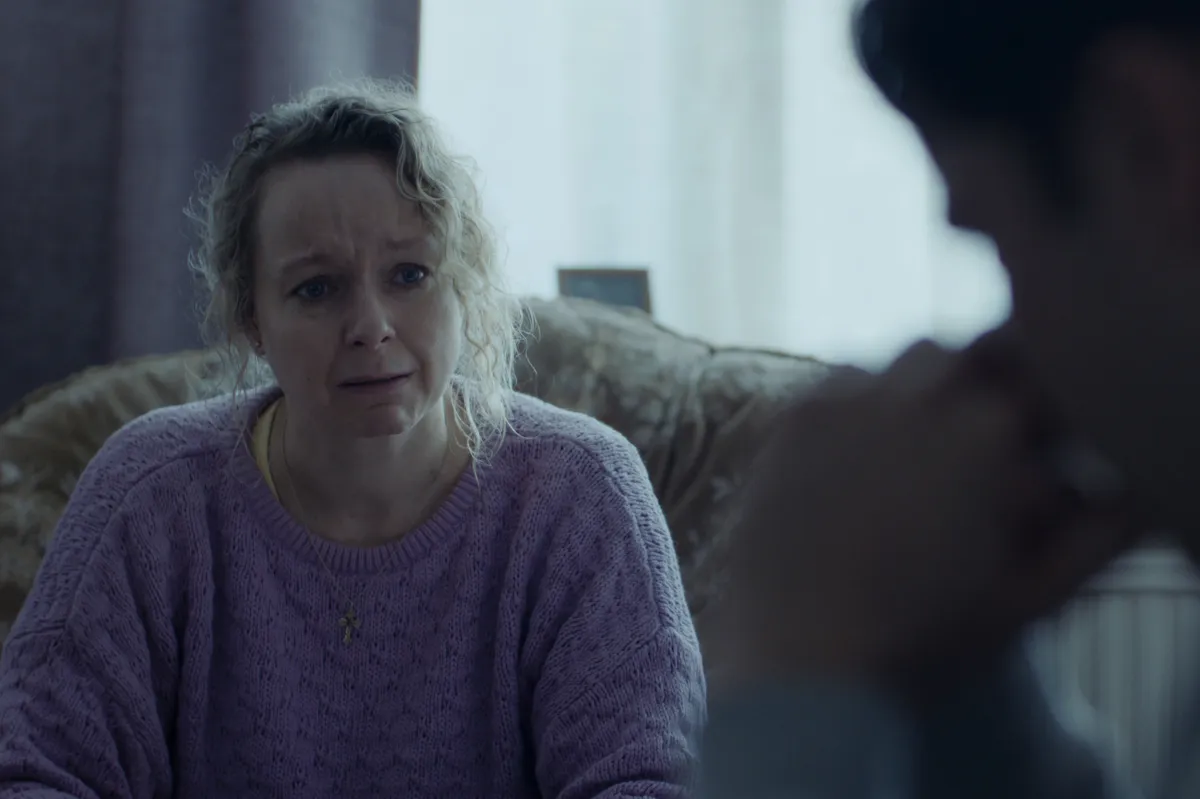
A veteran of the Troubles, he straddles his motorbike and waves goodbye to his partner Nessa (Samantha Morton) and son Brian (Samuel Bottomley). Only Brian isn’t his biological son, as we’ll eventually come to learn in this two-hour slog. Instead, Jem’s brother Ray (Daniel Day-Lewis) donated the DNA.
Day-Lewis plays a mirror image of his characters in director Jim Sheridan’s IRA dramas In the Name of the Father (1993) and The Boxer (1997). Here, he’s a former British soldier. Damaged by his time serving, he walked out on a pregnant Nessa, who continues to write letters to him begging him to meet his son.
Which is why Jem, who has fallen in with Nessa, gets on his bike and heads to Ray’s self-exiled hiding place, secret-squirrelled away in the depths of a fairytale-like forest that’s apparently permanently troubled by stormy skies and bracing winds, in yet another clumsy visual metaphor.
Watch the trailer
Anyone for cod?
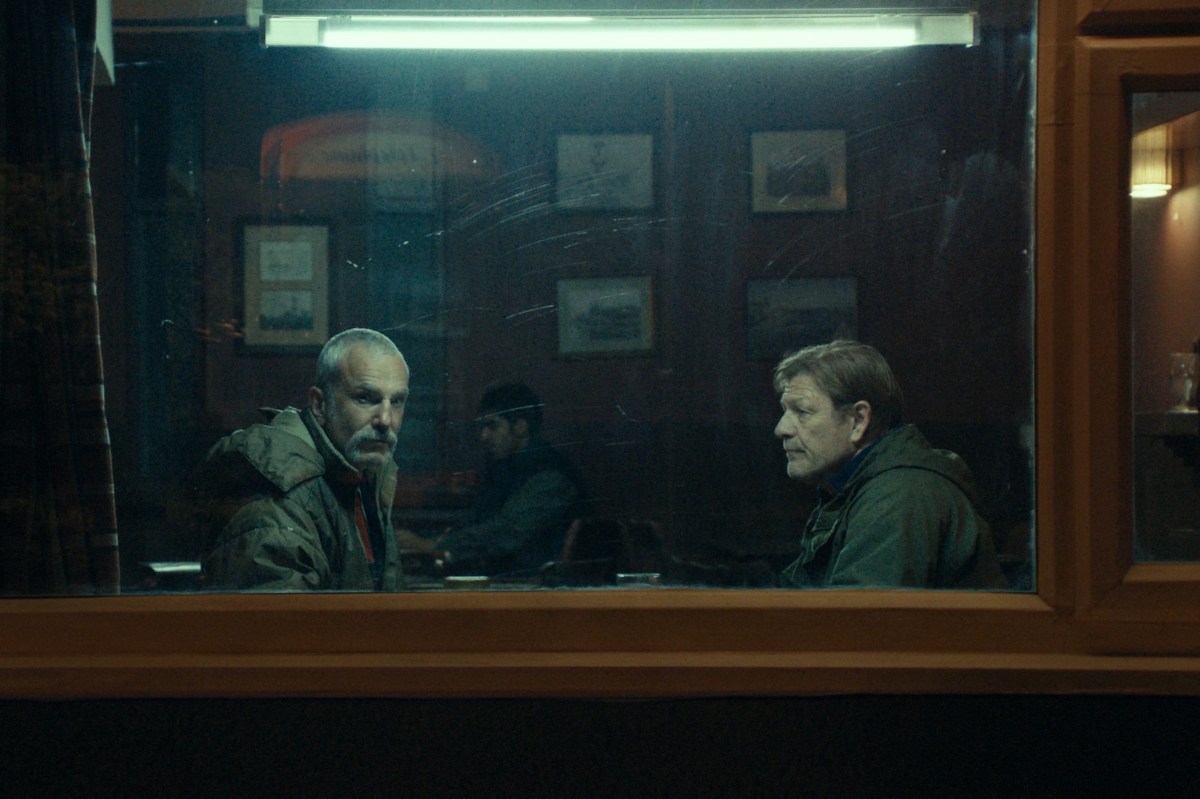
Yes, these British soldiers witnessed harrowing atrocities, as glimpses of human offal strung up on tree branches and blood gurgling down drains suggest. But as with any occupying army, there’s no doubt they’re responsible for their unfair share, which is why Ray has cloistered himself away. But it beggars belief Ray’s apparent seclusion isn’t so very far removed that the brothers can’t pop down the local pub for a pint.
No matter what beef the brothers have with one another – and you’ll be kept waiting on the details – it’s a bit much to expect us to sit with them in glowering silence for great swathes of the opening act.
ScreenHub: Sirât review – a tempestuous work of brilliant cinematic art
Bean and Day-Lewis senior are sterling actors, but even they struggle to ground Ronan’s lumbering screenplay, co-credited to his dad, in authenticity. These taciturn soldiers of misfortune may have northern accents (the latter’s wobbling way more than one might expect of an infamously Method actor) but they eventually speak at one another, delivering torturously hefty monologues that sound like cod-Shakespeare, stretching credulity.
One of the most brutal of these diatribes, referencing the Catholic church’s industrial sexual assault of children, is somewhat undercut by the bizarre decision to have Love Lies Bleeding cinematographer Ben Fordesman’s camera linger on the speaker’s butt. A move that may well be intended to amplify our discomfort, but it’s gratuitous and yet another example of the leadenly obvious.
Visionary or ordinary?
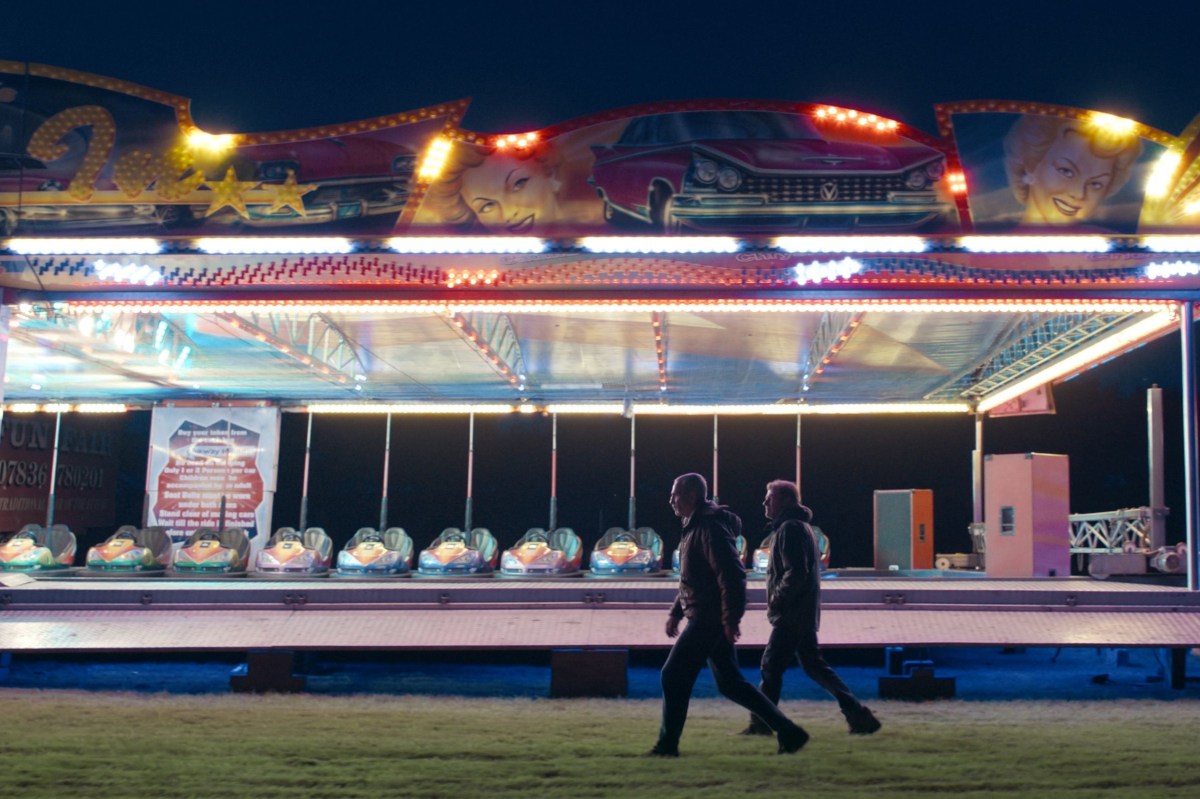
Still, Fordesman’s work is the saviour, here. Full of richly drawn compositions of great depth that are handsomely lit and move kinetically, Anemone’s visual flourish is by far its strongest aspect, astonishingly so.
That said, dream-like fantastical elements – like a diaphanous, human-faced horse ankle-deep in a moonlit lake, or a giant fish corpse gouged with wounds that’s washed downstream – aren’t so much visionary as afterthoughts inserted for attention.
On that note, while composer Bobby Krlic, aka The Haxan Cloak, delivers an impressively sonorous synth score that does the trick, rumbling our bowels, it’s whacked up way too loud for such a quietly lingering film.
By Anemone’s end, we wonder why on earth Jem would think Ray’s bitter and angry recluse, indignant at his brother’s intrusion, would be of any use offering guidance to poor Brian’s similarly lost soul, a lad who has foolishly followed his father(s) into the army.
A promising young actor, Bottomley has done great stuff since his first feature appearance in Paddy Considine’s Tyrannosaur (2011). But he’s hamstrung as an addendum here, as is Morton, in a film anchored on toxic masculinity. Still, they get a good bit more to do than Safia Oakley-Green, almost entirely squandered in a generic girlfriend role.
When the long-teased storm breaks glass in a biblical downpour, it feels like a Hail Mary throw that can’t save Ronan’s undercooked debut. Going back to the opening question, Anemone feels, at last, like it only got made because of you know who.