When my editor was considering covering Don’t Look Back in Anger, Dylan Southern and Will Lovelace’s concert movie documenting the Oasis reunion tour that ended the long-simmering feud between the Gallagher brothers, Liam and Noel, she asked if the band had broader appeal than for folks of our particular vintage.
At that stage, I hadn’t laid eyes on the documentary about the Oasis Live 25 tour. Now that I have – and unexpectedly wept great salty, sobbing rivers – I’m going to address this entirely reasonable concern on multiple levels.
Oasis: Don’t Look Back in Anger – quick links
The soundtrack of an era
Am I an Oasis fan? The simplest answer is no. Don’t get me wrong, the bolshie, working-class lads with a swagger wider than the Manchester Ship Canal were a massive part of my teenage years.
Definitely Maybe, their debut album, was the sound of summer in 1994. Oasis’ hands-in-the-air anthem Live Forever, their third single and first to chart in the top 10, released at the start of August, with the album closing out the month. Their sound was a direct counterpoint to the era’s mopey grunge, as typified by Nirvana (a personal fave).
I was 14 years old and so in the closet I didn’t even know I was gay, though still mercilessly bullied for it anyway, alongside a shopping list of other perceived faults that included having curly, then-ginger hair.
Developing a taste for alcohol and mild rebellion, I refused to go to church and embraced protest on social justice issues. Sneaking into pubs and clubs, we mostly boozed at house parties where we’d sink (and spew) such delicacies as three-litre plastic bottles of filthy White Lightning cider and whatever the hell MD ‘Mad Dog’ 20/20 was. It looked a lot like Drano.
By the time Halloween rolled around, Definitely Maybe’s fourth and final single, Cigarettes & Alcohol, fit the bill. It spent 82 weeks in the UK Top 100 after debuting at number seven.
In 2009, it all went away. With an increasingly aggro attitude boiling between Liam and Noel, Oasis officially broke up after the brothers had a fistfight backstage at the Rock en Seine festival in Paris, almost exactly 15 years after Definitely Maybe arrived.
Footage of the French crowd at first confused, then pissed off, as the tannoy announces Oasis are not only not coming on, but that the band has officially cancelled their world tour and themselves, opens Don’t Look Back in Anger.
But for me, personally, Oasis was a moment in time that was long done before then. They got me through my high school exams, as did The Beatles, but for whatever reason, perhaps over-playing, perhaps stress-association, I very rarely listened to either band after heading to uni.
So why did Don’t Look Back in Anger hit me right in the feels?
A blockbuster reunion
It’s easier to point to why Oasis still matters more broadly. The Oasis Live 25 tour, kicking off in Cardiff and concluding in São Paulo after multiple gigs at Manchester’s beloved Heaton Park, took in 41 stops and sold $443 million dollars’ worth of tickets.
A clutch of singles re-charted off the back of the reunion tour, with Live Forever reaching a new peak at eight. But it wasn’t just the usual suspects from the 90s flocking to these monumentally proportioned stadium gigs.
Documented with visceral visual flair by keen-eyed cinematographers Lol Crawley (Wicker, The Brutalist), Haris Zambarloukos (Beetlejuice Beetlejuice) and James Laxton (Moonlight), Don’t Look Back in Anger captures a crowd that’s clearly as youthful as it is crusty. Noel gets emotional when he notes that a generation took Oasis into their hearts in the 90s, and then passed that on to their children.
Southern and Lovelace – who also co-directed Meet Me in the Bathroom, the immersive snapshot of New York’s music scene in the noughties – work with their gun editors Martina Zamolo and George Cragg to intersperse astonishing concert footage with more personal insights from fans young and old about what Oasis’ music means to them.
One story, in particular, sings. A mum relays that one of the few times her non-verbal son has spoken to her was to ask her to play his favourite Oasis song, I Wanna Talk Tonight. In this way, Don’t Look Back in Anger is more about connection through music and its uncanny ability to lift our collective spirits than it is a portrait of dislocation.
Watch the trailer
Roll with it
You see, Don’t Look Back in Anger isn’t really about the Gallagher brothers finding their way back to peace, perhaps for the first time.
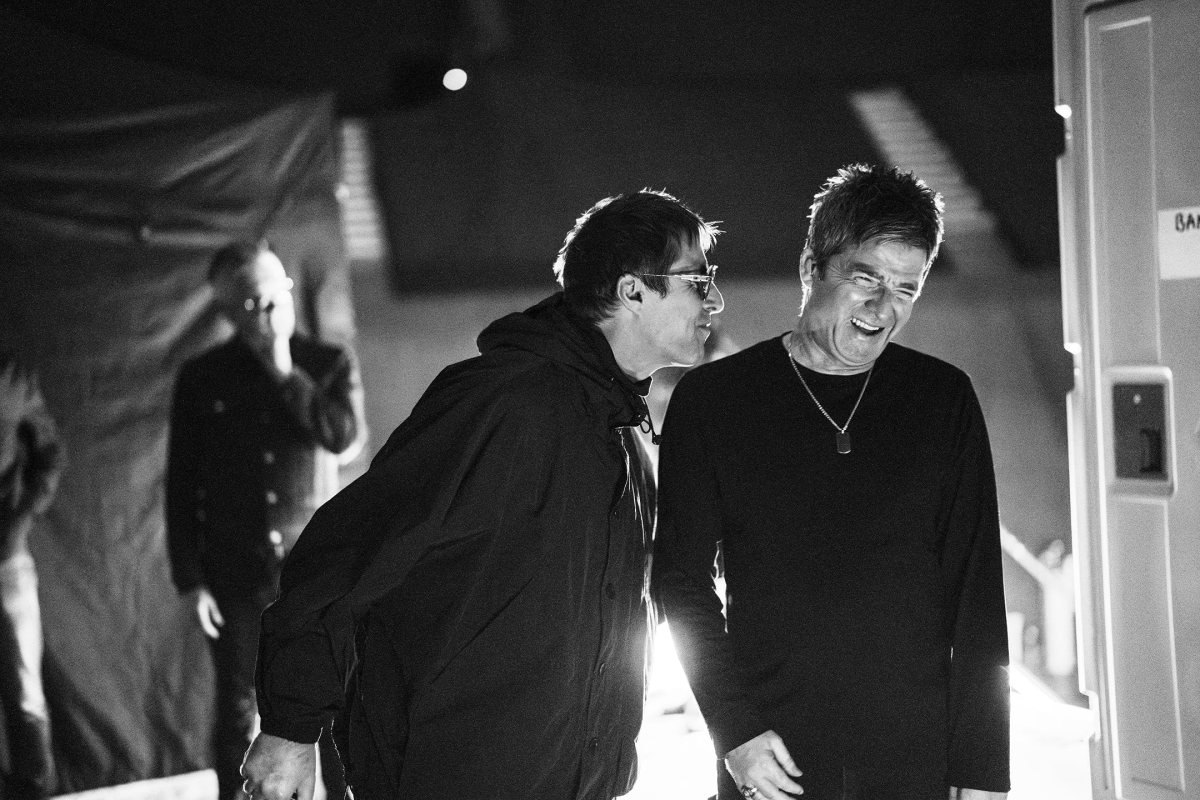
If that’s what you’re after, you won’t be disappointed. Setting the tone, a hilariously cantankerous Liam walks in and out of rehearsals while a bemused but no longer furious Noel stares at the closing door. A later sit-down together in an empty pub underlines just how far they’ve come since 2009.
At the start, Noel says he doesn’t have forgiveness in his heart. By the end credits, he’s singing a new tune. The first time they walk out on stage, Liam takes Noel’s hand and holds it aloft like he’s Muhammad Ali.
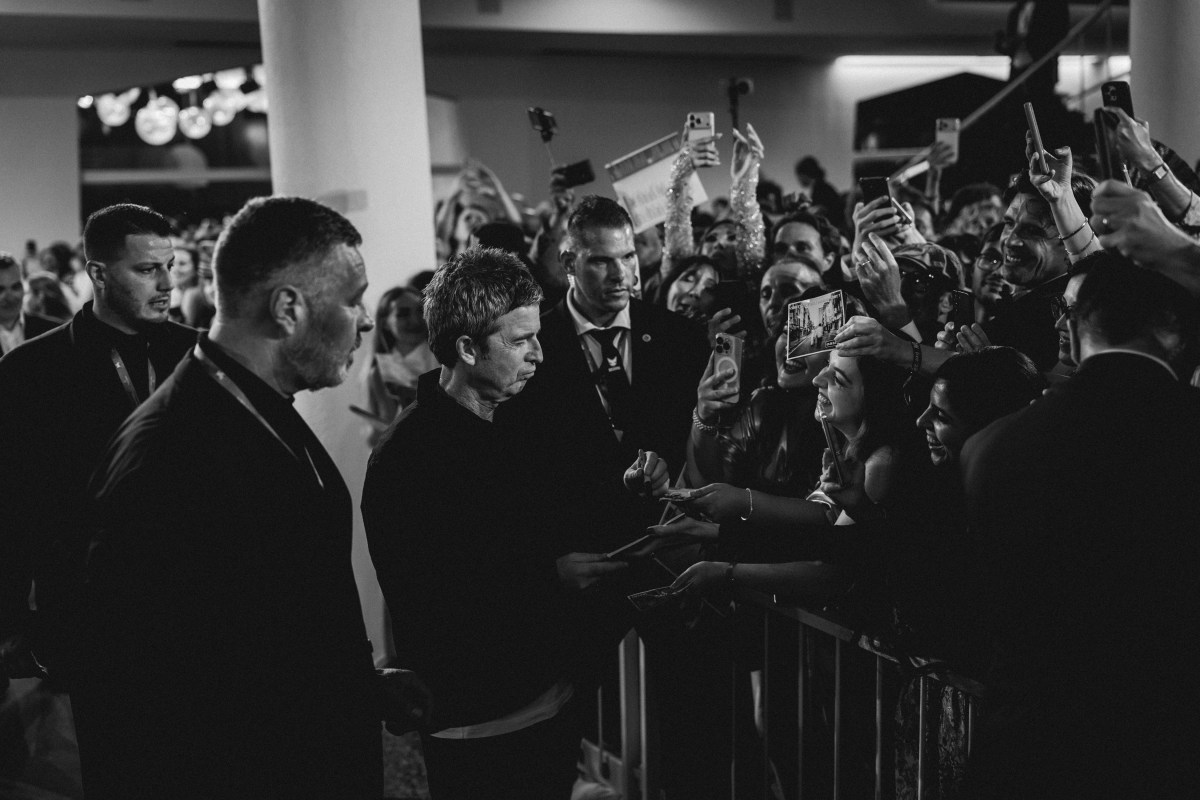
That concert footage shows how many men feel more able to emote at a gig, much like sports, telling their mates they love them, hugging and even kissing in a way that punctures the rigid shield of performative masculinity.
Noel was so overwhelmed by that Cardiff response he can’t recall the first 40 minutes of the gig. Throughout the tour, spotting fathers and sons together, arm in arm, he’d turn around and face backstage to keep it together.
There’s catharsis in the mundane; the brothers can now share silly videos with one another. Liam, ever the comedian, says he would have been done with their shit after 2009. He’s genuinely emotionally floored that the fans stayed true.
Again, it’s the generational bridge that’s been built that brings hope. The brothers didn’t speak to one another for 15 years, so their children grew up not knowing one another. When their dads buried the hatchet, reluctantly, the kids bonded instantly and are now thick as thieves.
With a writerly guiding hand from Locke and Dirty Pretty Things scribe Steven Knight, Don’t Look Back in Anger is as much about what lies between the lines.
It’s about how music can bring us all together. Watching the brothers heal their wounds while filling the hearts of their ever-loyal fans and a new generation made me feel like I was 14 all over again. And that’s the story, morning glory.