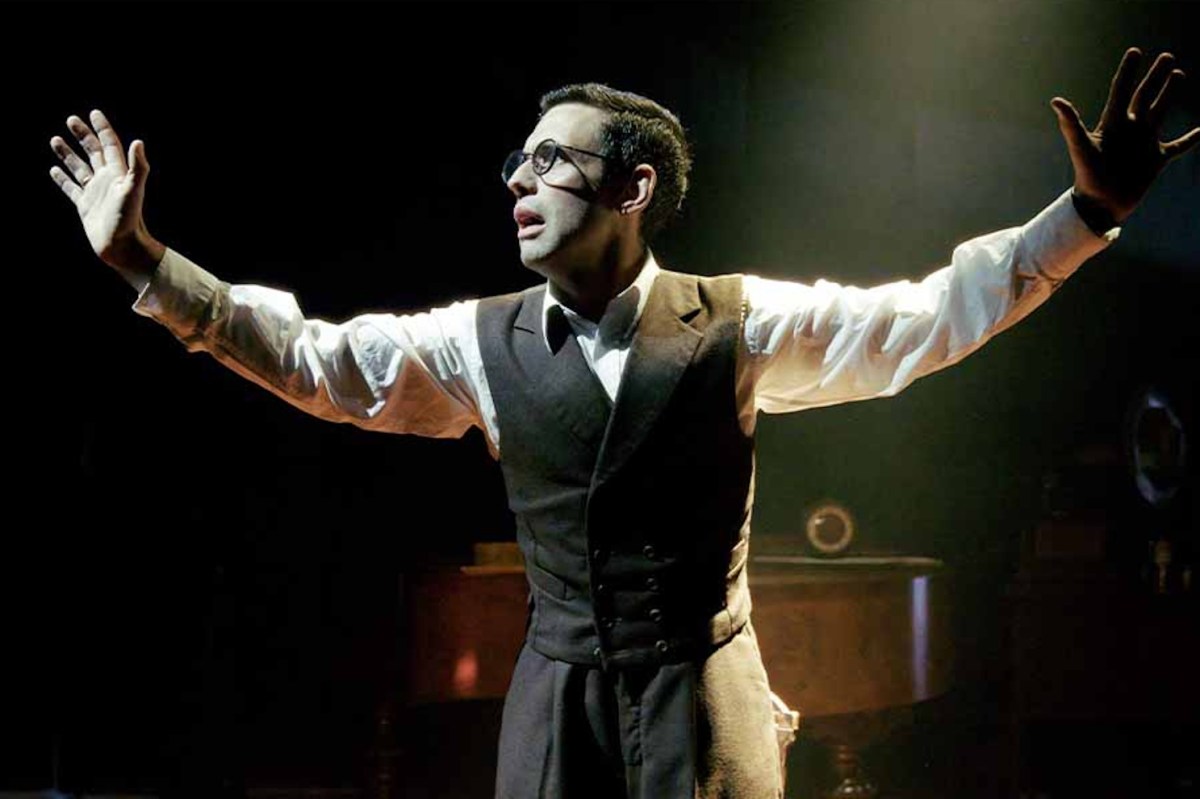
What does an artist owe the truth when freedom itself is threatened? Holy Fool, the new play written by Rosalind Adler and Lea Sellers and directed by Kate Fahy, finds extraordinary complexity in the compromises required to survive under political oppression. Using the life of Russian composer Dmitri Shostakovich as its subject, it is less a conventional biography than a thoughtful examination of what happens when artistic freedom is also a matter of personal survival.
At the height of Stalin’s regime, Shostakovich was celebrated as a great composer one moment and denounced the next. His music could make him; it could also destroy him.
Under constant threat, he was forced to navigate an impossible space between public conformity and private resistance, knowing that the wrong note, word or association could have devastating consequences. And yet he continues to write in Holy Fool, making his ‘mesmerising musical magic’, and saying simply ‘I compose because I cannot not’.
Holy Fool review – quick links
Art, truth, freedom and compromise
The strength of Holy Fool lies in its refusal to turn this predicament into a simple story of musical martyrdom. Shostakovich is not that, nor is he a radical or a dissident. Instead, the excellent script presents him as an awkward, vain, funny and intensely intelligent man, capable of reluctant compromise because that’s what survival demands. The inherent moral ambiguity in who creates and judges the art if ‘art belongs to the people’ gives the play much of its power.
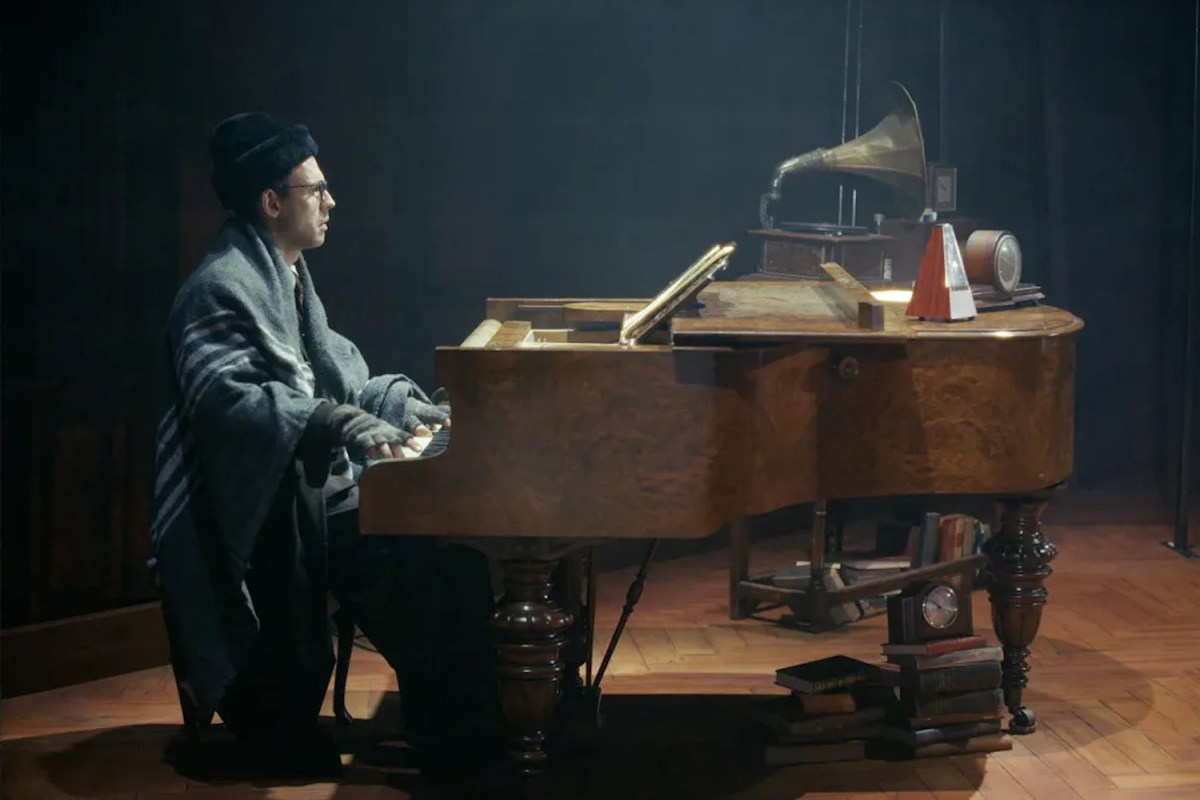
The Fourth Symphony, composed and then hidden for decades, is used to good effect as a dramatic motif. Yet the play is not really concerned with Shostakovich’s music. Its subject is the much wider question of art and freedom. What does it mean to make art when the state demands obedience? How much artistic integrity can survive when the consequences of dissent are potentially fatal?
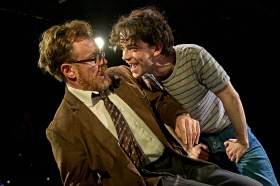
Benjamin O’Mahony is outstanding as Shostakovich. Rather than presenting him as an egotistical cultural icon, he gives us a deeply human figure, a composer but also a husband and father, struggling with this exhausting psychological burden.
O’Mahony allows the character’s humour, vanity and vulnerability to coexist with his formidable intelligence. The play spans several decades, and his ageing is conveyed through subtle shifts in physicality rather than theatrical transformation. It is a remarkably controlled performance, made all the stronger because he doesn’t ask for our sympathy.
From artistic inspiration to the grind of daily life
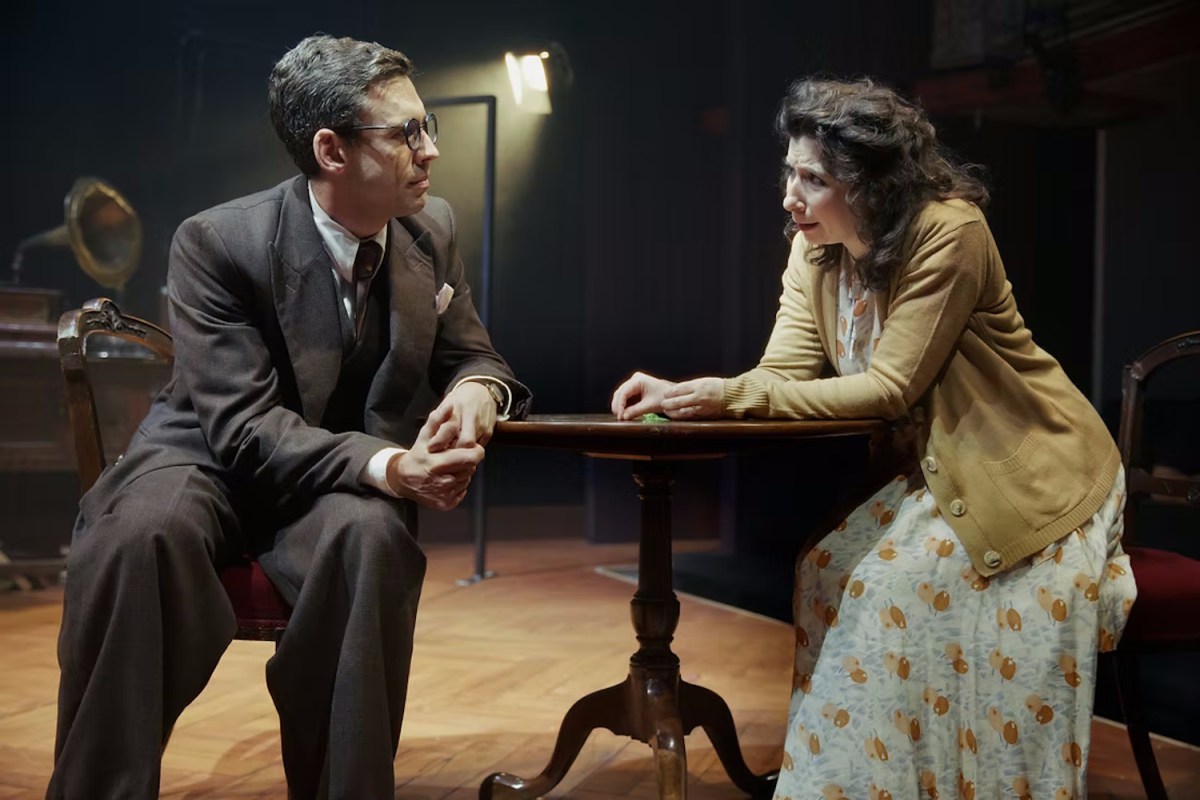
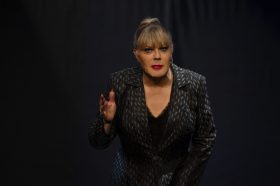
Jenna Augen is equally compelling as Nina, Shostakovich’s long-suffering wife. Sharp, witty and fiercely intelligent, she is more than the conventional supportive spouse. Augen captures the warmth of their relationship but also the frustration and fear that run beneath it. Her comic timing is beautifully judged, but when Nina’s accumulated anger finally erupts, the effect is all the more powerful.
Fergus O’Donnell brings warmth and finely calibrated humour to Izaak, Shostakovich’s friend and admirer, while also taking on other small roles with considerable versatility. His performance suggests that friendship itself can be a form of resistance and is a reminder that ordinary human relationships can survive the machinery of political power.
Phoebe Pryce is similarly impressive as Katya, bringing intelligence, volatility and vulnerability to her character. Both actors help expand the play beyond its central figure, creating a convincing ensemble portrait of lives shaped by forces beyond their control.
Restrained and powerful directing
Fahy’s direction is crucial to the play’s success. The performances remain restrained and psychologically credible, resisting the temptation towards grandstanding or easy political polemic. Holy Fool understands that tyranny is most effectively explored not through slogans but through the intimate decisions people make when confronted with fear.
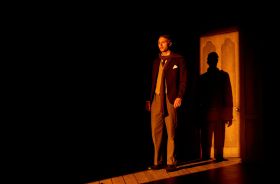
The result is an ensemble piece that keeps its focus firmly on real people rather than historical spectacle. We have all seen too many tedious plays where the actors stride the stage mouthing their political messages. It is the understatement here that makes Holy Fool so much more real and powerful. The intimate staging at Park Theatre, and the evocative set by William Fricker, with its grand piano and metronome, all add to the dramatic tension.
This approach also makes the play feel strikingly contemporary. The precise political circumstances may belong to another era, but its questions about censorship, ideological pressure, institutional power and speaking out against a prevailing orthodoxy are crucially relevant today.
State surveillance is also the theme of The Lives of Others opening this month at the Adelphi Theatre, and while Holy Fool does not posit a direct equivalence between Stalin’s Russia and today, it is still very much of the moment. It’s impossible to not think about social, political and artistic freedoms in our contemporary era.
Holy Fool offers no easy answers, and that is one of its considerable strengths. This is a sophisticated, intelligent and deeply human play about choices, principles and survival, given particularly effective expression through Fahy’s restrained direction and four excellent performances.
It reminds us that the most revealing stories about political oppression are not necessarily those about heroes and villains, but about ordinary people doing what they must. Holy Fool really is a memorable piece of theatre and simply unmissable.