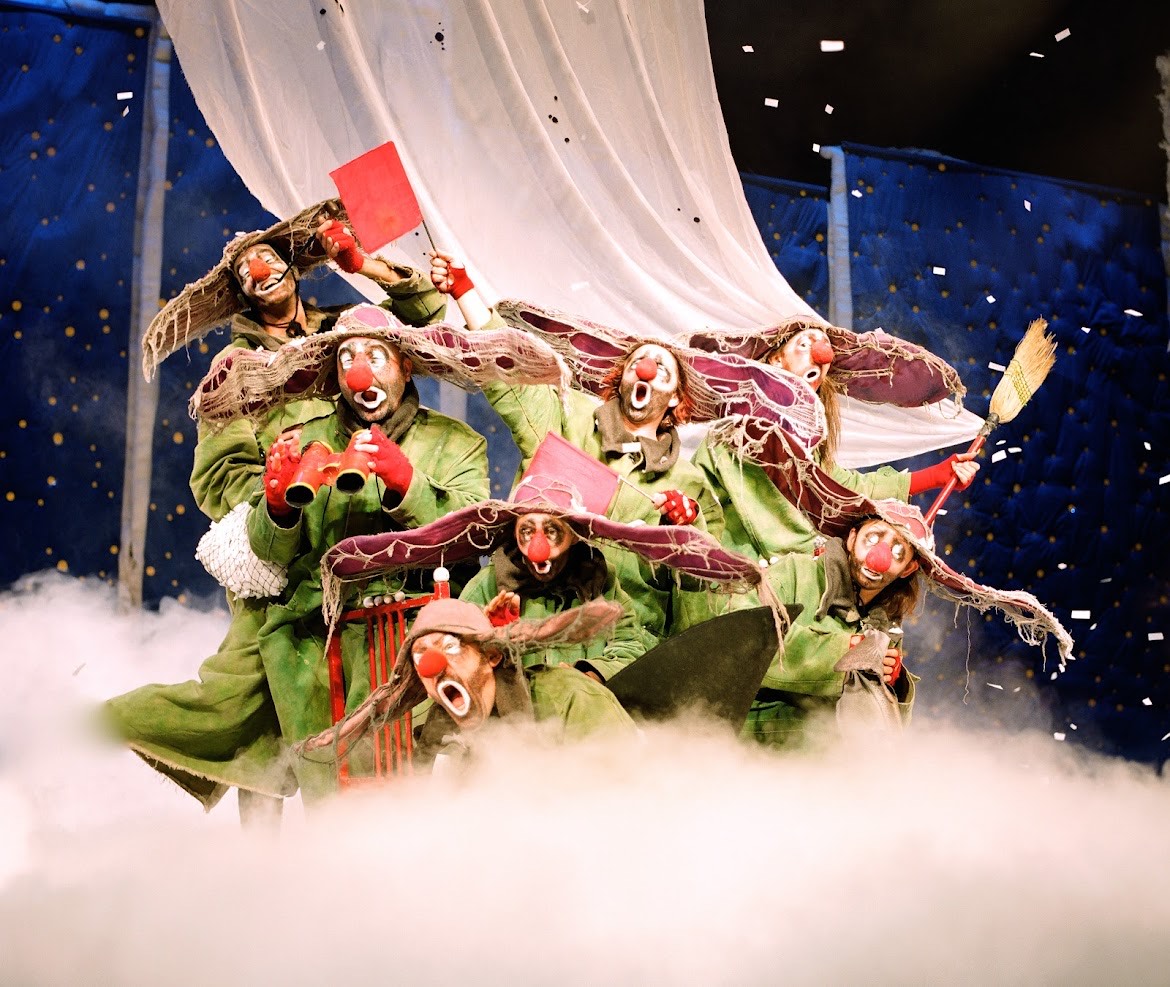
Slava’s Snowshow is one of the most inventive and influential works in contemporary clowning and physical theatre. Created by Russian master clown Slava Polunin and touring for more than three decades, the production continues to demonstrate why it is regarded as a benchmark of modern visual storytelling. It’s a status that has been reaffirmed in its latest visit to Birmingham.
A work that blends poetry, chaos, tenderness and pure theatrical invention, Snowshow unfolds through a sequence of dreamlike vignettes, shifting tone and emotion without warning. Polunin’s philosophy of being a ‘silent storyteller’ is at the heart of the experience; not a word of meaningful dialogue is spoken, yet meaning is everywhere.
Slava’s Snowshow review – quick links
Meaning in every movement
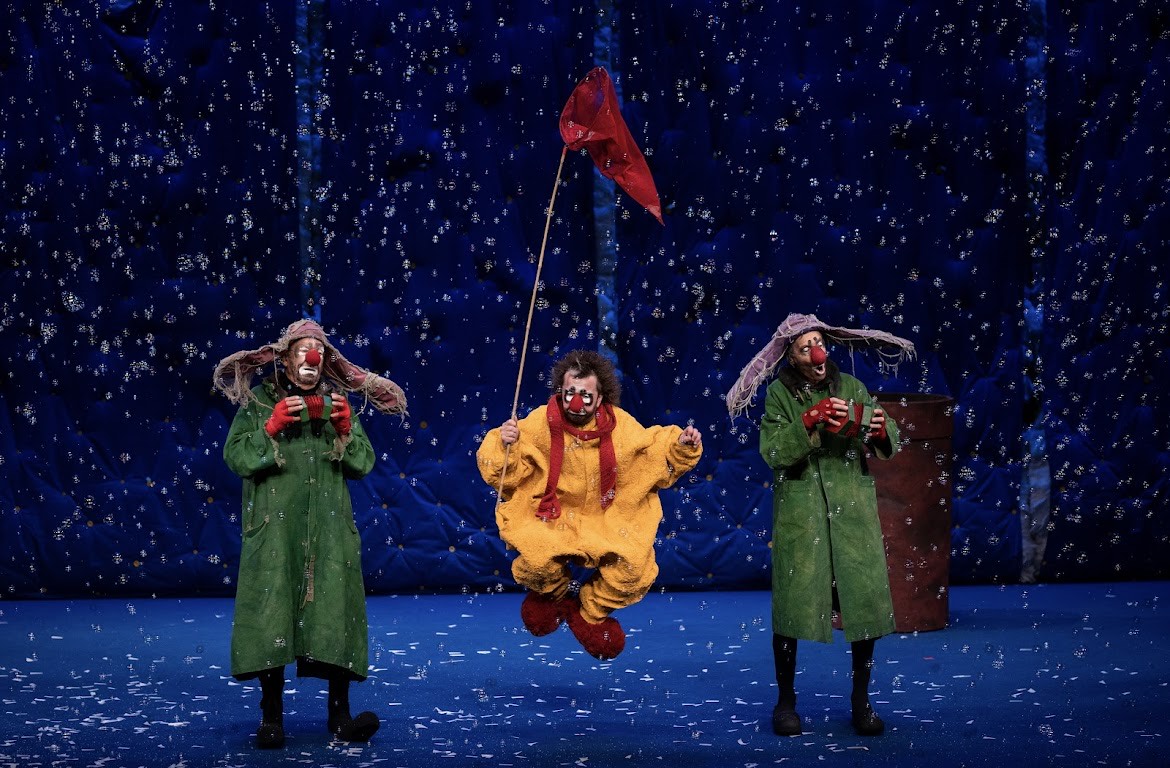
The yellow-suited lead clown (Artem Zhimo) commands the stage with astonishing expressiveness of movement. Every tilt of the head, every drooping shoulder conveys longing, mischief, curiosity or bewilderment.
His green-coated companions – identical in costume but individual in spirit – reveal their personalities with equal clarity despite communicating only in squeaks, sighs and occasional muttered nonsense. Together, they form a troupe defined by extraordinary physical precision and emotional elasticity.
The physical humour is relentless but never careless. Every pratfall, slow-motion gesture and mimicked movement is meticulously crafted. Clowns mirror one another with uncanny synchronicity, erupt into bouts of petty jealousy and collapse into despondent stillness.
At one point, Zhimo transforms a coat on a rack into a lover. With only a lean, a sway and a hesitant embrace, the moment becomes unexpectedly tender and disarmingly believable. These shifts from absurdity to poignancy give Snowshow its emotional resonance, proving that clowning can be as affecting as any spoken drama.
Drawing the audience into the web
Audience interaction is central to the experience. During the interval, clowns wander the aisles – gently teasing, startling or silently befriending unsuspecting patrons – blurring the line between performer and audience.
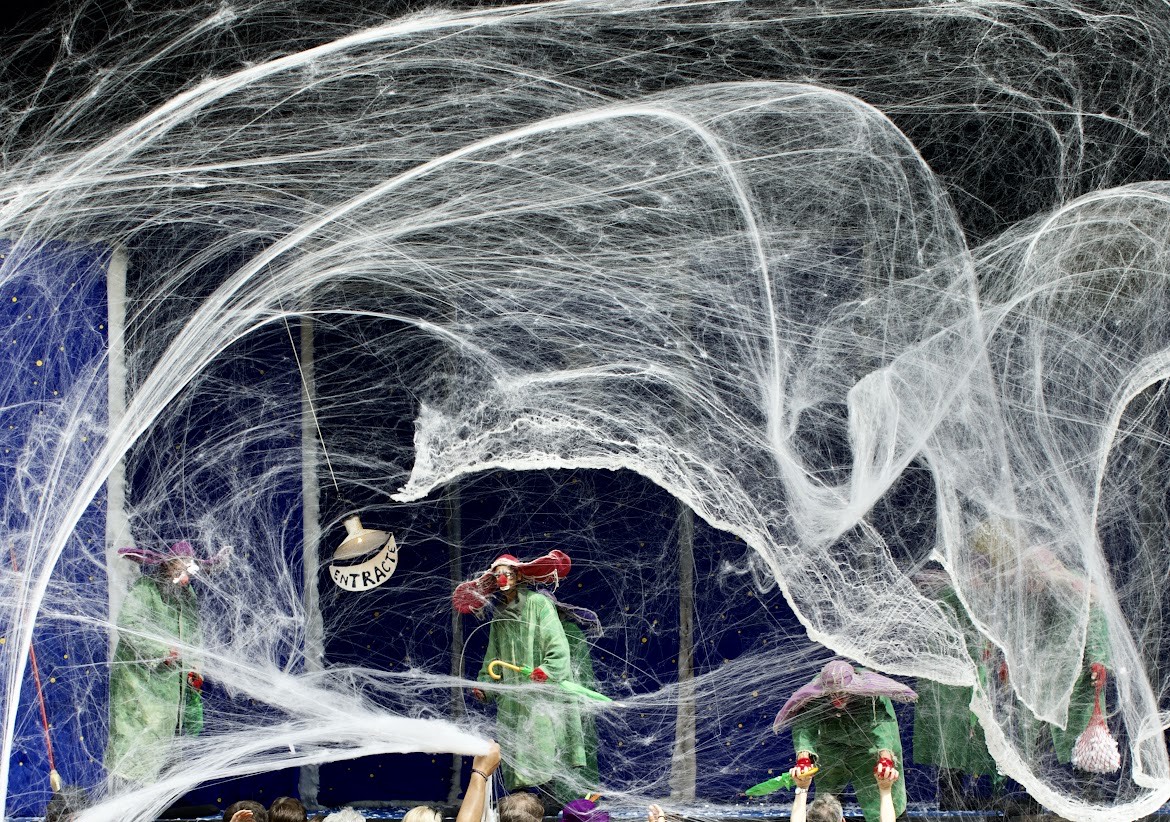
A gigantic cotton spiderweb rolls across the auditorium like a slow-moving tidal wave, eliciting shrieks, laughter and communal delight. Dense eruptions of bubbles flood the theatre, not in a delicate drift but in thick, engulfing masses that briefly obscure the stage. Enormous inflatable balls ricochet across the auditorium, reinforcing Polunin’s vision of theatre as shared, joyous chaos.
Read: Hidden review: daring production falls short
Snowshow is a full-bodied sensory feast – at times overwhelming. Even before the performance begins, an ominous train soundtrack rumbles through the auditorium. Thick plumes of smoke surge repeatedly across the stage, filling the theatre and swallowing the audience.
The clowning swings abruptly from mischievous play to chaotic exuberance. My nine-year-old companion found certain moments overwhelmingly intense, yet the clowns’ bubbles, soaring balloons and playful energy quickly restored the sense of joy.
Slava’s Snowshow: the staging of a favourite
Technical craftsmanship elevates the performance further. Lighting shifts from intimate candle-like warmth to stark, surreal brightness. The Eclectic sound design by Roman Dubinnikov and Polunin weaves Beethoven, Vangelis, samba rhythms and choral swell to punctuate shifts from whimsy to poignancy with subtle brilliance.
And then comes the finale: a blizzard of paper blasted into the audience with hurricane force, accompanied by fans and giant inflatable balls hurtling through the auditorium. It is less a gentle snowfall than a theatrical tsunami – unending, hilarious, and intoxicating.
Thirty years on, Slava’s Snowshow remains a singular theatrical achievement: playful, anarchic, tender, and profound. It is a work that reminds audiences of the joy of surprise, the thrill of imagination, and the simple delight of being part of a shared experience.
In a theatre landscape where clowning occupies only a small corner, Polunin’s masterpiece proves its enduring power, demonstrating that this seemingly marginal art form can still astonish, delight and move audiences like few others.