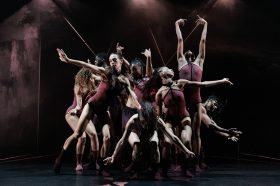
There’s no shortage of ambition in Motionhouse’s Hidden. Billed as a dance-circus performance, it’s a large-scale, physically demanding production that wants to say something about disconnection in the modern world. But for all its striking visuals and high-impact movement, the show often feels thematically thin and dramatically stretched.
Based in Warwickshire, Motionhouse has built a reputation for bold, genre-crossing performance. The company combines contemporary dance, aerial work and multimedia design in large productions that are both spectacular and accessible.
Their 2021 production Nobody was widely praised for its visceral impact and inventive staging and Hidden picks up that thread. This time, the aim is to explore a journey from isolation to connection, from crisis to resilience.
It’s a theme that Artistic Director Kevin Finnan describes in the program as ‘a path from darkness into the light’.
Hidden – quick links
Impressive physicality, elusive material
Hidden introduces a series of loosely connected characters: a man spiralling through the chaos of a city street, a couple cocooned in a stylish apartment, and a gamer absorbed into his screen.
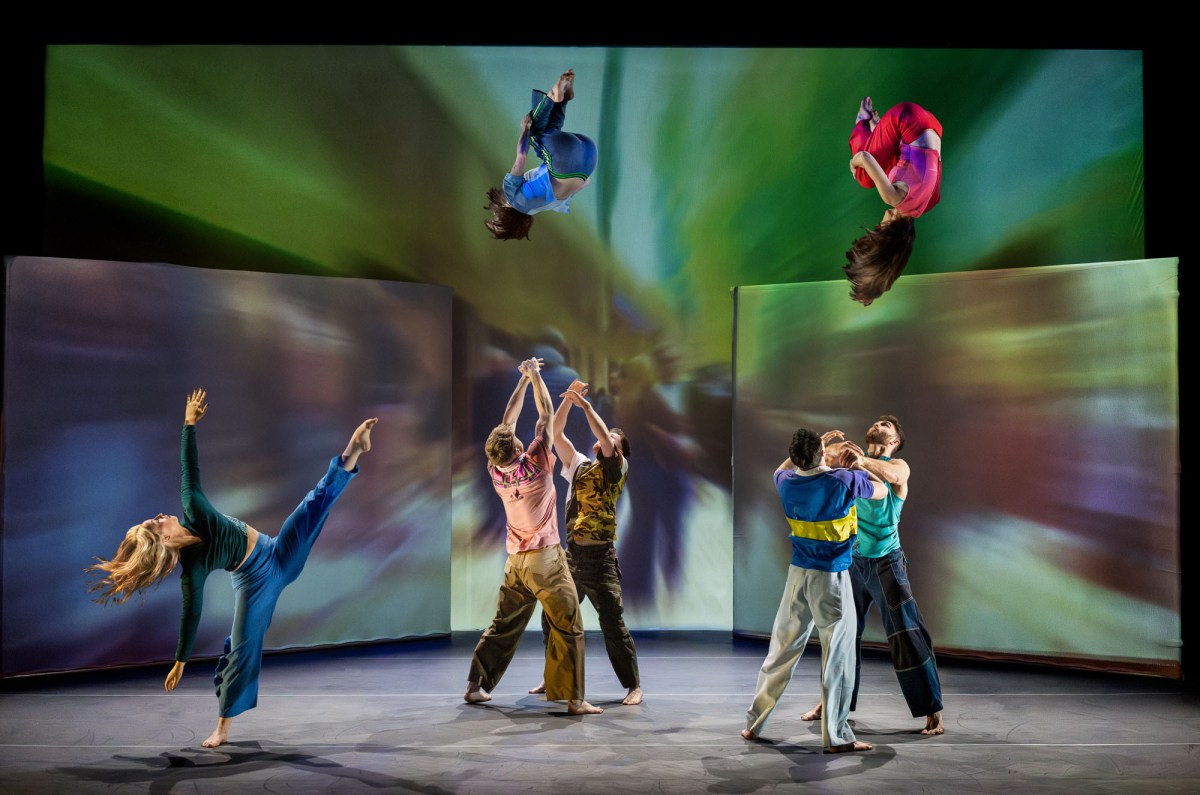
The movement is tight, fast, and often breathtaking. Motionhouse’s trademark throws, catches and stacked balances and delivered with unshakable control. But while the physicality impresses, the material itself feels derivative.
The strength of the emotional story is diluted by pacing issues. Strong visual ideas are repeated and extended well beyond their natural lifespan. One dancer’s descent into a video-game world is especially overfamiliar – conceptually tired and not doing enough visually to justify its length.
Working the stage
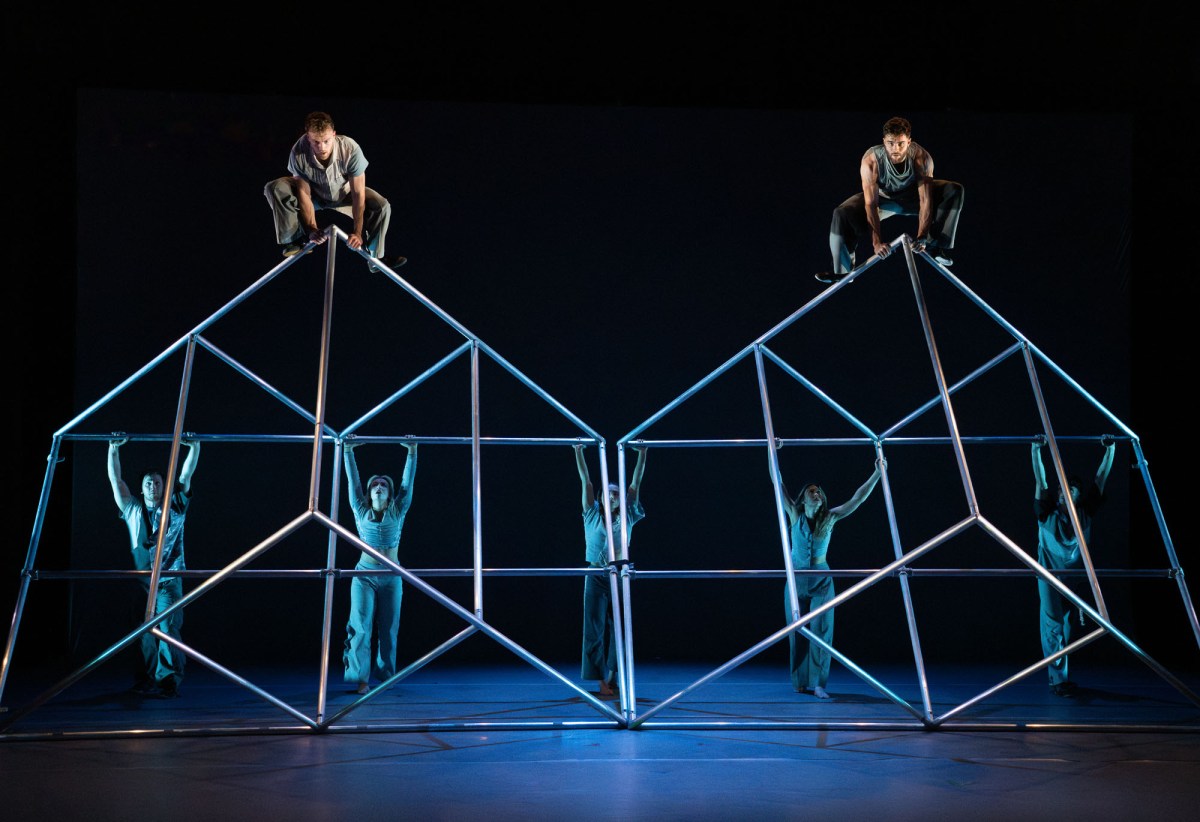
The set, by Simon Dorman, is one of the production’s most distinctive features. Two large triangular prism frames dominate the stage. Initially draped with fabric to become screens for projections, they’re later stripped to become climbing structures, and then eventually reassembled into a steep ramp.
The versatility is impressive and the way the dancers interact with the set is often elegant and well integrated. But the frequent repositioning of the structures becomes repetitive. At times, it feels like watching people rearrange furniture mid-show.
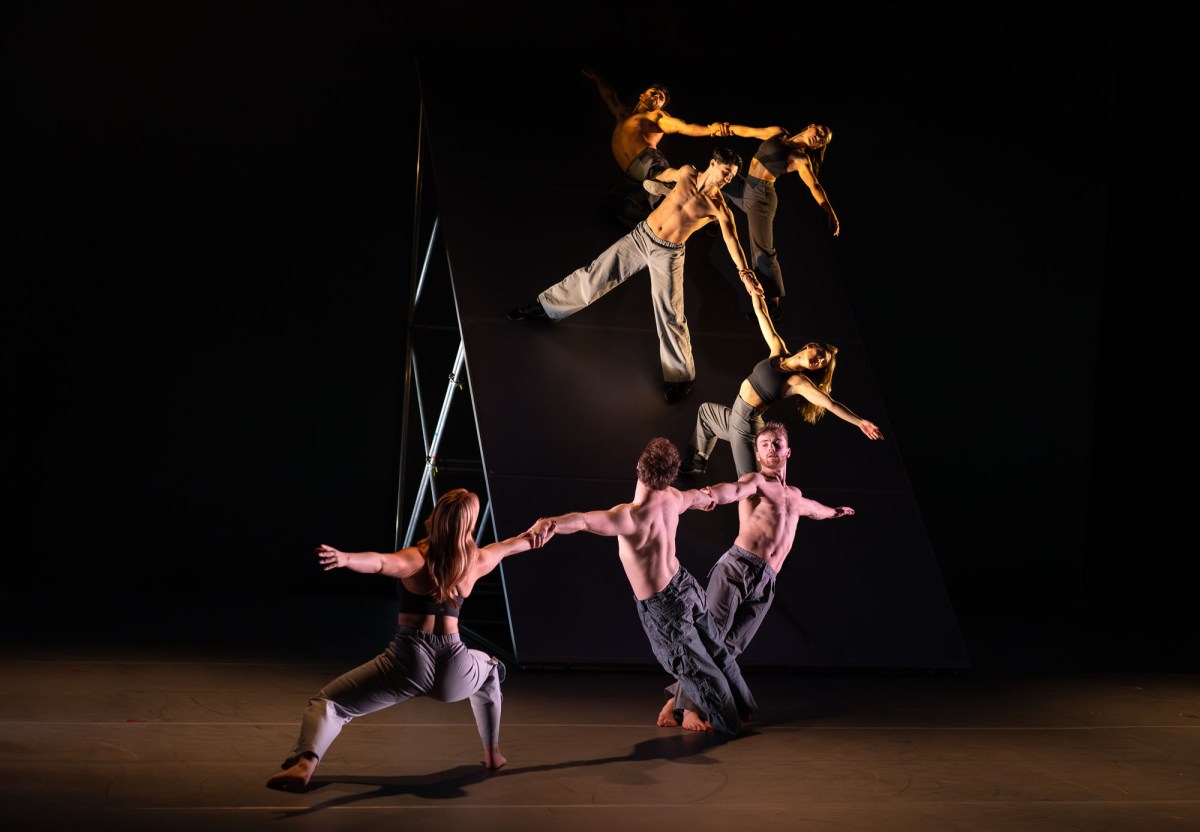
While the first half is conceptually muddled and overlong, the second benefits from a more stripped-back approach. With projections gone and the ramp in place, the choreography shifts gear, leaning into moments of support and collectivity rather than isolation.
The result is more emotionally grounded and dramatically satisfying. Alex de la Bastide, Blair Moor and Dylan Davies are particularly strong here – committed, precise, and emotionally generous without tipping into cliché.
Hidden: A journey without a convincing resolution
Even so, Hidden never quite pulls itself together as a whole. The characters introduced early on are dropped without resolution. The thematic gesture towards transformation is clear but it feels largely symbolic rather than dramaturgically earned.
The show’s unevenness didn’t dampen the crowd’s enthusiasm. Motionhouse may hail from Warwickshire, but in Birmingham, the audience treated them like one of their own, giving them a standing ovation that recognised both their ambition and their connection to local audiences.
Hidden is visually inventive and full of daring but its ideas don’t always hold under scrutiny. There’s talent onstage and ambition in the concept – but by the end, the emotional and narrative arc remains frustratingly out of reach.