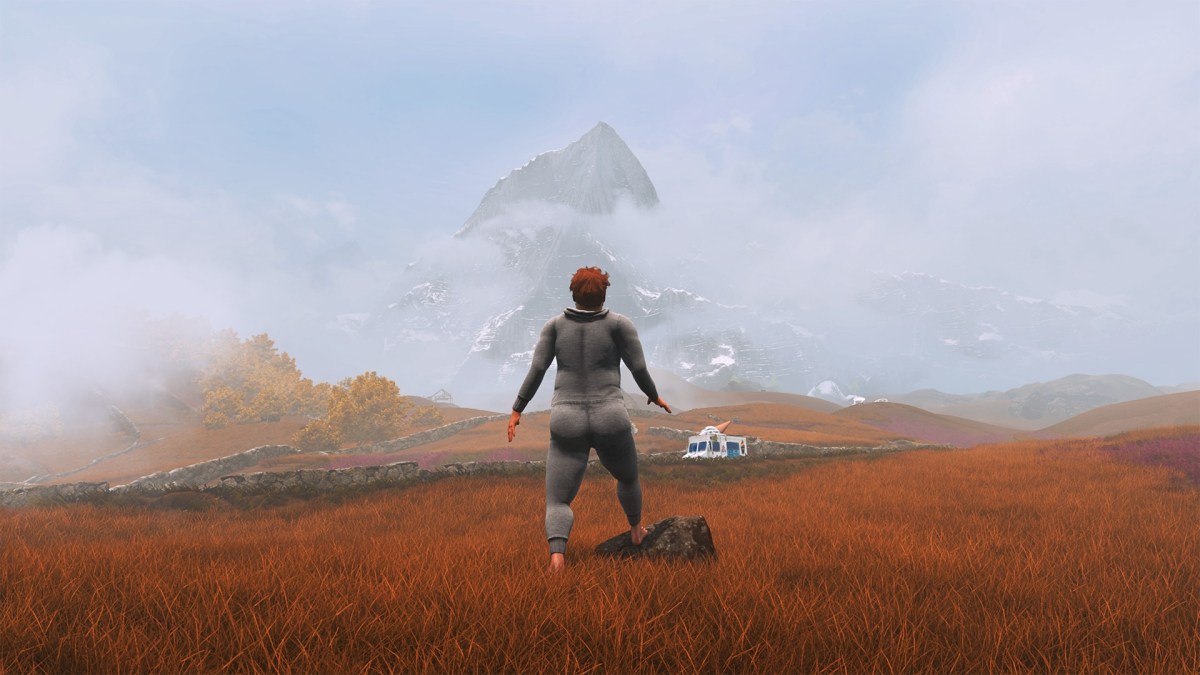
I’ve given Baby Steps four stars, but across my playthrough I ran the full gamut, really considering every number on the scale.
Early thoughts of ‘do I like this game at all’ turned to ‘I absolutely adore this game’ as I got better at the controls; and as I played through the rest of the game my thoughts fluctuated between ‘this is transcendent’ and ‘really now, that’s a bit much’.
At a few points, when the game was particularly cruel, giving it one star seemed like the only way to get proper revenge; in others, where the game would bend ever-so-slightly to accommodate me, I was ready to laud it as a masterpiece.
Baby Steps: meet Nate
I’m getting ahead of myself, which, as Baby Steps has shown me, is a great way to fall over and roll all the way back down the bloody hill you just spent several minutes very carefully inching your way up.
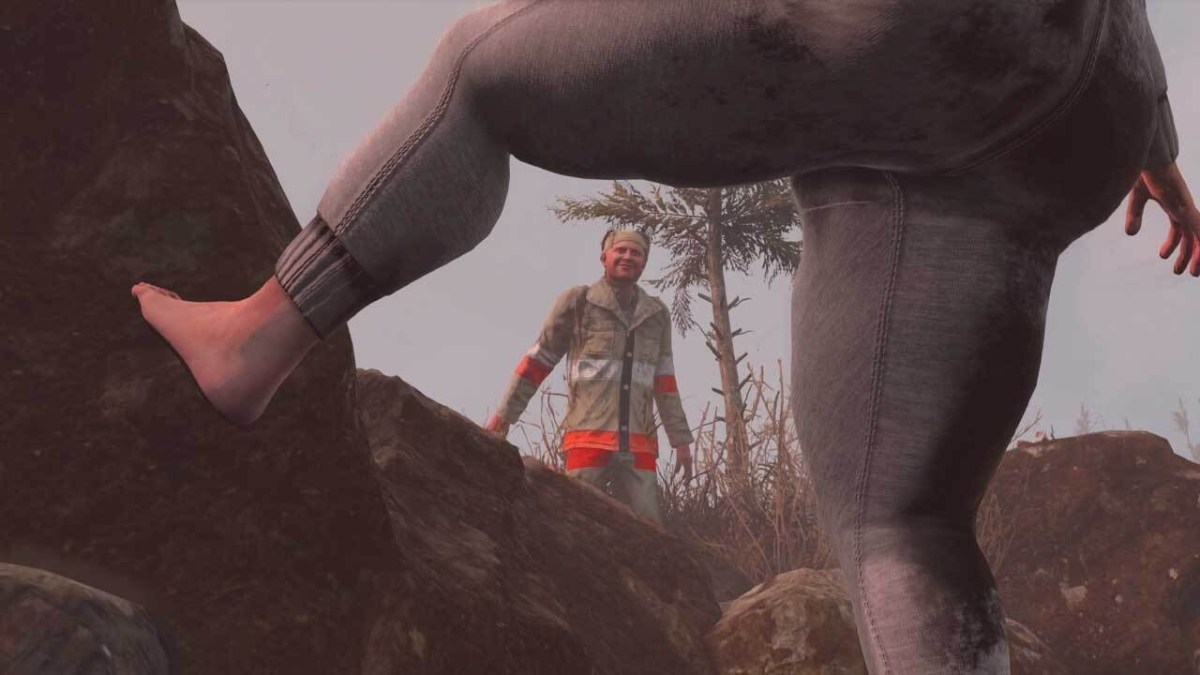
You play as Nate, a man who is – and I say this with love in my heart for him – just a real piece of shit. In the opening seconds of the game he’s suddenly teleported out of his parents’ basement and into a mysterious, mountainous land, and it’s up to you to guide him through it.
This is a true walking simulator, with the emphasis on ‘simulator’. With a controller in hand, your left and right triggers control Nate’s respective feet; hold one down and move the stick to move the associated foot, then let the trigger go to bring it back to the ground.
Tilt too hard without lifting a foot and Nate will simply fall down, his onesie getting covered in dirt or sand or whatever he was stepping through at the time. This is how you play the entire game – there’s no shortcut, no skill improvements, no hidden abilities, just an awful lot of steps and many, many falls.
It’s a full-game celebration of the DualSense controller, which makes great use of its haptic triggers and internal speaker as you play – possibly to remind you not to hurl it at the ground during moments of intense frustration.
Baby Steps: bodily control
It would be easy to attach platitudes to Baby Steps: ‘it’s a game about putting one foot in front of the other’, ‘it’s a game about getting back up when you fall down’, and so on. I don’t think that’s quite what the game is going for, though – it’s a game where you get a bit better at controlling your body, but not one where your protagonist grows or transforms or changes.
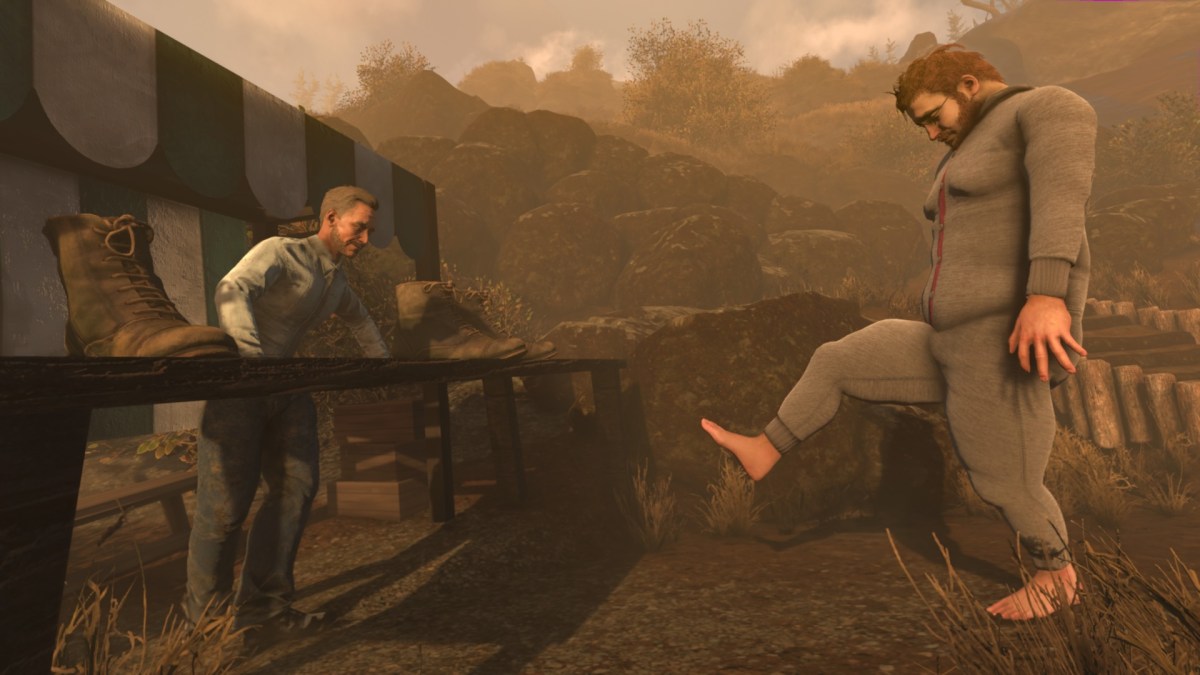
It perfectly captures the feeling of going on a hike with people who are in much better shape than you, that sense of really needing to think with a lot of intentionality as you navigate environments that other folks – in this case, every other video game protagonist, as well as the various NPCs you encounter during the game’s cutscenes – navigate with seeming ease.
It’s not just that Nate isn’t physically fit: the game goes to great lengths to make it clear, through several very funny and strange cutscenes, that he’s pathologically incapable of accepting help from anyone, that he really just wants to be left alone to suffer on this journey. Nate does not need to find himself, or improve, or change, but he does need to climb these bloody hills.
Baby Steps: now that’s mean
Baby Steps is mean, sometimes. A mistimed step might see you tumbling down a mudslide, falling into a lake some considerable distance from where you started. It could make you ragdoll down the entire mountain you just spent 30 minutes slowly, methodically working your way up.
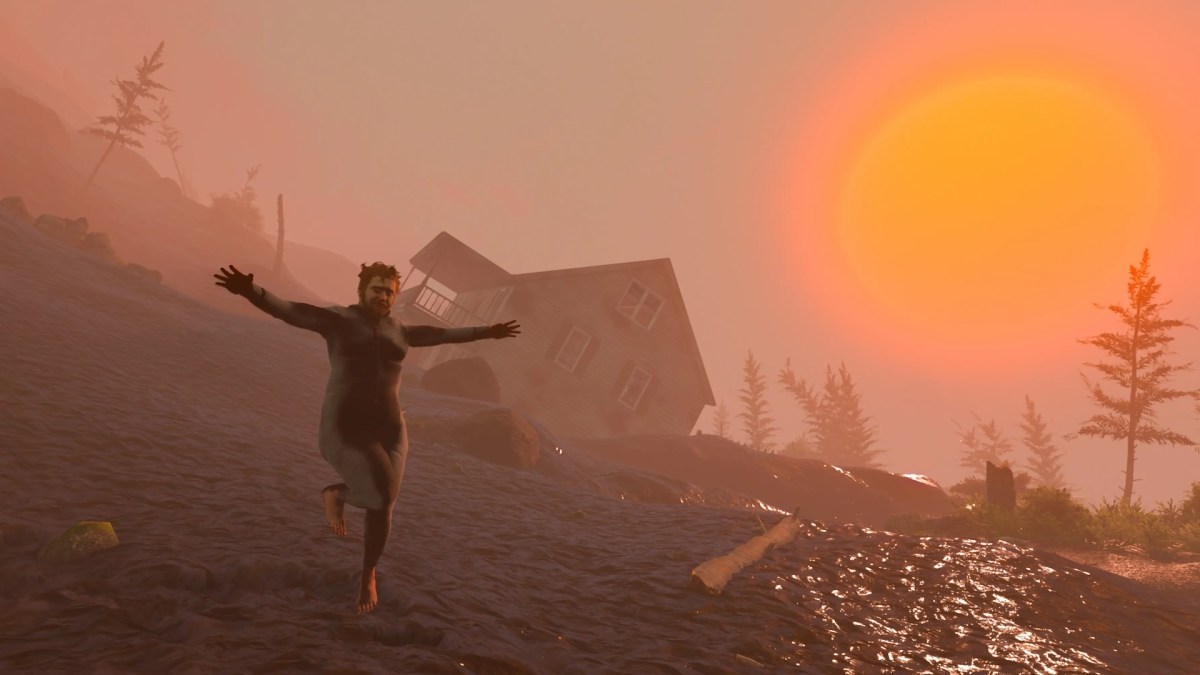
The game does not give you firm directions beyond a light in the distance that may or may not be visible at any given point, and it doesn’t tell you if you’re going the wrong way to progress the story; regularly I’d pass through a clearing and find myself back in the exact spot I’d already passed though 30 minutes earlier, unsure how I got there. That’s where the fury comes in; there were many moments where I had to put the controller down, walk away, and ask myself whether I could actually keep playing.
The answer was always ‘yes’, though, and within ten minutes I’d be back, trying to figure out the next obstacle. When Baby Steps hits, it’s bloody euphoric. You might learn a new stepping technique through experimentation with a difficult terrain, or figure out the perfect foothold to hoist yourself to a new path you didn’t notice previously; you might find the route that previously seemed impossible is, actually, workable (you also might not, which leads back to fury).
In more than one instance I thought about ways I’d moved my body during some of those real-life hikes, watching a more fit friend merrily push forward, as I very carefully considered every movement I made; to recreate these movements in the game and see Nate get past the obstacles felt fantastic.
Baby Steps: victory in the bones
There are towering, world-shattering beasts in other games that have given me less grief than a slight incline has in Baby Steps.
There was one section that involved slow, careful steps over narrow beams suspended over muddy ravine that I think is imprinted on my soul; the fear, the calm of my movements, the absolute elation when I made it to the other side.
I felt Nate’s victories in my bones, even if he didn’t feel them himself. For all its moments of evil skill checks and intensely aggravating inclines, Baby Steps can occasionally be kind, too – a physics system that will sometimes let you do the impossible, safe points where a rock will break your fall if you start sliding down a hill, flatter areas where you can happily march across flat land for a while.
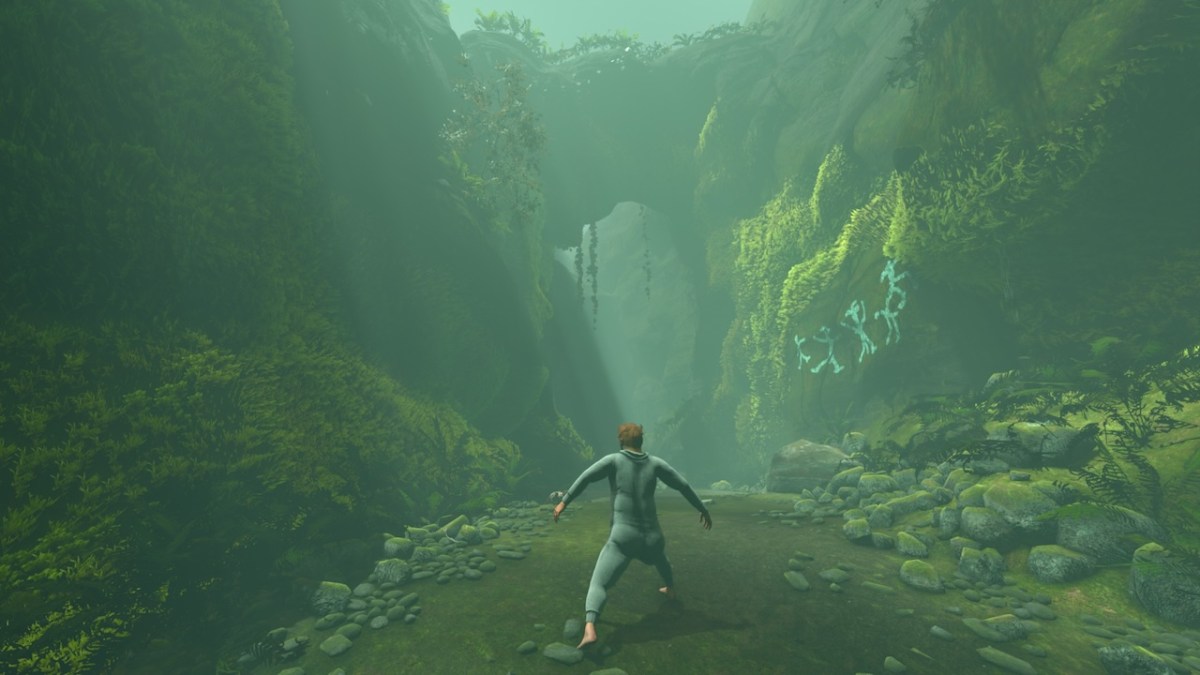
Although Nate can’t die, the phenomenal inconvenience of falling off a path makes the danger of crossing a difficult section feel very real.
The balance isn’t perfect; there’s one area, in particular, that made me step away from it for an entire day, unable to watch Nate go tumbling yet again as his feet slipped out from under him on a series of seemingly impassable sandy hills.
And while the game is loaded with extra quests and secrets to discover, stopping to investigate them often feels like a mistake once you’re neck-deep into them – actions as simple as approaching and leaving areas is pretty laborious when you control every step you take, and as much as you know what you’re signing up for with a game like this, that doesn’t make you wish any less that Nate could just walk forward when you push the stick forward sometimes.
But, of course, the friction and frustration are the point, and you can’t have the moments of elation without them.
Baby Steps: intensity and purpose
Baby Steps is a game of tremendous intensity and purpose. It’s not afraid to make you suffer and stall out, and it makes a real argument for being slow, methodical, and considerate in your actions.
There’s an idea I kept coming back to throughout the game – the notion that games, and entertainment art more broadly, can ‘waste’ our time. When people talk about art that is laborious, that hides the fun, that stretches out across multiple hours when it could have been shorter, they’re often thinking about their time as a commodity, and entertainment as a potential ‘waste’ of it.
Those are hours that could have been spent working, or deep-cleaning the kitchen, or engaging with more culturally-significant art and media!
Baby Steps feels like a repudiation of this notion – to appreciate it as art, you really need to dedicate the time to its moments of monotony and pain, and you need to treat it, to some degree, as a sort of labour, in the same way that an awkward hike is meant to operate as a source of both pleasure and fitness.
I am wary of getting too high-minded about a game where a big idiot in a romper suit repeatedly falls on his butt – one where, by the way, features far more full-frontal male nudity than I was expecting – but there’s something to be said about an experience that pushes you into a meditative state in the way this one did.
Baby Steps has given me some of the best – and worst – moments I’ve had in a game in quite some time, and I felt richer for both the good and the bad experiences I had with it.