
The Coffee Talk series, which debuted in January 2020 just before we were all locked in our houses for a long time and the idea of being able to visit nice coffee shops suddenly became a novelty, is one of the major forebearers of the ‘cosy game’ wave of the past few years.
It’s a series without fail states, deep conflicts or difficult decisions. Instead, people and creatures of varying levels of mysticism visit your coffee shop, you make them a drink that matches up to what they ask for, and you enjoy the conversations that follow. There’s not a lot to them, which has been a large part of the appeal for many players.
I had mixed feelings about the original Coffee Talk. The simplicity of both the drink-making mechanics and the storytelling made the game feel somewhat weightless, even if it was pleasant existing behind the counter, serving various well-written characters.
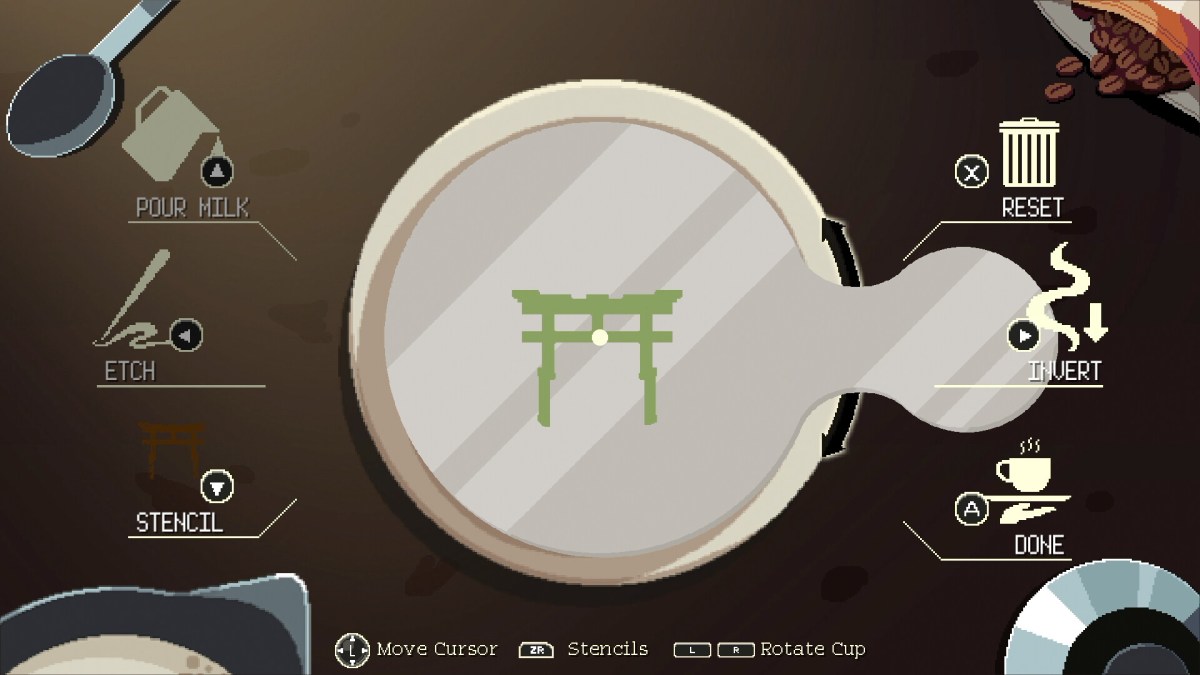
Coffee Talk Tokyo, which changes the game’s setting and mythology – you’re now serving various Japanese folklore figures – does not change much. You’re still blending drinks based on customer orders and listening in on their conversations. But this is, for my money, a much more successful execution of the concept, a game that, for all its cosy vibes, carries some real dramatic weight.
Coffee Talk Tokyo review – quick links
Serving folkloric customers
As the proprietor of the eponymous coffee spot in the middle of Tokyo, you’ll serve customers that include a dragon spirit-turned-musician, a recently retired workaholic Kappa, a three-person family unit who are all dealing with their own unique dramas, and a ghost unable to fade into the afterlife until it figures out what’s holding them to the mortal plane.
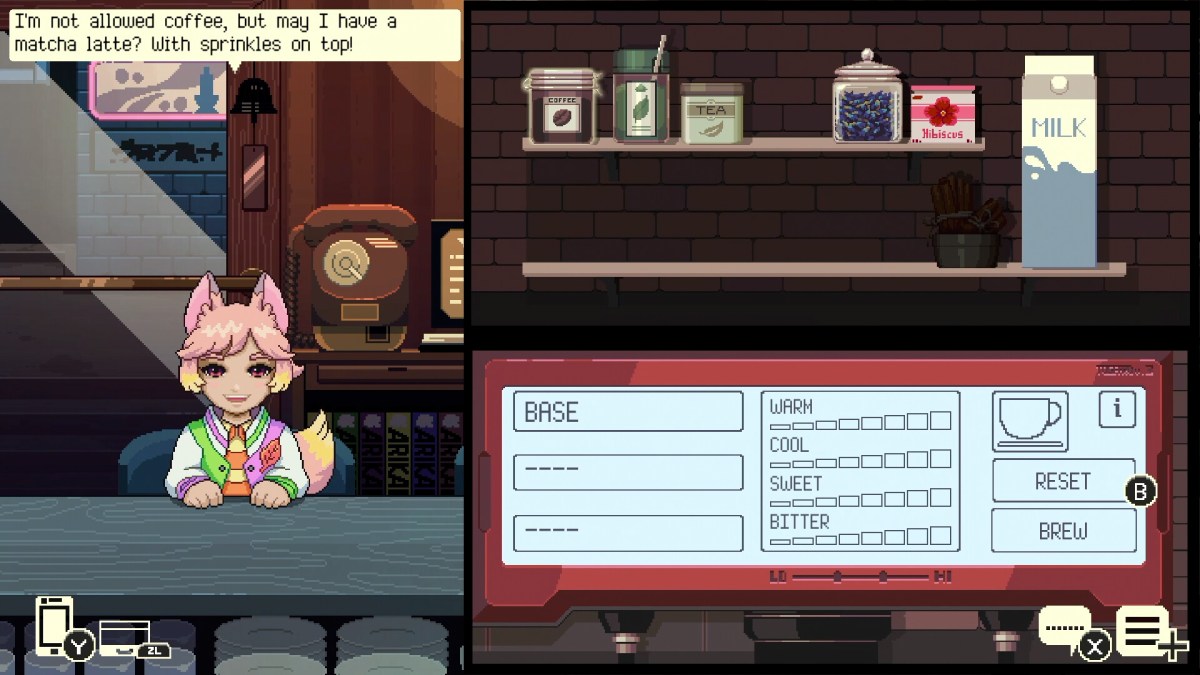
Customers come in and sometimes they are very clear about what they want and how to make it. Other times, they’re vague – and if you misinterpret their order they may be disappointed. You also have access to a social media app used by characters in the game, and paying attention to what they’re saying here may unlock unique dialogue throughout the game.
There’s not a lot of mechanical depth here, outside of interpreting a few orders during each in-game day. In the early stages of Coffee Talk Tokyo, it grated on me how getting an order wrong would generally end with the character agreeing to drink what you’d served them anyway, absolving you of messing up the most fundamental part of your job. In those early sections, the game felt a little too wrapped in cotton wool. But that changes as you start to get more involved in the interpersonal struggles of the game’s cast.
A unique cast of characters
Vin, a character who assists you in the cafe, is particularly interesting. Their arms and some other body parts have been replaced with prosthetics following an accident some months earlier, and now they live with chronic pain. I was surprised at how moved I was by Vin’s plotline, which initially seemed one-note but gradually unfurls with greater depth, nuance and social observation than I expected.
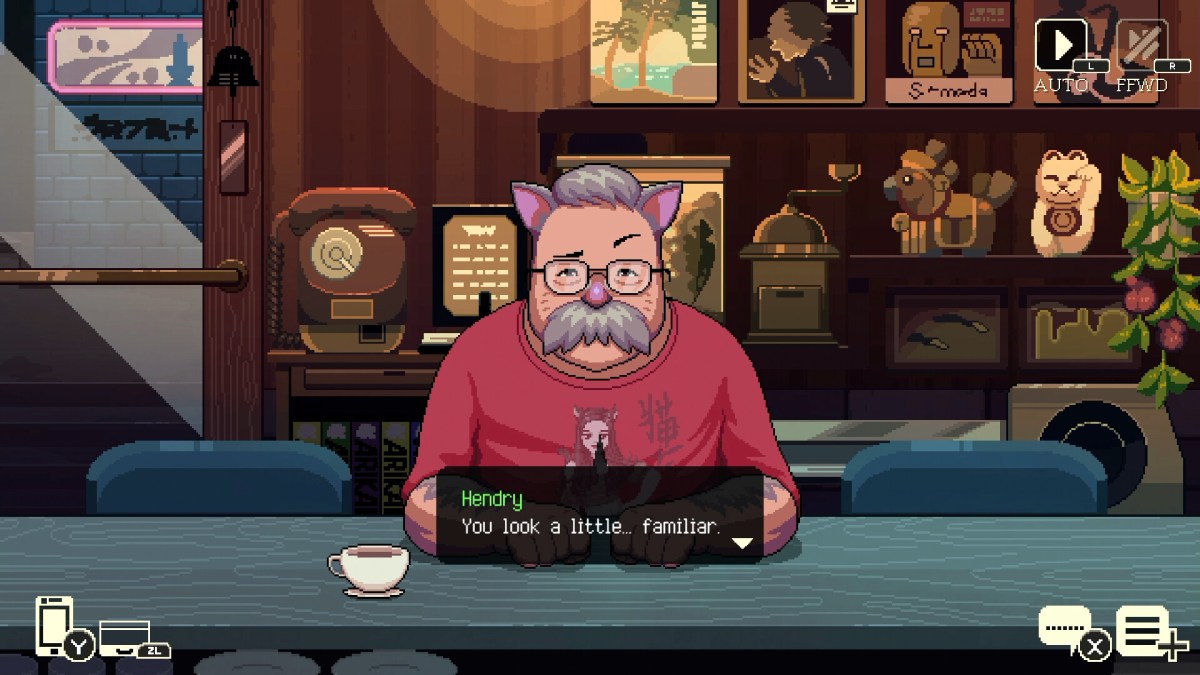
Characters I quickly dismissed at first meeting went on to surprise me, and I came to feel a great affection for the entire cast. Every character feels unique, and while some are more interesting than others, a large part of the appeal is seeing different groupings of increasingly familiar characters coming in, and then watching how they all interact with each other.
Similarly, the game’s Facebook-style social media, which can be accessed at any time from your in-game phone, felt corny to me until the game’s mid-way point – when I realised how much I was tracking different story points and character developments.
Cliché though it may be, Tokyo is just such a good setting for a story like this and not only because you can tap into so much folklore. It’s also because the idea of sitting in a quiet Japanese cafe during the middle of a summer shower, ordering a specialty drink and having a surprisingly deep conversation with a stranger at the bar while lo-fi vinyl beats pump through the sound system, is such a vibe.
The pixel-art visual style the series is known for has received a small but noticeable upgrade in Coffee Talk Tokyo, and the character designs and animations are uniformly excellent.
ScreenHub: More cosy game reviews
Tapping into the drama
From a pure mechanical perspective, Coffee Talk Tokyo is not a particularly deep game. There’s an endless mode for drink experimentation and another high-score mode that doesn’t warrant a whole lot of attention, but most of the appeal comes from watching how these low-key character dramas play out.
It excels as a game that celebrates a quiet sit with a nice drink in front of you but it also, to its great credit, isn’t afraid to let its characters and conversations get a little uncomfortable. You’ll watch characters misunderstand each other, work through poor decisions, and reveal their own prejudices and naiveties.
Coffee Talk Tokyo is a cosy, casual experience, but it’s also a game with a firm respect for how difficult life can be sometimes. The further in I got, the more important it felt that I correctly serve the right drink to suit a customer’s mood. As the game effectively argues, the first sip of the right beverage can bring the world into calm focus, and those moments where life feels good and calm are vital.
Coffee Talk Tokyo is the best, most well-written entry in the series so far, and a great example of how a cosy game does not need to shy away from the world or its characters’ struggles.