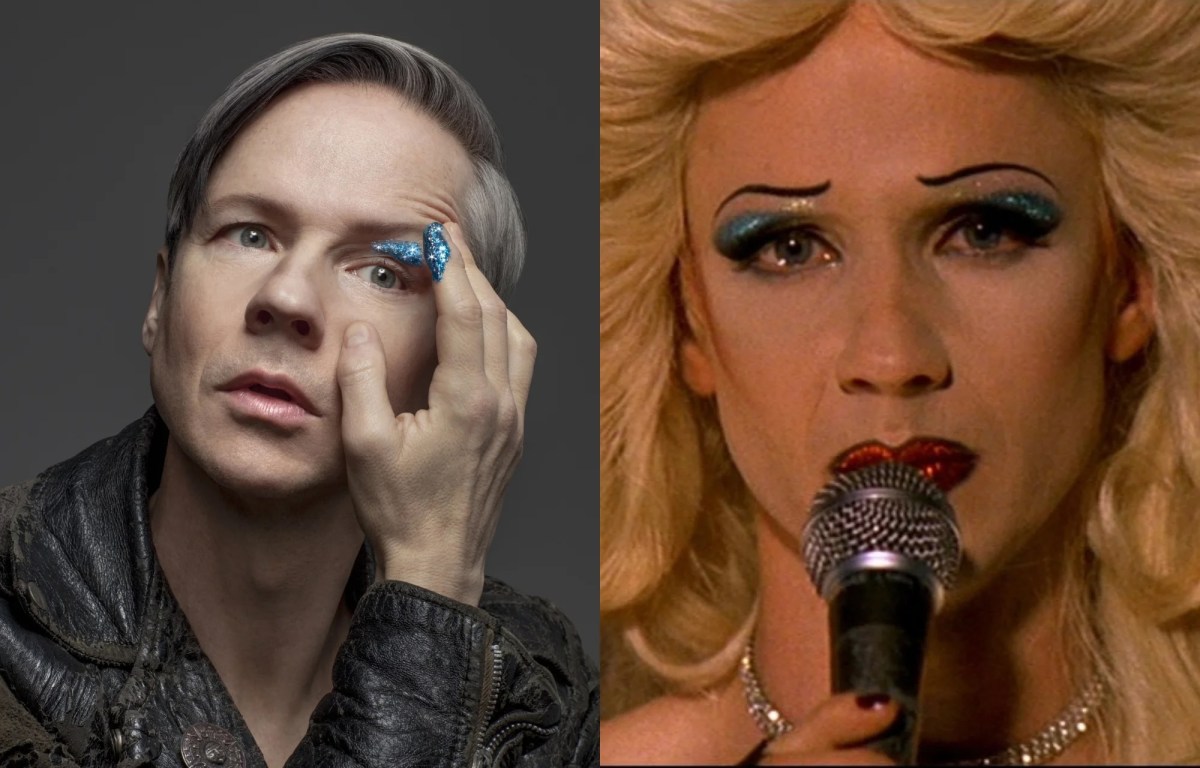
For John Cameron Mitchell, the greatest success of Hedwig and the Angry Inch has very little to do with box office numbers, awards or cultural canonisation. Instead, it is the stories.
As he tours the world with the film’s 25th anniversary celebrations, Mitchell is meeting thousands of people who have carried Hedwig with them for decades: punk rockers, middle-aged mothers, people of various gender experiences, queer teenagers discovering the film for the first time, and older audiences who have been passing it between friends since the late 1990s.
‘Because it was passed from friend to friend, the people who like it tend to be good quality people,’ Mitchell tells me with a laugh, casually biting into an apple as an off-screen publicist keeps time on our hurried Zoom interview. ‘Lovers, parents to children… they all found something in the story that was useful to them.’
It is an unusual way to describe the legacy of one of queer cinema’s defining cult films, but it also explains why Hedwig has endured. Mitchell is making an appearance at the 2026 Melbourne International Film Festival for a special event, John Cameron Mitchell Presents: Hedwig and the Angry Inch 25th Anniversary on 21 August, revisiting the film he wrote, directed and starred in with live commentary.
The anniversary event arrives not as an exercise in nostalgia, but as a celebration of a work that continues to mutate through new audiences, new productions and increasingly complicated conversations around gender and identity.
John Cameron Mitchell on Hedwig – quick links
A punk musical that was never supposed to be mainstream
Before it became a film, Hedwig was an experiment. Mitchell and composer Stephen Trask spent years developing the character through performances in New York’s downtown drag and punk scene before the musical premiered Off-Broadway in 1998.
It was born in clubs rather than conventional theatres, shaped by live rock performance, improvisation and the chaotic energy of queer nightlife rather than Broadway polish. That history matters because Mitchell believes the work survived precisely because nobody expected it to become commercially successful.
‘We weren’t thinking monetarily,’ he says. ‘There was no way we could actually make money with it because it would never be on Broadway at the time. It would never be up for an Oscar.’
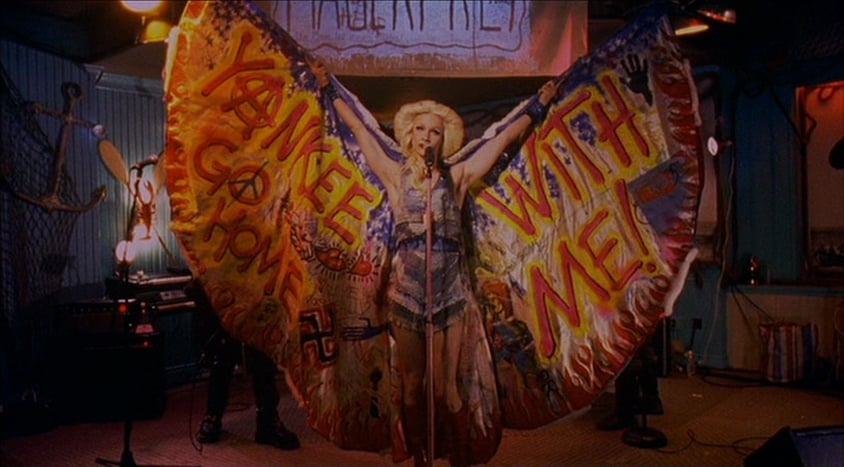
The lack of commercial expectation became an unexpected creative freedom. ‘Because it could never be mainstreamised or monetised that way, it kept it honest,’ Mitchell says. ‘We were like, well, we might as well do exactly what we want.’
That instinct carried into the 2001 film adaptation, Mitchell’s directorial debut, which transformed the intimate rock musical into an exuberant cinematic fantasia of glam rock, animation, melodrama and punk theatre.
Hedwig became larger than life without losing the intimacy of someone telling their story directly to an audience. It was also, famously, a commercial flop. Yet Mitchell has little interest in rewriting that history. If anything, he sees its cult trajectory as evidence that cultural influence cannot be measured by opening weekends.
‘It’s not about how many eyes, how many clicks,’ he says. ‘It’s … the right eyes, the right clicks, at the right time.’
It is a philosophy that feels increasingly radical in an entertainment industry obsessed with algorithms and instant visibility. Hedwig was discovered slowly, handed from friend to friend rather than marketed into ubiquity, and its community grew organically around the work itself.
Hedwig belongs to no one
Few queer characters have inspired as much interpretation as Hedwig Robinson. Over the past quarter-century, Hedwig has been embraced variously as a trans icon, a genderfluid figure, a drag creation, a queer survivor and a symbol of radical self-invention.
Mitchell understands why audiences project themselves onto the character, but he remains as resistant to attempts to define Hedwig too neatly as he does with his own identity. (He casually came out as non-binary in 2022, later clarifying that he preferred the term androgynous, and continues to use he/him pronouns.)
‘Hedwig is not a trans story,’ he says. For Mitchell, the central tragedy of the character is not one of transition, but coercion.
Hedwig is subjected to a botched operation in order to escape East Germany before the fall of the Berlin Wall, an act of patriarchal violence rather than self-determined identity.
‘That’s what it’s about: someone telling you what you are,’ says Mitchell.
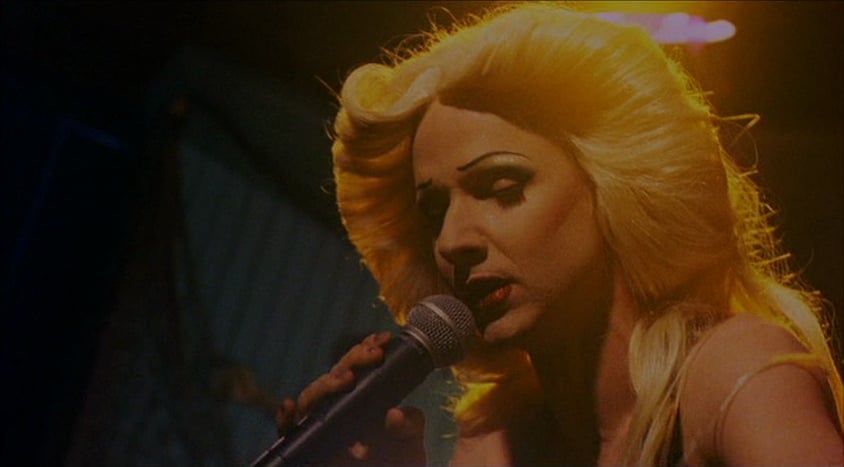
Rather than arriving at a stable identity, Mitchell sees Hedwig as someone recovering from trauma, anger and betrayal before gradually moving towards forgiveness.
‘By the end, they find that they’re a gender of one,’ he says.
In Australia, Hedwig has become the subject of heated debates about representation.
A planned Australian production starring Hugh Sheridan was indefinitely postponed in 2020 following a petition that challenged the casting of a cis performer, as well as a broader lack of queer and gender diverse representation in the cast and creative team.
The controversy became one of the country’s most visible conversations about who should be permitted to embody queer and gender-diverse characters on stage.
Mitchell remains critical of that episode, arguing that the work fundamentally resists being assigned to a single identity category. Yet the Australian story did not end there.
In 2025, Hedwig returned in a celebrated new production. Co-directed by boundary-breaking queer theatremaker Dino Dimitriadis and starring Seann Miley Moore, it premiered at Adelaide Festival before touring Melbourne and Sydney.

The production was widely praised for bringing together a creative team that centered trans and nonbinary artists, demonstrating how the musical can continue evolving through contemporary queer voices rather than remaining frozen in its original interpretation.
Hedwig has been reimagined in countless ways around the world, and like many of those productions, Mitchell didn’t have any involvement with this one.
‘I don’t like to micromanage,’ he says simply. ‘You do your Hedwig. Keep the core of the piece. Add jokes. I don’t care the gender. It’s not Rocky Horror, where Richard O’Brien controls every possible production.’
There have been productions featuring multiple Hedwigs, wildly different visual languages and radically different interpretations across the world. Mitchell’s only real wish is that the work continues travelling.
‘The sun should never set on Hedwig,’ he says. ‘That bitch gets around.’
Dangerous ideas and tender sex
If Hedwig established Mitchell as one of queer cinema’s great punk visionaries, Shortbus confirmed that he had little interest in behaving himself. The 2006 ensemble film remains startlingly explicit, but Mitchell bristles at the assumption that featuring non-simulated sex automatically makes a work pornographic.
‘Pornographic is about how you use it,’ he says. ‘Sex itself is neutral.’
According to Mitchell, sex is simultaneously funny, boring, joyful, traumatic, awkward and profoundly human – and cinema should be capable of holding all of those contradictions at once.
That tenderness is exactly what has helped Shortbus endure alongside Hedwig. While it continues to provoke audiences, the film’s real subject is intimacy: strangers attempting to connect in a city full of loneliness, desire and emotional isolation.
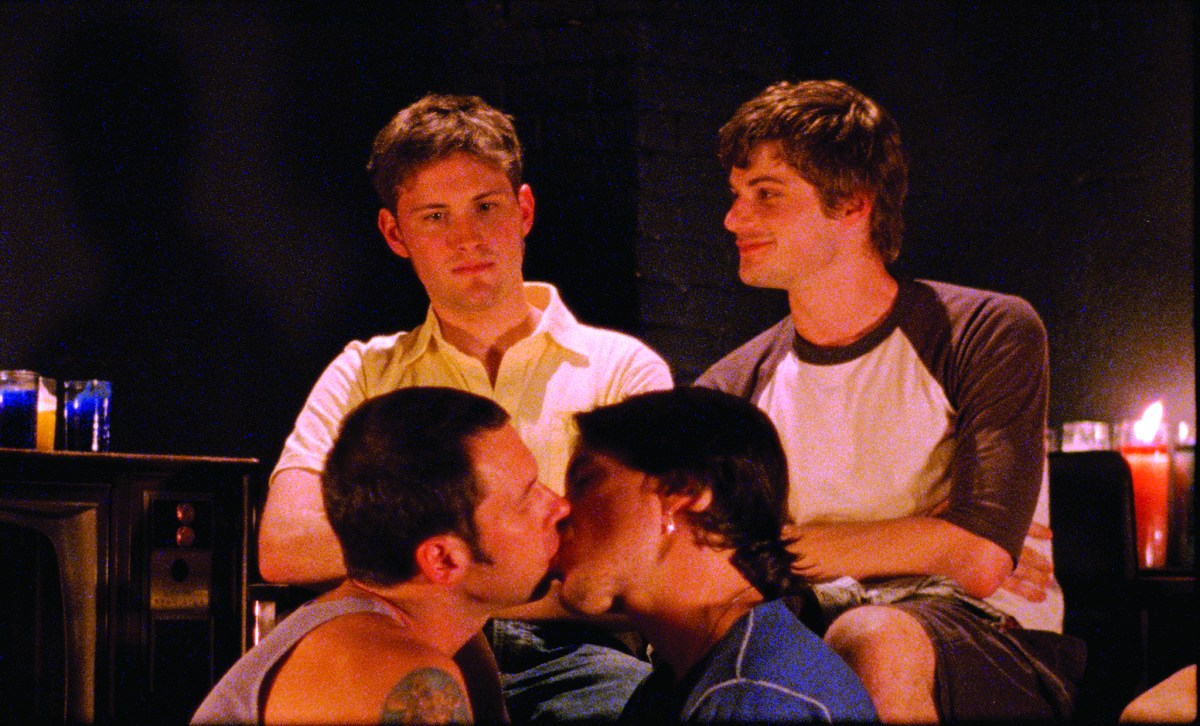
Mitchell will also appear at this year’s Festival of Dangerous Ideas in Sydney, where Shortbus is screening as part of the festival’s inaugural film program, alongside his live talk Just Be Punk.
The festival is interested in cinema that challenges audiences rather than simply comforting them, an idea Mitchell articulates with characteristic conviction. For him, dangerous art is not art that harms. It is art that unsettles certainty.
‘Good danger is the kind that makes you stop, rethink where you are, look at the whole thing and maybe adjust your path,’ he says. The greatest danger, Mitchell suggests, may actually be staying safe.
‘We can shrink if we don’t try new things,’ he says. ‘Maybe it’s our soul that shrinks rather than our body.’
A career built on refusing a lane
That refusal runs throughout Mitchell’s career. From Hedwig’s glam-rock mythology to Shortbus’s radical tenderness, from being hand-picked by Nicole Kidman to direct the devastating drama of Rabbit Hole, to portraying larger-than-life characters in television series including Girls and Joe vs Carole, Mitchell has repeatedly crossed between theatre, cinema, music and performance without appearing particularly interested in disciplinary boundaries.
This is also reflected in his eclectic list of upcoming engagements in Australia, where he’ll also be performing his tribute show I’m Afraid of Americans: A Bowie Song Cycle in Sydney and Melbourne in September.
His frustration with contemporary cultural conversations is rooted in the same belief. During our conversation, Mitchell repeatedly returns to the importance of empathy and collaboration, particularly when creating characters whose experiences differ from his own.
‘That’s why it’s wonderful to write about what you’re not,’ he says. ‘There is a God-given gift to find empathy.’
He is openly sceptical of the increasingly common idea that artists should only tell stories drawn directly from their own lived experience, arguing that storytelling inevitably requires imagination alongside responsibility.
For Mitchell, collaboration is what makes that possible. The cast of Shortbus helped shape the film through improvisation and shared authorship; Hedwig itself emerged gradually through years of live performance rather than arriving fully formed on the page.
His body of work repeatedly demonstrates a belief that art becomes richer when it is porous enough to absorb other people’s experiences. It is also why punk remains such an important word in Mitchell’s vocabulary.
Not punk as fashion. Not punk as nostalgia. Punk as in a willingness to risk embarrassment, contradiction and failure in pursuit of something more alive.
The miracle of finding your people
Perhaps the most moving thing Mitchell says about Hedwig is also the simplest: he still seems genuinely astonished that people care.
After decades of larger productions, Broadway revivals and international adaptations, Mitchell remains more interested in the individual audience member than the cultural institution surrounding the work.
‘A punk rocker and a middle-aged middle-class lady with kids both recognised me from Hedwig,’ he says, talking about different fan encounters he’s had during anniversary tour. ‘It affected them in different ways.’
That breadth of identification is Hedwig’s greatest contradiction. A story about a fictional East German rock singer with an impossible history became meaningful to people whose lives look nothing like hers.
It became a cult classic not because audiences agreed on what Hedwig represented, but because they were allowed to find something of themselves within her.
Twenty-five years later, that openness may be the film’s most radical quality. Mitchell has spent much of his career defending art that resists easy categorisation, whether through explicit sex, unruly gender, black comedy or punk performance.
Hedwig survives because it refuses to become respectable enough to fit neatly inside any one political, theatrical or cultural box. It remains messy. It remains theatrical. And, much to its creator’s delight, it continues getting passed from one outsider to another.