As one of our most significant filmmakers, Bruce Beresford has delivered an embarrassment of cinematic riches, capturing the Australian spirit as a champion of the New Wave through to conquering Hollywood and now his new movie, The Travellers, in cinemas this week.
Critics in 1972 may have sniffed at the racy misbehaviour in The Adventures of Barry McKenzie, ripped from comic books, but the movie became a box office sensation. Beresford would go on to capture a political moment with Don’s Party (1976) and examine our sporting obsession with another great David Williamson adaptation, The Club (1980).
Teen spirit never smelled so rich as it did in Beresford’s take on Kathy Lette and Gabrielle Carey’s iconic novel, Puberty Blues (1981). He shone light into the darkest corners in the noir Money Movers (1978) and the war crimes trial of Breaker Morant (1980).
The latter attracted his first of two Oscar nominations. The other came for the Robert Duvall-led, country music-scored Tender Mercies (1984). Opening doors in LA, Driving Miss Daisy (1989) would bring home four golden statuettes, including Best Picture. But Beresford wasn’t nominated in the director category.
‘Bastards,’ offers Beresford, nattily dressed in a grey striped suit and with a mischievous glimmer to his eyes as we share a sofa at Sony’s Melbourne offices on a sunny spring day.
Bruce Beresford: The Travellers – quick links
It wasn’t always a sure path. Beresford’s beloved mum, Lona, wasn’t entirely impressed by his emerging passion for the filmic form when, as a child, he’d dash straight from primary school to the local theatre in Springwood in the New South Wales Blue Mountains.
‘They played double bills, so I’d run down the street and slip into the cinema pretending to be with somebody,’ Beresford recalls. ‘Until she kicked up a fuss and finally stopped me doing it.’
Thankfully for us, that intervention didn’t dissuade Beresford, who began experimenting with Super 8 movies before hitting his teenage years. Now 85, the writer and director would rather not retire. ‘But it’s very hard to get the money at my age,’ he chuckles. ‘They don’t want you dropping dead halfway through it.’
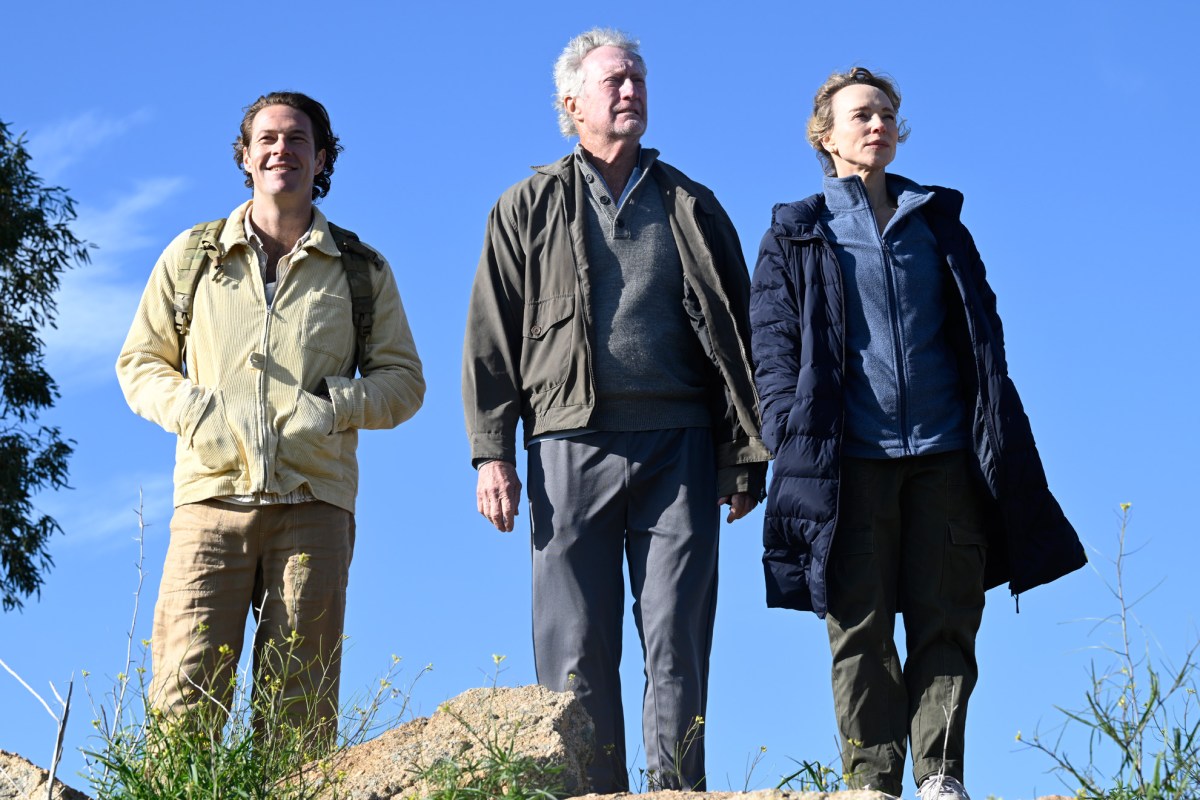
The Travellers: Beresford reunites with Bryan Brown and Susie Porter
Beresford’s latest offering, The Travellers, opens in Australian cinemas seven years after he breathed cinematic life into Madeleine St John’s novel Ladies in Black.
He wrote the screenplay during lockdown. ‘There was nothing else to do,’ he says.
Beresford always had his dear friend and Sydney neighbour Bryan Brown in mind while writing the role of Fred. A kookily charismatic guy, Fred’s prone to crankiness, determined to remain in his crumbling cottage in rural Western Australia even if things have gotten away from him a bit. His wife, played by Christine Jeffery, is on her deathbed.
‘I finished writing the screenplay one night and I took Bryan to a coffee shop and offered it to him the next morning,’ Beresford says. It’s the first time they’ve reunited since Breaker Morant. ‘Bryan plays it strong. That was important. We’re not dealing with someone who’s on his last legs. He’s quite forceful and dynamic and can think for himself.’
Read: Bruce Beresford’s The Travellers to hit Australian cinemas this October
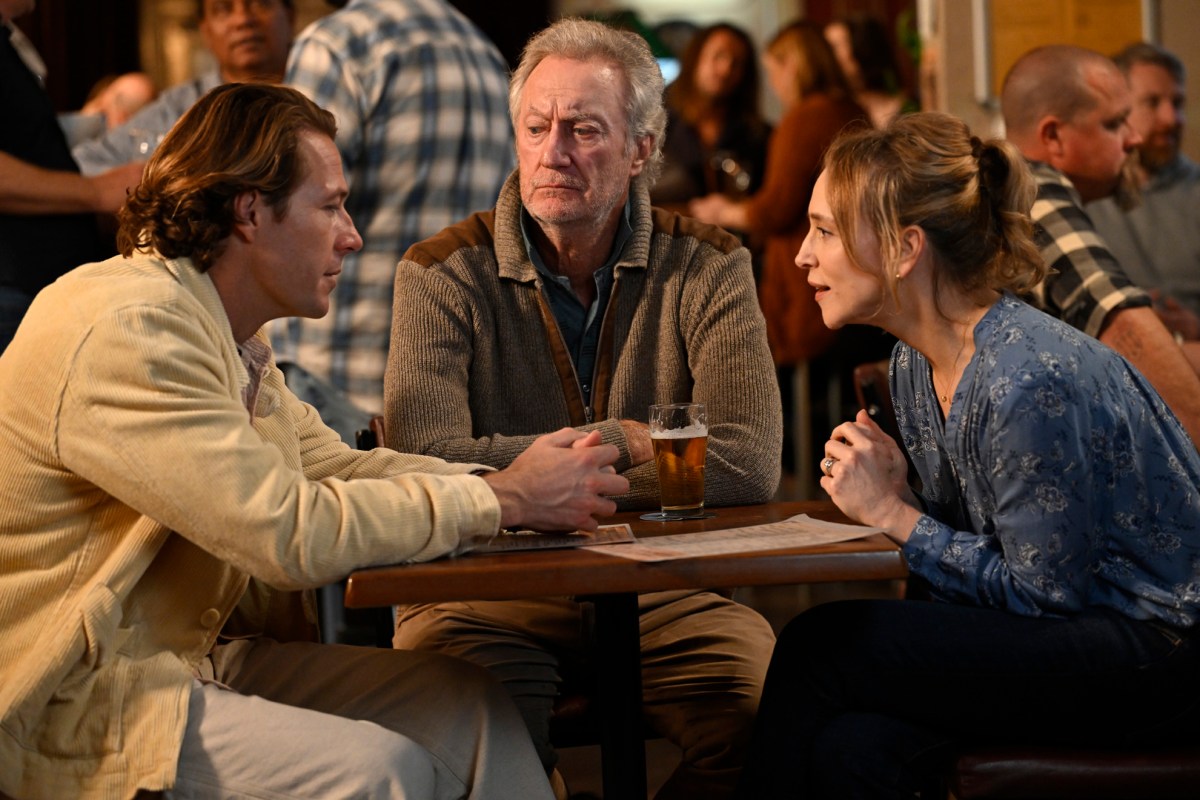
It sets the scene for familial tussle. Fred’s chalk-and-cheese son, Stephen, played by Point Break remake lead Luke Bracey, is a set designer for lavish European operas. When he flies in to see his dying mother, it prompts a difficult conversation about their dad’s future with stoic sister, Nikki, played by Susie Porter, who Beresford worked with on Ladies in Black and Paradise Road (1997).
Beresford returned to Porter and Brown as two actors who can respect a screenplay but make it their own. ‘Susie and Bryan are very naturalistic,’ he says. ‘I always like to listen to actors when it sounds like they’re improvising the dialogue, even though they are not.’
Bracey was suggested to Beresford by a producer, and impressed with his ability to keep up with the more seasoned performers. ‘Luke plays the role with a lot of subtlety and believability, even though he’d never been to the opera,’ Beresford says.
Beresford draws on opera and the back-and-forth of family life
A fan of the form since high school, Beresford only agreed to go to his first opera – probably Rigoletto – because the mate who invited him had a beautiful cousin. ‘She was gorgeous but it was the music that completely captivated me,’ Beresford says. ‘Then I became a real devotee and that was another reason I went to London, to haunt the Royal Opera. I saw every production there for years.’
Beresford has directed opera himself, most recently Melbourne Opera’s Macbeth in 2021, and relished the opportunity to include sequences from Antonín Dvořák’s Rusalka and Giuseppe Verdi’s La traviata in The Travellers. He also includes a clip of fellow Australian adventurer Errol Flynn, taken from 1938 classic The Adventures of Robin Hood.
‘I knew I wanted to get an Errol Flynn film,’ Beresford says. ‘Robin Hood was one he made independently after his Warner Brothers contract ended, which made it much easier because you’d be tied up in red tape otherwise. We just contacted his daughter and she gave us the okay.’
Family is at the heart of The Travellers. ‘The original idea came from an incident where I had to come back from America because my mother was very sick and then, about a year later, I came back because of my father,’ he recalls.
Friends are facing a similar situation now, wrestling with the best way forward. ‘I realised it’s an interesting source of drama that affects so many people,’ Beresford says.
Watch the trailer
A hand up along the way
As a young man, Beresford’s interest in film very quickly coalesced around one role. ‘By the time I was 10, I started to remember directors’ names,’ he says. ‘My friends would say, “Oh, we want to go and see this film on the weekend, you coming, Bruce?” And I’d say, “No, the director’s no good,” and go do something else.’
He travelled in Europe after graduating from the University of Sydney, then tried to break into the film scene in England, taking an editing gig in Nigeria when that didn’t work out. It’s where he also dipped his toes into theatre directing, eventually returning to London and a gig at the British Film Institute.
He returned home just in time to catch the Australian New Wave, and those barbed reviews for Barry McKenzie stung. ‘[Star] Barry Humphries and I were very taken aback, because we both thought, “Well, it’s just good fun.” But then the reviews came and said, “Oh, this reflects very badly on Australia,” and everyone got very puritanical about it, which surprised us.’
His fortunes soon changed. Beresford insists much of his early success was down to good luck and even better friends. ‘Barry really helped me, as did [cinematographer] Don McAlpine and [producer] Phillip Adams. Their contribution is enormous.’
He adds, ‘Philip called me when I was in London and asked if I’d read a play called Don’s Party.’ Beresford hadn’t, but it sparked another of his great loves. ‘[David] Williamson is such a terrific writer. He’s written about 50 plays and I’ve seen at least 30 of them. I love when plays are full of good, believable dialogue and wonderful conflict.’
Beresford’s natural instincts
Beresford has adapted five plays for the big screen, including Alfred Uhry’s Driving Miss Daisy and Kenneth G Ross’ Breaker Morant, expanding the scope of both. ‘If you actually got hold Kenneth’s play, it’s quite different,’ Beresford says. ‘It wasn’t naturalistic enough, so I did a lot of work on that script.’
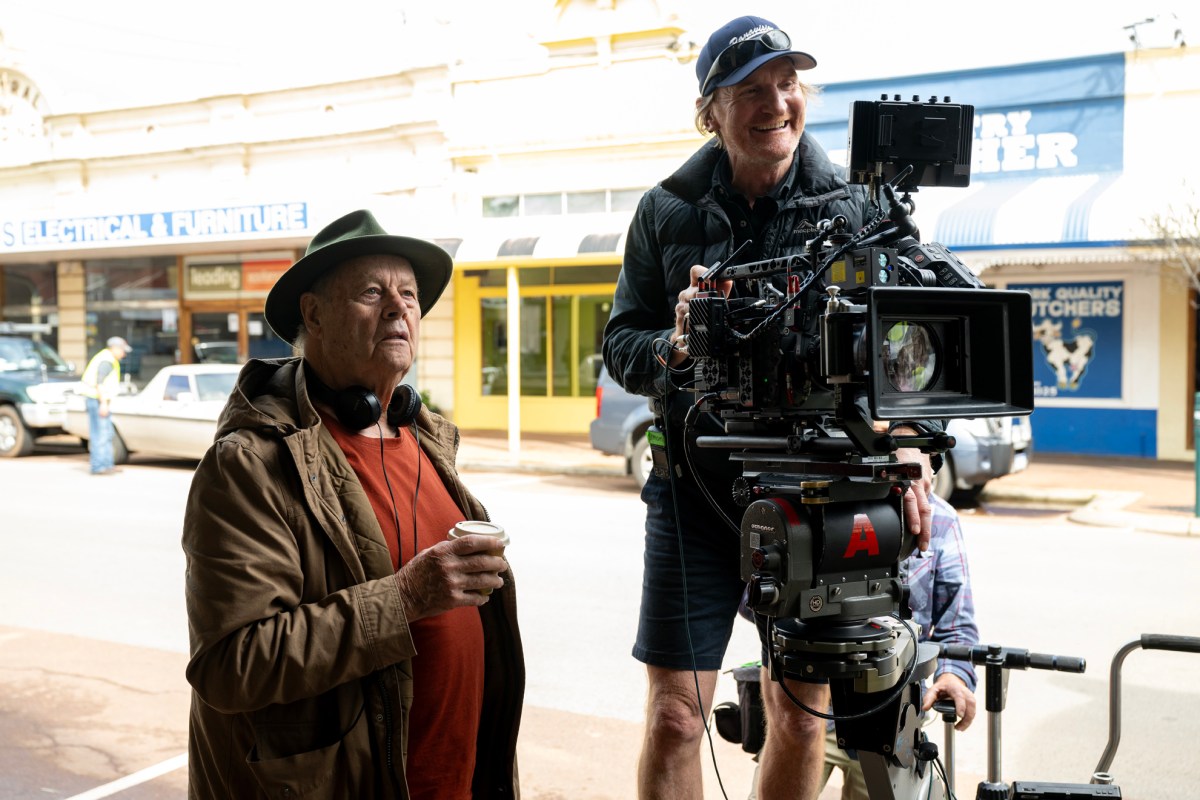
Naturalism is key to Beresford. It’s why he values Brown and Porter’s performances so much. And just like theatre or opera, which embrace the intimacy of being right there, Beresford hopes the pendulum swings back from streaming at home towards the communal cinematic experience once more.
‘There’s really nothing to compare with seeing a film on a big screen and having an audience around you,’ he says. ‘No home cinema compares to that.’