At 21 years old, Adelaide-born filmmaker Alice Maio Mackay already has six trans-forward horror features (many streaming on Shudder) and a bunch of shorts to her name. In fact, she’s in the middle of shooting a new film as we speak. This, just after her more romantically-minded The Serpent’s Skin, which is currently screening at the Melbourne Queer Film Festival following its global debut at Frameline in San Francisco and Australian premiere at SXSW Sydney.
Embracing the horror genre while queering the tropes, Mackay’s fabulously fun and empowering features are shot on a shoestring budget that’s largely crowdfunded, rather than reliant on state and federal bodies like Screen Australia.
‘It allows me to tell the stories that I want to tell, with the cast and with the crew that I want,’ Mackay says. ‘I’m not sacrificing anything, toning elements of transness or trans life down. I can be more subtle with it, or more in your face.’
The Serpent’s Skin director interview – quick links
Getting an early start
Filmmaking has been the driving force of her life. ‘I made [debut feature] So Vam when I was 16,’ Mackay says. ‘It’s crazy to me that people are still logging my short, Tooth 4 Tooth, which I shot at 14. So I’ve been able to grow and evolve, developing the stories and fine-tuning my voice and aesthetics.’
With a punk sentiment that recalls Rainer Werner Fassbinder’s electric oeuvre, Mackay’s work channels everything from emo rock to gothic fairy tales, adopted by way of films including The Craft and Francis Ford Coppola’s Twixt, plus small-screen fantasies like Charmed and Buffy the Vampire Slayer.
Mackay’s films seem to play out in an ambiguous world that’s slightly out of time and place, shot in Australia with both local and American actors using their own accents.
‘I don’t want to geo-lock myself,’ Mackay says. ‘There are artists that I feel are right for the part, and if they’re right for the part, that’s who I want them to be, to tell the story we all can. And it’s kind of ambiguous, with references to 90s and flip phones, it’s just this other, fantasy world.’
A true queering. After all, being seen matters, with reflections of any nature few and far between when Mackay started. ‘When I first came out, there wasn’t a lot of trans films out there, especially in Australia,’ she says. ‘There was 52 Tuesdays when I was younger, but not much else.’
Read: Jimpa review: supple and rewarding cinema
Things are changing rapidly. Mackay is often mentioned in the same breath as Canadian filmmaker Louise Weard, who directed Castration Movie and co-produced The Serpent’s Skin, as well as American filmmakers Jane Schoenbrun of I Saw the TV Glow fame, and Vera Drew, the celebrated creator of The People’s Joker. Drew edited both The Serpent’s Skin and Mackay’s previous feature, Carnage for Christmas.
‘Getting to work with Vera and shadowing Jane recently, kind of becoming friends, just goes to show we are all over the globe,’ Mackay says of their solidarity. ‘We’re able to tell very different types of films and yet be connected, and I think that’s really special.’
Good neighbours in The Serpent’s Skin
The Serpent’s Skin marks the first feature Alexandra McVicker has shot since coming out. ‘I didn’t even realise this, but I’d watched her pre-transition in [HBO show] Vice Principals,’ Mackay says. ‘It feels like a sense of trust, from her, that this is the first project to really reintroduce herself. I felt very honoured.’
McVicker plays Anna, a young woman prone to self-harm who skips her smothering, small town life to start over in the big city with hope. Anna has emerging powers that allow her to ‘pop’ the minds of anyone who threatens her or others, which come in handy when the record store she lands a gig at, run by Heartbreak High and Neighbours star Scott Major as Buzz, is robbed by a bigoted thug.
Anna crashes with her sister, Dakota, played by another Neighbours alum in Charlotte Chimes. ‘During the pandemic, I was obsessed with Charlotte’s storyline, stealing a baby from London, and I also watched all the old Heartbreak High episodes, so working with Scott and Charlotte was very surreal.’
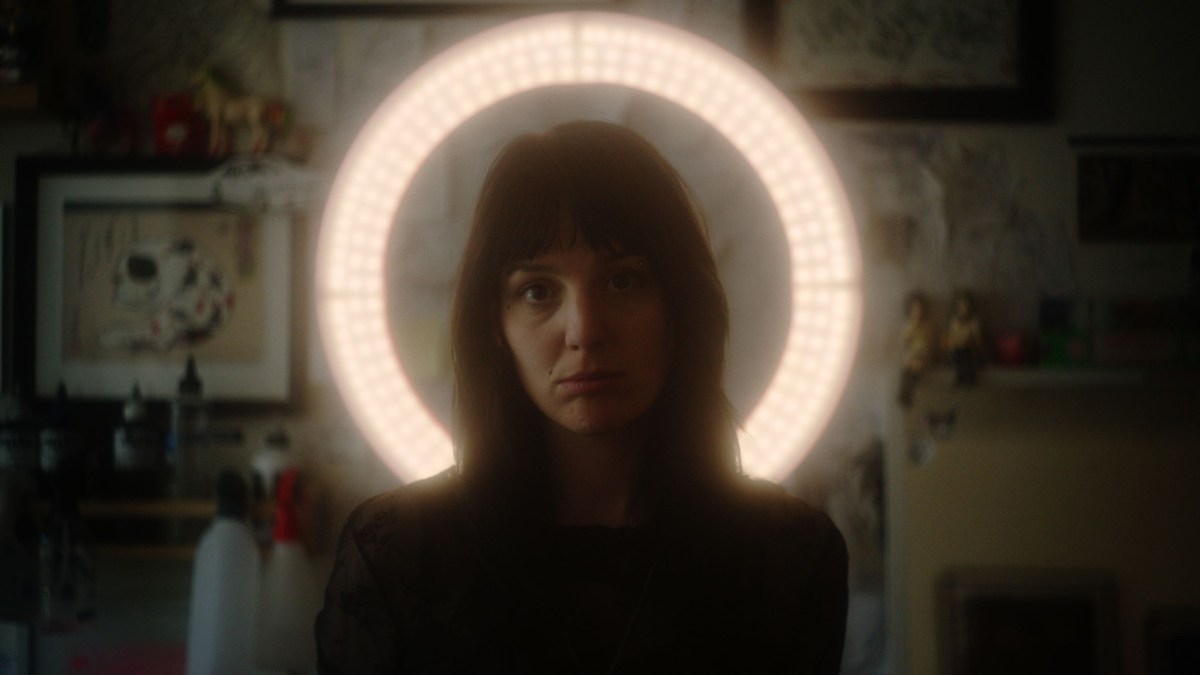
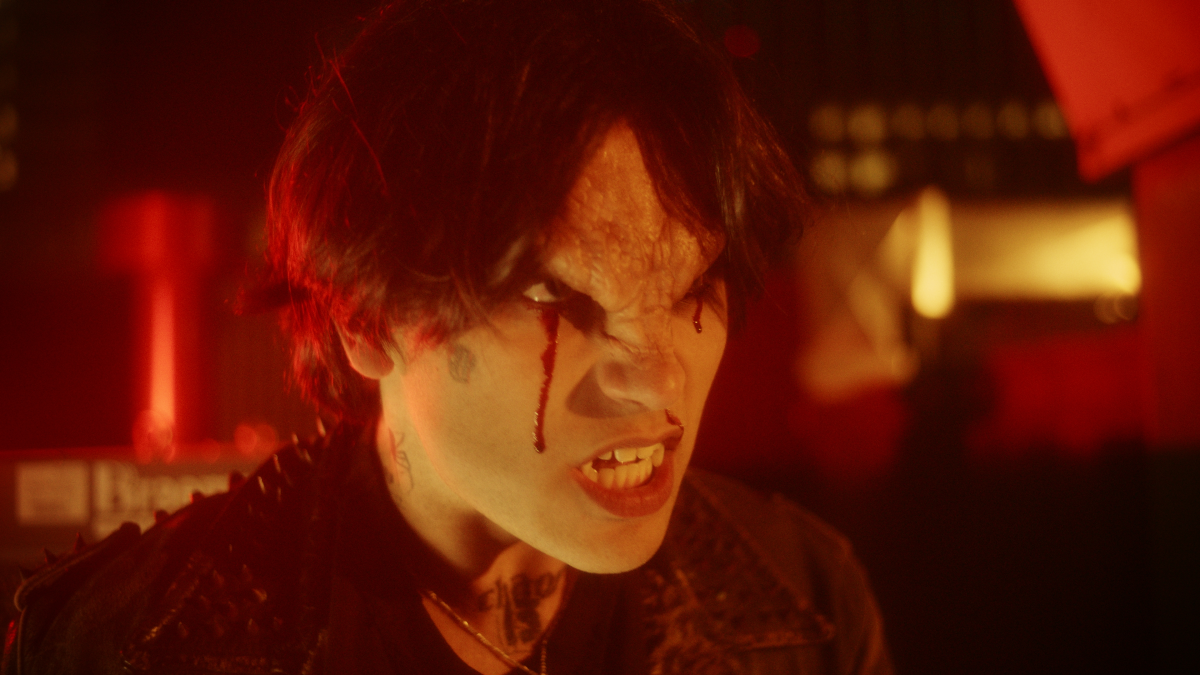
Anna has a one-night stand with a cute rocker, Jordan Dulieu’s Danny, who lives in the apartment building that Dakota jokingly (though prophetically) dubs the Bates Motel. But she really has eyes for tattooist Gen, played by Avalon Fast, whom Anna first sees in visions.
‘Avalon is also an incredible filmmaker [Honeycomb, Camp] who I look up to,’ Mackay says. ‘I didn’t really think of her as an actress until one day she was like, “If you ever need anyone, I’m always happy to audition”.’
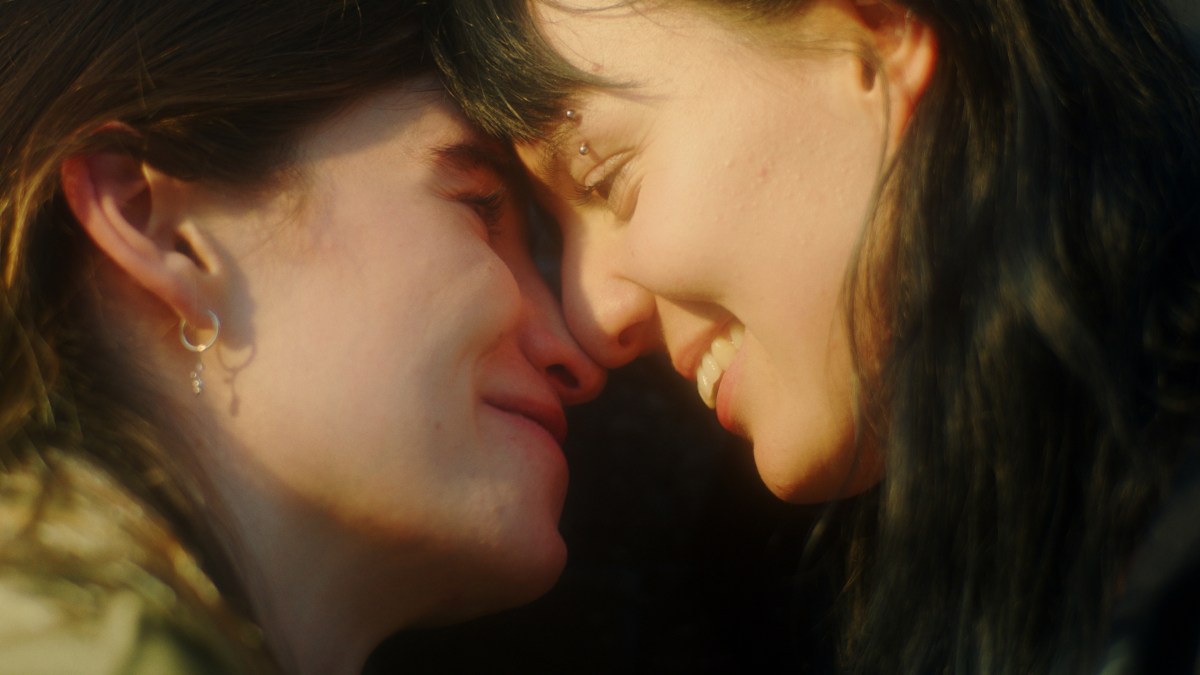
Those visions symbolise a longing for connection that many queer viewers will recognise. ‘Anna experiences isolation, then she has these like glimpses of Gen, and it represents her future. That she’s not alone, even if she physically is in that moment. It’s that glimmer of hope.’
Sure, The Serpent’s Skin involves demonic possession via skin art and a staller draining the life force from a variety of folks. But it’s also a sex-positive, tender film, marking a shift in tone from Mackay’s more frenetic features.
Mackay worked with emerging intimacy coordinator Zoe Taylor, who is also queer. ‘That was really vital to this film,’ Mackay says. ‘Anna and Gen’s relationship is central; they’re soul mates. But it was important to me to depict Anna, a trans woman, having a lovely, consensual sex scene with a cis man, because that isn’t something we see on screen very often.’
Just do it
Visibility and sensitivity matter, particularly in a political climate in which trans communities all over the globe are under relentless attack.
‘There are a lot of trans actors who were booking roles way back in the 2000s, and they aren’t as much anymore,’ Mackay says. ‘So having a community to fall back on matters, especially when there are still a lot of regressive and transphobic people within the film industry. Just having a chat and sharing resources is really beautiful.’
This support network is also why the platform offered by prestigious film festivals, whether specifically queer like MQFF and Frameline, or more broadly by the likes of SXSW, is vital for filmmakers like Mackay. ‘Having these festivals program works by trans people and all along the gender spectrum is really important,’ Mackay says.
Read: Melbourne Queer Film Festival – ScreenHub’s top 6 picks
Mackay has assembled a solid crew, including her regular co-writer Benjamin Pahl Robinson, composer Alexander Taylor, and cinematographer Aaron Schuppan.
‘It just feels like family at this point,’ Mackay says. ‘We’ve worked so often together under these intense, albeit fun, circumstances, making a movie with no money and wanting it to be the best we can.’
Mackay heartily recommends that other LGBTQIA+ filmmakers hoping to follow in her footsteps build that support network and crack on. ‘As cheesy as it sounds, you just have to find a way to tell these stories. It’s not always going to turn out perfectly but if you have this desire and passion for any kind of storytelling, you just need to make it. You can’t sit around waiting for something to happen.’