
Sir Alan Ayckbourn’s 1985 play Woman in Mind relies on nuance and tone to reach its audience. It’s the story of Susan, a vicar’s wife who escapes her dull reality by exploring an imaginary world, and on that surface level, it’s a very British comedy about roles and expectations.
Dig a little deeper and it might have something more serious to say, not just about gender stereotypes, hopes and dreams, but also about the myths and misunderstandings around mental illness.
Ayckbourn’s writing remains sharply observant, in this the play’s 40th anniversary year, giving an insightful critique of middle-class mores and the inability to engage in a meaningful way with anything deeply personal or emotional.
Woman in Mind review – quick links
Sheridan Smith leads a neat ensemble in this very British period piece
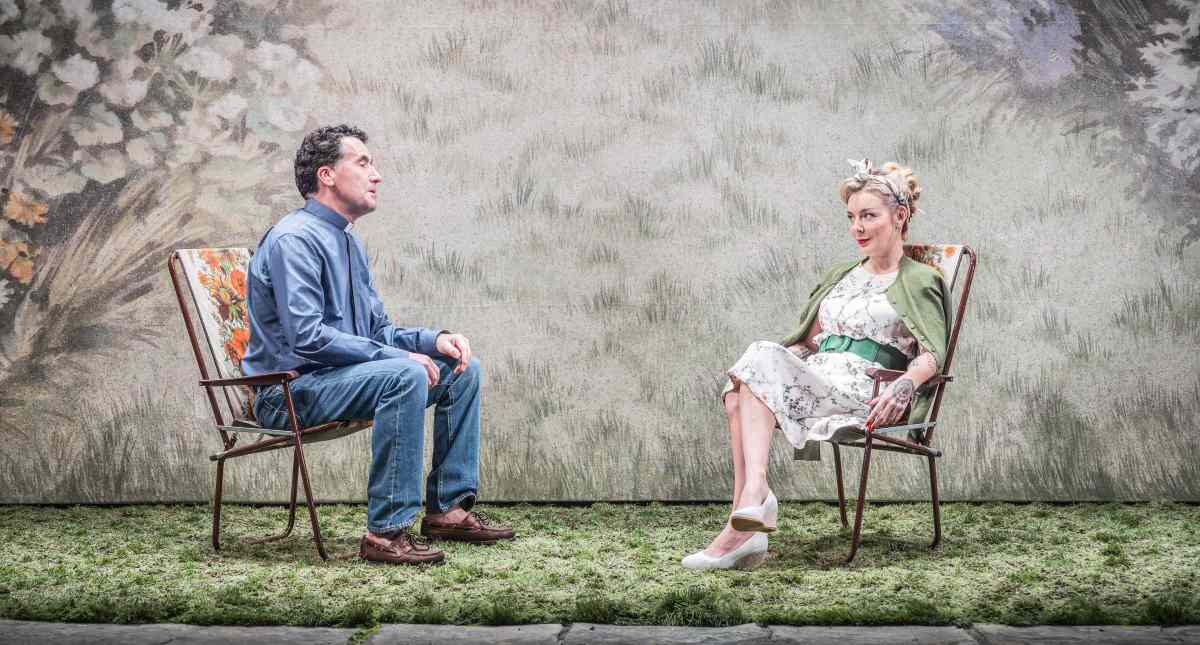
This new revival at the Duke of York’s Theatre leans into a faintly uncomfortable blend of farce and dramatic unease. Yes, there are some laughs, but we’re also very aware that something is amiss.
At first it’s not clear if Susan is really having a nervous breakdown or is just painfully bored and unhappy. This creative and psychological tension is important but doesn’t quite sustain the play today with as much force as it probably did back in the day.
Sheridan Smith is appealing in the lead role, bringing a real sense of empathy and understanding to her portrayal of Susan. We understand her feelings of frustration and isolation as her life, real and imagined, closes in around her.
While some of the physical comedy is not entirely convincing, we still see her as a real person with genuine issues, not just a cut-out character from a 1980s’ sitcom.
This is a role that’s been played by many accomplished actors – including Julia McKenzie, Helen Mirren and Stockard Channing – and Smith still manages to make it her own.
Woman in Mind’s real and imaginary worlds
The two men in her life are husband Gerald, played with a gentle touch by Tim McMullan, most recently seen on television in the Magpie Murders series, and her bumbling doctor Bill, played by comedian Romesh Ranganathan, making his West End stage debut.
They share the stage well. Gerald has some great lines, often delivered without a flicker of amusement. As he says with suitable disdain, ‘Sarcasm is the greatest weapon of the smallest minds’.
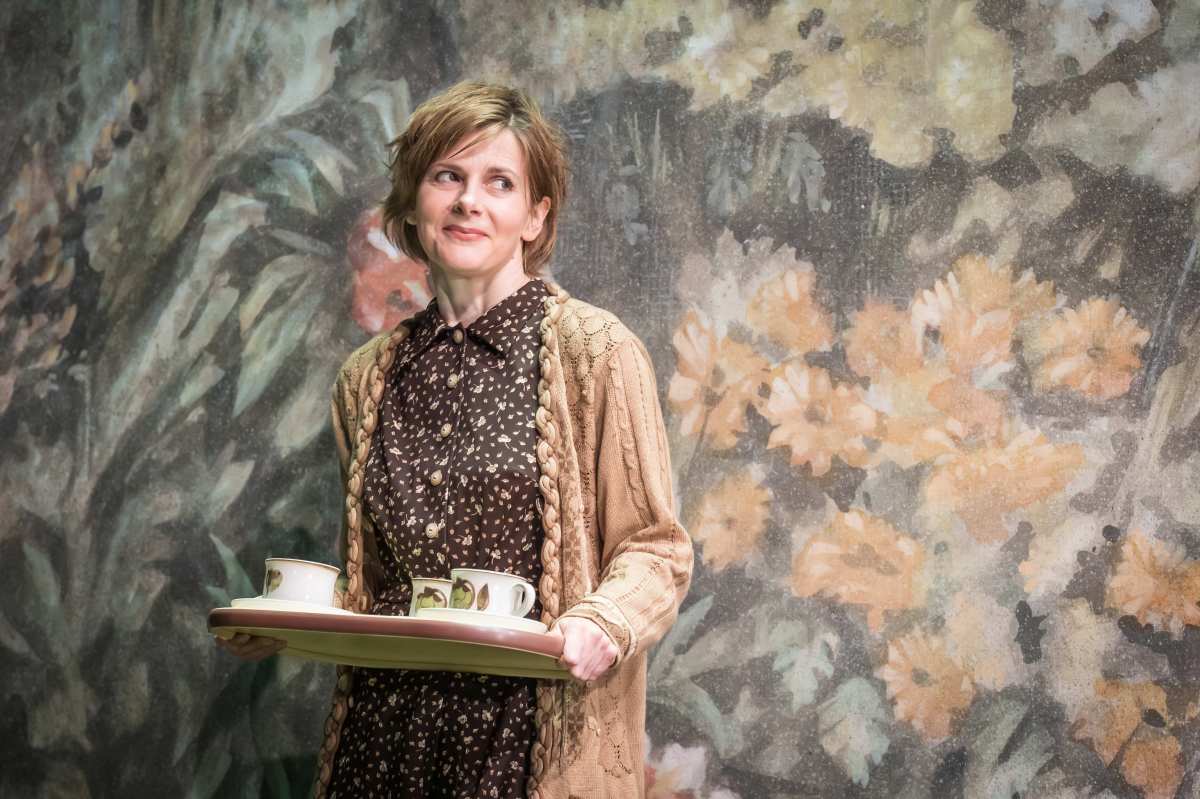
Around them, her children, real and imagined, and fantasy husband Andy, are thinly-drawn rather than fully developed characters, but are bright and breezy and create a welcome change of pace. Susan’s imagined family is perfectly curated in sharp contrast to her real family. A special mention goes to Louise Brealey who does a creditable job as Susan’s intentionally annoying sister-in-law Muriel.
Staging Susan’s mental leaps
Susan’s garden, some 20 to 30 square feet in real life, becomes a large estate complete with tennis court and lush plantings in her imaginary world.
Director Michael Longhurst has opted for a semi-staged production with little set and few props. The theatre’s safety curtain is used as a key marker, adorned with flowers, and it’s lifted and lowered to indicate Susan’s place, real or imagined.
The set and costumes by Soutra Gilmour create a colourful hyperreal sense of the time. Curiously there is no attempt to conceal Smith’s multiple tattoos which is somewhat at odds with her role. A vicar’s wife would easily wear the sleeveless summer dress but it’s unlikely she’d be so heavily inked.
The lighting, sound, and video design all help to set the scene and really come into their own as the emotional tension builds towards the end of the play.
There is a frustrating slowness to the first half of the play. We understand what’s happening and want it to move along. The second half is more dramatic but still feels a little unsatisfying. The tonal balance just doesn’t always hold, and the broad comedy of the beginning inevitably undermines the impact of Susan’s sad crescendo of despair. These are small problems in a strong revival, anchored by strong central performances.
While it may not fully explore the depths of this unsettling play, there is plenty to contemplate and to admire. Woman in Mind certainly leaves you wondering what happens when fantasy becomes more appealing than reality.