
‘It’s the end of the world as we know it,’ sings Carol Sturka, borrowing from Michael Stipe, in the seventh episode of Pluribus. The misanthropic romantasy author at the centre of Apple TV’s new sci-fi series isn’t wrong.
But what if an alien virus that rewrites the RNA of almost every human on earth and connects their consciousnesses isn’t a dystopian nightmare? What if earth’s new hive-mind population feels exactly what Carol, in her R.E.M. car karaoke session, doesn’t? What if they feel fine?
Pluribus review – quick links
Pluribus: believe the hype
Pluribus is another must-see from Breaking Bad creator Vince Gilligan and a reunion with Better Call Saul’s exceptional Rhea Seehorn, who plays Carol.
Cleverly and compellingly, Pluribus asks if it’s more terrifying for an apocalypse of widespread death and destruction to forever alter life as humanity knows it – whether via an outbreak, extra-terrestrial invasion, cosmic body, war, climate change or technology gone rogue, all of the usual film and TV suspects – or for peace, love and happiness to reign supreme at the cost of individuality. (A third option: is today’s status quo scarier than them all?)
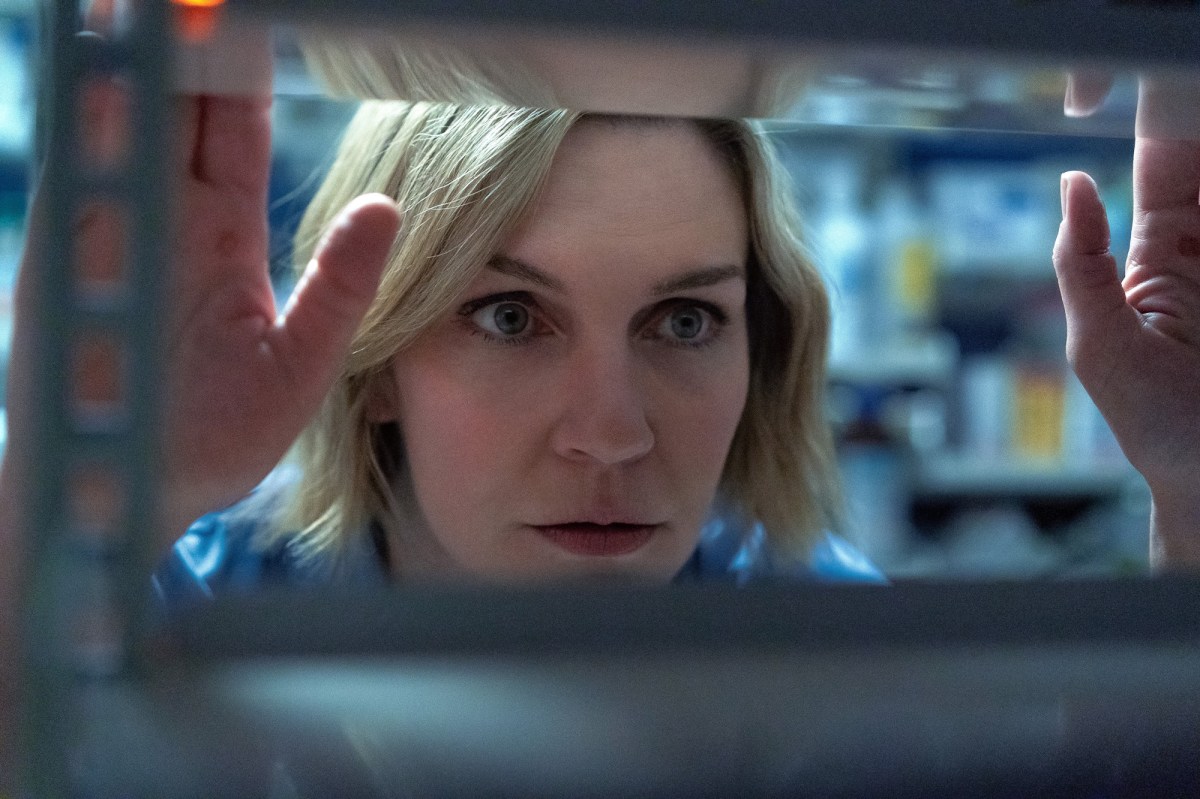
Harmony still has a body count, as Carol heartbreakingly witnesses when ‘the joining’ occurs while she’s toasting the conclusion of a book tour with her partner Helen (Miriam Shor). And yet, even among the mere 12 others across the globe who aren’t unceremoniously subscribed to the mental cloud, Pluribus’ protagonist is an outlier.
Her pleas for their help to reclaim the world – ‘we’ve all seen this movie and we know it does not end well,’ she impresses – are mostly met with disinterest.
Vince Gilligan’s loving return to sci-fi
Viewers familiar with Gilligan’s work will be well aware that his shows turn out spectacularly – rarely for his characters, admittedly, but always for his audience. Just like Carol, Pluribus is rightly wary of conformity; however, in adding to its guiding force’s stellar slate, this smart and bold series complies.
For the decade and a half between Breaking Bad’s 2008 debut and Better Call Saul’s 2022 finale, which also included 2019’s straight-to-streaming film El Camino: A Breaking Bad Movie, Gilligan crafted an Albuquerque-set franchise filled with intricate and gripping character studies.
While Walter White’s transformation from high-school chemistry teacher to drug kingpin was the saga’s catalyst, there’s been no better tragedy on 21st century TV than Saul Goodman’s plight.
Read: 5 best Australian TV series of 2025
Whatever followed for Gilligan was certain to spark eager interest, then, as any new effort from one of the medium’s current greats always should. With Pluribus, he’s back in New Mexico’s biggest city, back with Seehorn, and back diving deep into complex and flawed figures.
He’s also harking back to The X-Files, the ’90s-debuting hit that initially introduced his talents, reigniting an idea that he explored in his directorial debut on that beloved show: that peace on earth might be achieved instantly if humanity in its present state was largely eradicated. It’s a return to sci-fi that’s also influenced by The Twilight Zone and Invasion of the Body Snatchers.

Plying his skills for Apple TV, Gilligan unfurls Pluribus on a platform that’s already established itself as a loving home for the genre too. As the likes of Severance, Silo, Dark Matter, Sunny and Constellation have all demonstrated (the latter featuring Breaking Bad and Better Call Saul alum Jonathan Banks), there’s little that the streamer covets more than sci-fi mysteries.
Unsurprisingly given all of the above, its newest addition is now its most-watched drama series of all time.
Pluribus: a multi-level masterclass
Come for the intriguing idea, stay for the unparalleled execution: that’s the Gilligan promise.
Regardless of whether he’s firmly in the crime genre or psychically linking an entire planet’s brains to contemplate personal-versus-collective idylls and the value of unique thought, Gilligan offers an absorbing and astute examination of what it means to be human.
Indeed, if Gilligan knows one thing about earth’s most dominant species, it’s that we’re all just figuring it out as we go along. No one has all the answers. Anyone who thinks they do is deluding themselves. Whatever sits before us, even if that’s battling the power of a single sentience that promises to fix everything, the sole choice is trying to find a way forward.
Although Gilligan’s isolated protagonists mightn’t realise that they’re confronting this reality again and again, it’s evident in their deeds. Playing Carol, who was blisteringly sardonic and unhappy when life was normal, Seehorn wears this truth on her face.
In a role specifically written for her, as well as the leading part that viewers were desperate to see after her awards-nominated turn as Better Call Saul’s Kim Wexler, Seehorn delivers an emotional masterclass.
That she often does so alone due to Carol’s cynicism and cantankerousness makes it even more remarkable. Even Zosia (Karolina Wydra), her assigned chaperone from the unified horde, takes her leave.
Ever cognisant of her imperfections – her books are ‘mindless crap’ and her readers ‘dummies’ – Carol might seem among the least likely candidates to champion humanity’s importance, but Seehorn couldn’t be a savvier choice to unpack and refute that perception.
Vince Gilligan is in his element with Pluribus
Gilligan’s latest stroke of casting genius expands his own ongoing masterclass. In brandishing precision and patience on the small screen, he too stands solo.
As his leads repeatedly unveil career-best portrayals and his supporting players, such as Carlos-Manuel Vesga as Paraguayan holdout Manousos, similarly excel, Gilligan proves peerless when it comes to letting imagery and action do the talking.
In stressing that we’re all simply getting by on the fly, he shows and never tells. The process sequences that became Breaking Bad hallmarks, then anchored Better Call Saul, are again pivotal in Pluribus.
Alongside Seehorn grappling with the many challenges plaguing Carol, nothing in Pluribus is more captivating than watching a discovery ripple from intergalactic radio waves to spread globally, or following the ordeal to bury a loved one, search for food or make a treacherous trek across South America.

Gilligan also knows the rewards that spring from toiling for a solution, taking the time to do a job properly, waiting for everything to click and truly earning a result. Pluribus’ first nine-episode season (a second has already been greenlit) is a love letter to this fact.
That mightn’t be everyone’s position – while the response has mostly been glowing, some struggle with the series’ deliberate pacing – but in the stunning cinematography and shrewd storytelling that’s so inherent to his work, Gilligan has always treasured uncommon angles and different perspectives.
Pluribus may dwell among other giants on his resume, however it stands alone as 2025’s best.