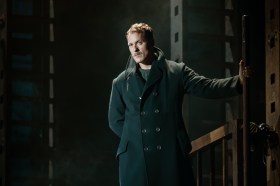
The London Symphony Orchestra (LSO) gave a wonderfully strong account of The Makropoulos Affair, a strange and other-worldly opera by Czech composer Leoš Janáček. The LSO, and Conductor Emeritus Sir Simon Rattle, have showcased many of Janáček’s works both in performance and as recordings for LSO Live. Based on a play by Karel Capek, The Makropoulos Affair is the fantastical story of Emilia Marty, a beautiful opera singer who long ago found the secret to eternal life and now is 337 years old. It is finally revealed that she was born Elina Makropoulos in Crete in 1585. She has taken many identities during her long life, each named as to have the initials EM.
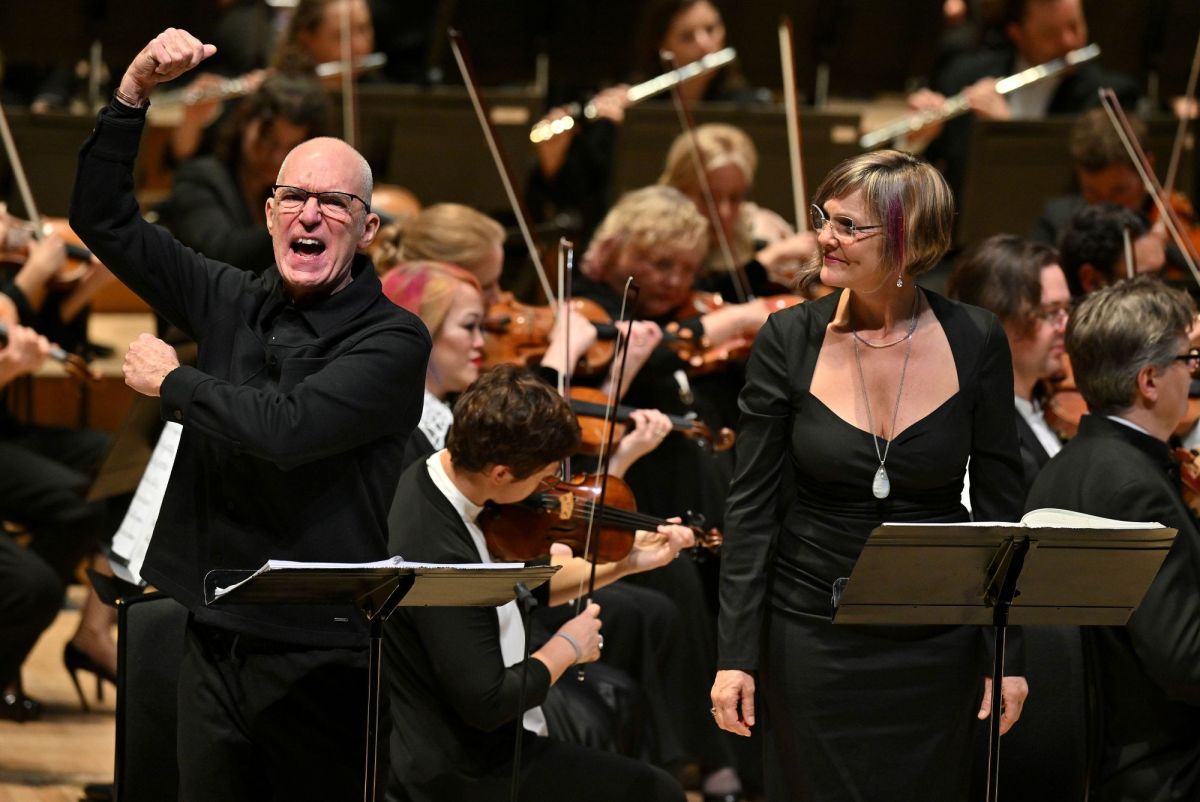
This was a concert performance with the singers standing in front of the orchestra. Even without the usual trappings of set and costumes to help tell the story, it was a remarkably vibrant and affecting performance. Sung in Czech with English surtitles above the players, the storyline can be a little confusing – it’s definitely helpful to read the synopsis first – but hearing it in its original language is a delight. Janáček made detailed studies of Czech folksongs and idioms and used this to great advantage in his compositions. The words fit the music with far more resonance than they ever could in translation.
The Makropoulos Affair: life, death and comedy
The Makropoulos Affair is described in the program notes as ‘a thoroughly metropolitan comedy’ but here it is played more as a meditation on life and death. Even so, there are some delightfully comedic lines such as ‘lunatics live a long time’.
German soprano Marlis Petersen gave an outstanding performance, full of emotionality and vivid vocal colour, in the lead role of EM. This is a part she knows well, and that confidence shone through in every phrase and gesture. It was magical when she sung in full voice with the massed strings playing powerfully behind her. A special mention too for soprano Doubravka Novotná, who studied at the Janáček Academy of Performing Arts, and absolutely shone as Krista.
Alongside Petersen was a cohort of experienced and characterful singers, many of whom have sung these roles previously. And apart from the ever-popular locals Peter Hoare and Alan Oke – who played the same characters last year with Royal Opera – they all have Czech backgrounds and so have a deep and natural affinity with the text and its precise articulation, ensuring they can bring their characters to life. There’s also very little actual action here. Each of the three acts takes place in an enclosed setting – the clerk’s office at a legal firm for Act 1; the stage of an empty theatre for Act 2; and Emilia’s hotel room for Act 3. This makes it a perfect choice as a concert performance.
Maestro Rattle has long enjoyed a deep engagement with Czech musical repertoire, often bringing lesser-known works to the concert hall. This work premiered just a couple of years before Janáček died, and like others from his late period, is a vast and complex score. Apparently the composer was concerned about the orchestra overpowering the voices, but that wasn’t really a problem here.
The Makropoulos Affair: from bold prelude to final flourish
The prelude was big and bold, setting a cracking pace, and played both on-stage and off-stage in a technique Janáček uses to great effect. The score for Act 1 finished with a boisterous climax in contrast to the fateful finish to Act 2. In Act 3, the off-stage brass players are seen again, then they entered and remained standing for the final flourish.
Coming in at almost two hours, played through without an interval, The Makropoulos Affair makes substantial demands on the conductor, singers, and orchestra. Rattle showed his command of the piece, keeping up the tempo and emphasising the richness in the music. It must have sounded quite radical back in 1826 with its original and innovative score and supernatural storyline. Is eternal life worth the grief of lost loves and loneliness? Should we live one life but live it well? There is a lovely passage towards the end of Act 3 where Petersen sings facing the audience, and the others stand with their backs turned to represent their characters now in spirit. It’s a moving moment indeed.