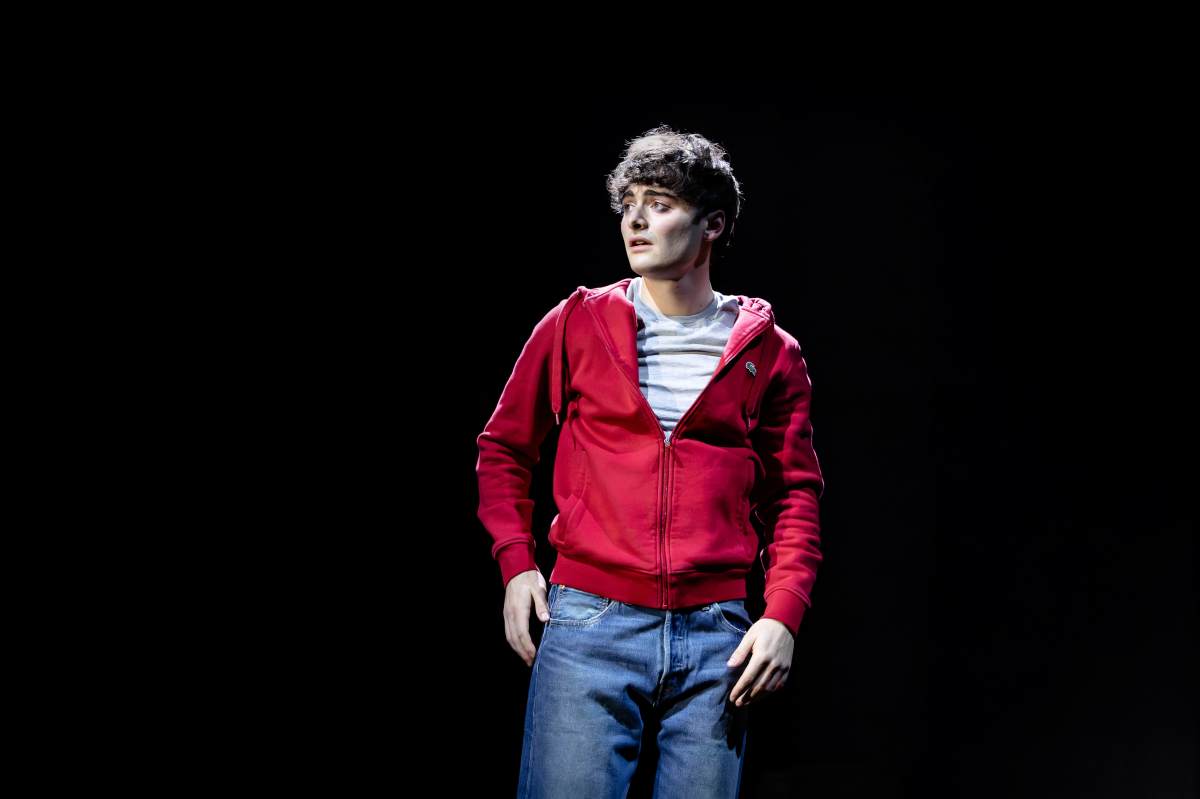
There is something uncomfortably familiar about Affluenza, Andy Sandberg’s new play about the arrogance of wealth, having its world premiere season at Riverside Studios. The drama opens in the Hamptons where two people were killed and several seriously injured in a car accident caused by Dylan, a 16-year-old who had been drinking. And yes, the legal drinking age in New York State is 21.
Stranger Things star Noah Schnapp is convincing as Dylan, the rich boy living in his own messed-up reality, but it’s a shame that he’s making his London stage debut in such a confused and convoluted play. It’s no doubt his fame that saw the play’s season at Riverside Studios in Hammersmith extended before it even opened.
Affluenza review – quick links
A study in entitlement
Dylan is the obnoxious son of wealthy parents who think their money, and an ambitious lawyer, can make it all go away. When his mother says indignantly, ‘People died, he didn’t kill them’, it sums up their complete abrogation of responsibility.
It is Brad, the New York lawyer, played with considerable authority by Rupert Young, who comes up with the ‘affluenza’ defence that basically says Dylan is an immoral imbecile because that’s the way he was brought up. This feels like a rather smart twist on the ‘I had an unhappy childhood, your honour’ defence; either way, it’s still your parents’ fault.
There are some sharp observations here about money and inherited privilege and the first act works well, but the change of pace, tone, and generational shift in the second act is so marked that it feels like a different play entirely. Written and directed by Sandberg, there are strong points in both acts but the play struggles to feel like a coherent work.
The premise clearly reflects the real-life ‘affluenza’ case of Texan teenager Ethan Couch back in 2013, but its roots go back much further. There is a long history of scandals in the US, and here in the UK, where the rules don’t seem to apply if you have wealth, status and friends in high places. These central questions about equality before the law are clearly still very relevant today.
The question of inheritance
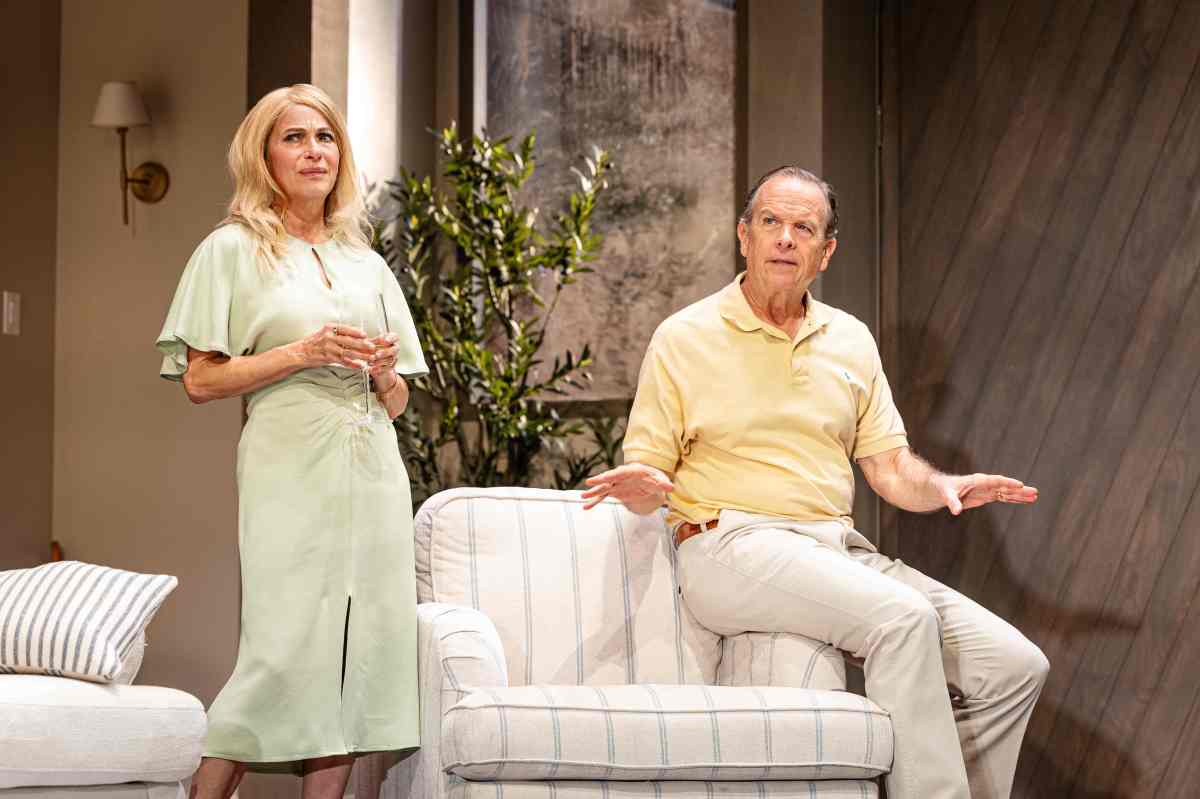
The first act makes the most of this uncomfortable proposition. Juliet Cowan and Donald Sage Mackay are effective as Dylan’s parents, capturing the astonishing arrogance of people who think their money can make anything go away. Cowan is almost a cliché, glass of wine in hand, but there’s also something real about her utter lack of self-awareness and Mackay embodies the awful macho aggressiveness of a man who assumes his money can fix it.
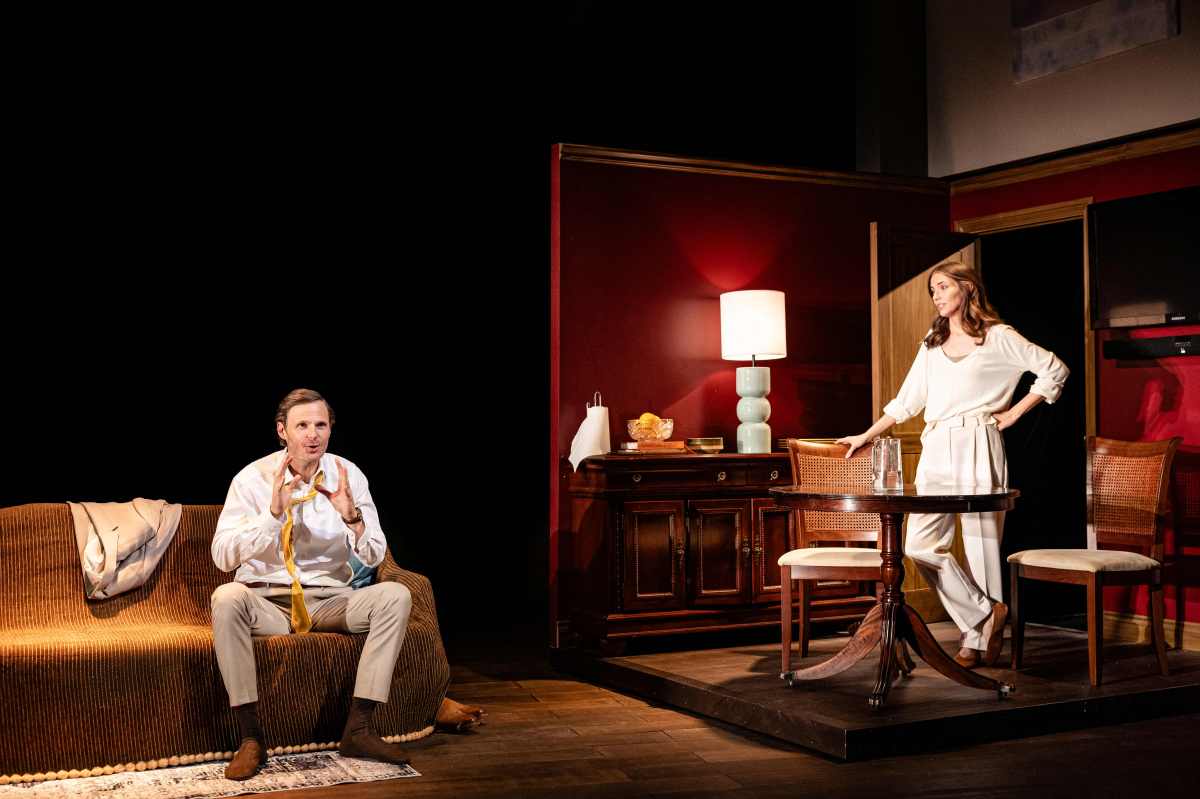
Rupert Young is the production’s strongest presence as Brad, the lawyer increasingly troubled by the moral fluidity required of him but still driven on by his own ambition. Wallis Currie-Wood makes Anna, his psychiatrist wife, a thoughtful and intelligent counterpoint. She’s also hilarious as the morally vacant Crystal in Act Two. The ensemble works well together throughout the play with good contrasts of tone and character.
Sandberg’s most interesting theatrical device comes after the interval, when the perspective shifts dramatically. Time has moved on and Dylan, now played by Young, has his own teenage son, Todd, again played by Schnapp. This is completely disorientating at first but potentially fruitful, opening up broader questions about inherited privilege and parental influence and whether the sins of one generation do inevitably become the burden of the next.
Unfortunately, the second act never quite fulfils this potential as the tone becomes more surreal. Rather confusingly, their life is now the focus of a reality television show and loaded with questions about money, celebrity, fame and privacy.
A wealth of ideas
There are lots of worthwhile ideas here, but the connection to the carefully constructed first half feels tenuous. Indeed, it seems like a different play with a different agenda.
This is a frustrating weakness because Affluenza has a genuinely provocative subject. Its strongest moments expose the extraordinary arrogance of people who have never had to care much about the consequences of their actions.
Its shifting perspectives suggest a desire to dig deeper into the effects of privilege across generations, but it doesn’t quite get there. The second act is too loud, too busy, and too eager to score a quick point to really make a coherent argument.
Even so, the performances give the evening considerable life. There is humanity here beneath the play’s satire, while the ensemble commit fully to the difficult tonal shifts and their multiple roles. It really feels like Affluenza is the victim of its own wealth of ideas; even so its central provocation about wealth and privilege remains a compelling one.
