Danny Robins’s 2:22 – A Ghost Story has established itself as a slick machine built on high-concept marketing and a revolving door of celebrity leads. Ever since its 2021 debut the production has relied on the curiosity factor of seeing pop icons like Lily Allen or Cheryl tread the boards – a novelty that successfully masked the script’s inherent thinness. On the current tour, however, that protection is gone. Stripped of its headline anchors, the play is forced to stand on its own structural merits, and the result is a dramatic foundation that feels remarkably unsound.
2:22 – A Ghost Story – quick links
A paranormal dinner party from hell
The premise is a classic “dinner party from hell” with a paranormal twist. Jenny and Sam have recently moved into a fixer-upper Victorian house, but Jenny is convinced the nursery is haunted by a presence that appears at exactly 2:22am. Sam, a staunch rationalist, remains aggressively skeptical. To settle the debate, they host their old friend Lauren and her new partner Ben for a late-night vigil, waiting for the clock to mark the fateful time.
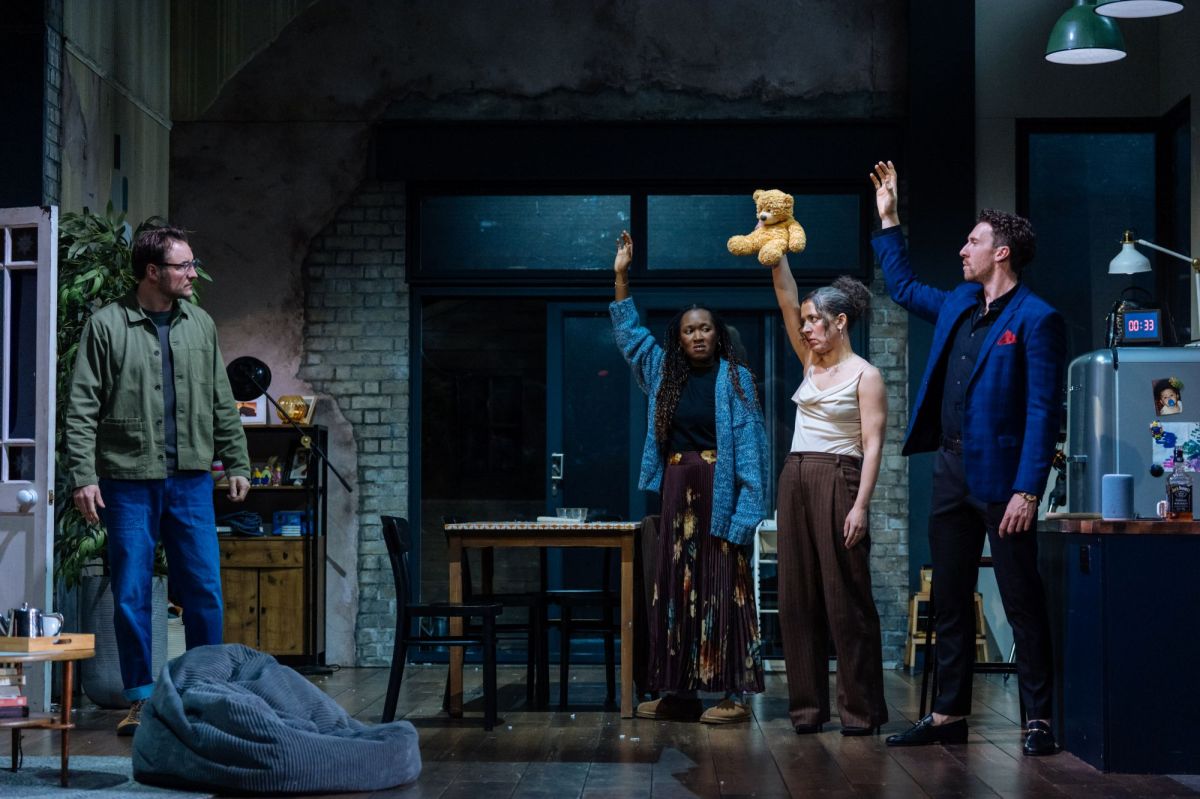
The whole show takes place in Jenny and Sam’s newly renovated kitchen. Robins attempts to ground the supernatural in the sociopolitical, touching on themes of class and the “colonisation” of working-class history through open-plan living. Yet, these observations feel like intellectual “get out of jail free” cards. They are desperate attempts to grant the narrative a weight it hasn’t earned, functioning as thematic window-dressing that ultimately leads nowhere of import.
Cast do well with thinly written characters
The script does the actors few favours. Sam is written with an arrogant, entitled hostility so sharp he seemingly hates his own wife, while Jenny is a two-dimensional “New Mother™” archetype. Lauren begins the show slightly drunk and a little annoying, only to end it very drunk and very annoying. Meanwhile, Ben often seems to have no idea why he is even at this dinner party – a confusion frequently shared by the audience.
It is a credit to this touring cast that they find any humanity within these hollow caricatures. Shvorne Marks does an admirable job of pushing Jenny beyond the anxious new mother cliché, layering her with a palpable history and emotional nuance. James Bye provides a serviceable Sam, navigating the character’s unearned arrogance with a professional, steady hand. Natalie Casey maintains a frantic, propulsive energy, earning many of the few genuine laughs of the night. Her performance is frequently obscured by an American accent that oscillates between an old-timey detective and someone who has never actually encountered an American.
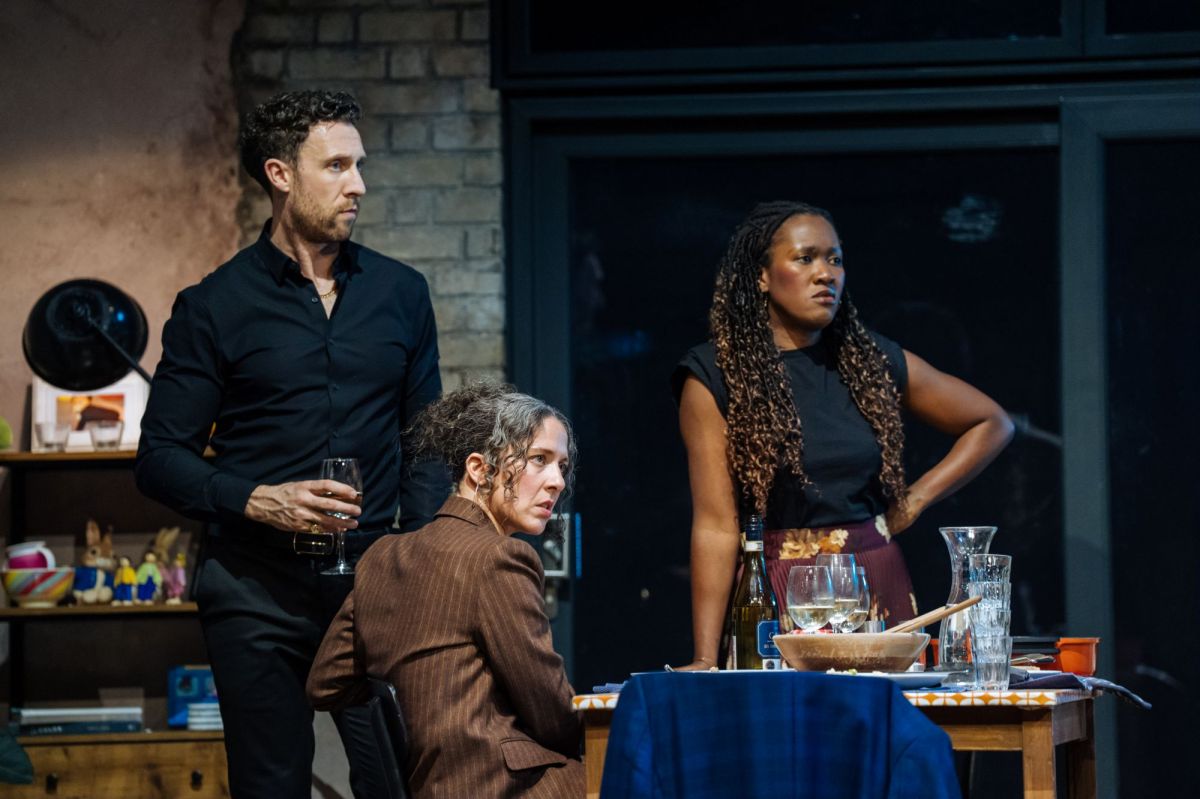
The real highlight of the evening was a display of extraordinary professional resilience. Following an emergency cast change at the intermission, understudy Paul Sockett stepped into the role of Ben and integrated so seamlessly that the transition was nearly invisible. It was a virtuosic save; Sockett’s sharp comic timing provided a vital anchor to a second half that can otherwise feel schematic.
Digital countdown and jump scares
Because the audience is given so little reason to care for these characters, the production relies on mechanical jolts to manufacture stakes. An ear-piercing scream punctuates every scene change. Tellingly, these are the only moments the audience actually jumps. It is a cheap, Pavlovian way to secure a fright, relying on the physical unpleasantness of high-pitched decibels rather than the tightening of a psychological screw. Artistically, it’s more on par with a temporary Halloween haunted house than an elevated piece of theatre.
Read: Clementine review: a riot in a Regency dress
The production’s trademark red digital clock remains a powerful image, inching toward 2:22 as the play builds toward its climax. The way it fast-forwards through time, accompanied by a spooky yet upbeat modern score, builds genuine suspense. Yet, when we finally reach the climax, the reveal is akin to the “it was all a dream” trope – the lowest and laziest of narrative devices. The resolution feels like a trick used to negate two hours of repetitive shouting and sensory assault.
Despite these significant structural flaws, it is impossible to ignore the communal appeal of the production. There is a palpable sense of fun in the room; the audience gasp where they are told to gasp and jump when the decibels demand it. Ultimately, 2:22 – A Ghost Story delivers the jumpy, populist entertainment it promises on the poster, even if any deeper resonance is buried beneath the (ear-piercingly loud) noise.