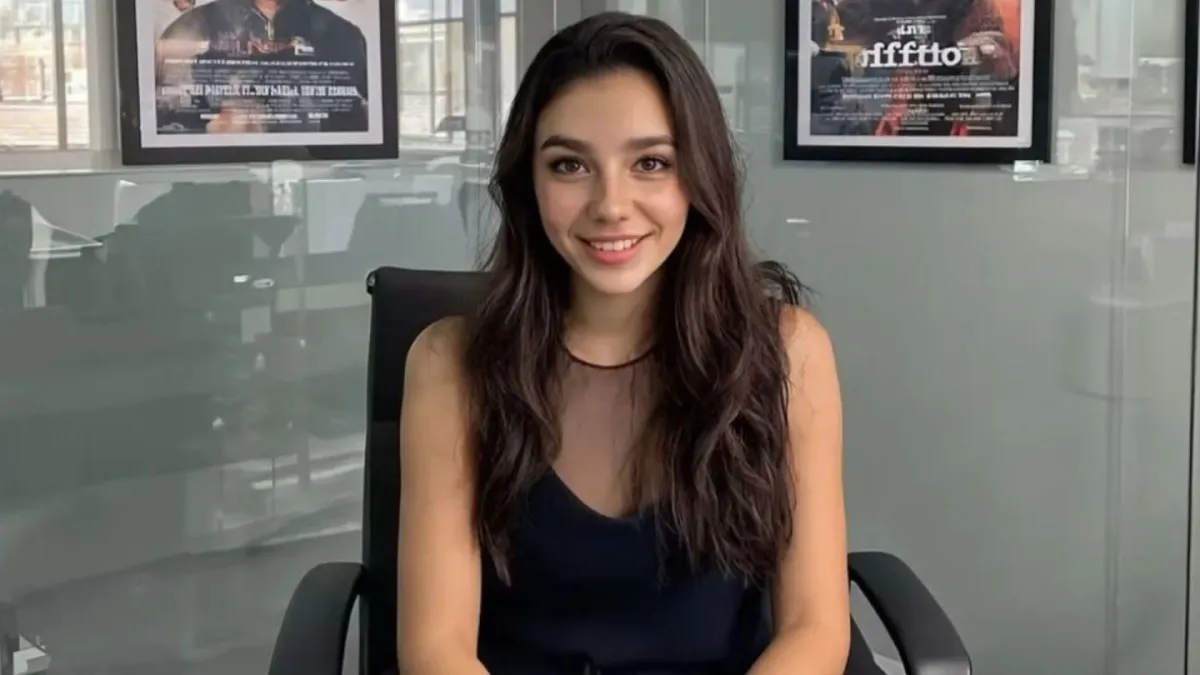
The debut of Tilly Norwood – the world’s first AI-generated ‘actor’ – has triggered panic across the global film industry.
Created by Dutch actor and comedian Eline Van der Velden through her AI studios Particle6 and Xicoia, Norwood has been described by its creator as the beginning of a new era of ‘synthetic talent’.
Van der Velden has now revealed Xicoia is in talks with talent agents interested in signing Norwood. The announcement, made during a panel talk at the recent Zurich Summit, sparked immediate concerns about copyright and the future of human creativity.
Tilly Norwood – quick links
California has already introduced landmark laws aimed at protecting performers from unauthorised AI use, as reported in TheSourceLA. Last year Governor Gavin Newsom signed Assembly Bills 1836 and 2602, which make it illegal to digitally reproduce an actor’s likeness or voice without their consent. That’s now been followed with another AI safety bill regulating standards for AI developers.
Until this, there were no clear limits preventing studios from generating digital doubles of performers for film or television, and there’s no telling which actors’ faces were digitally synthesised and fused together to create Norwood or other AI generated models. While Van de Velden would tout this as the way of the future, it’s got many people clenching their jaws while wondering exactly what that future entails.
The launch of Tilly Norwood
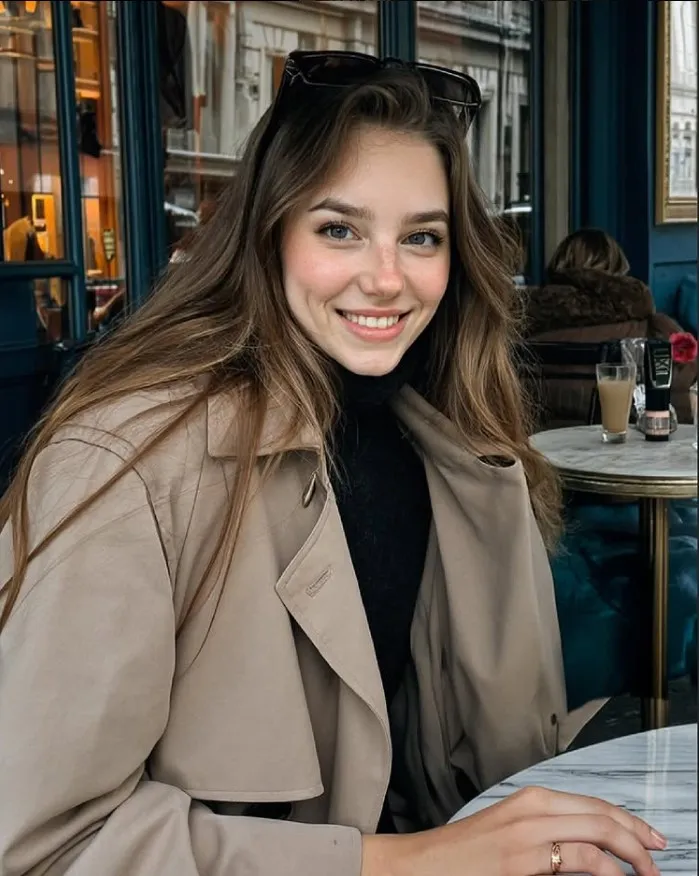
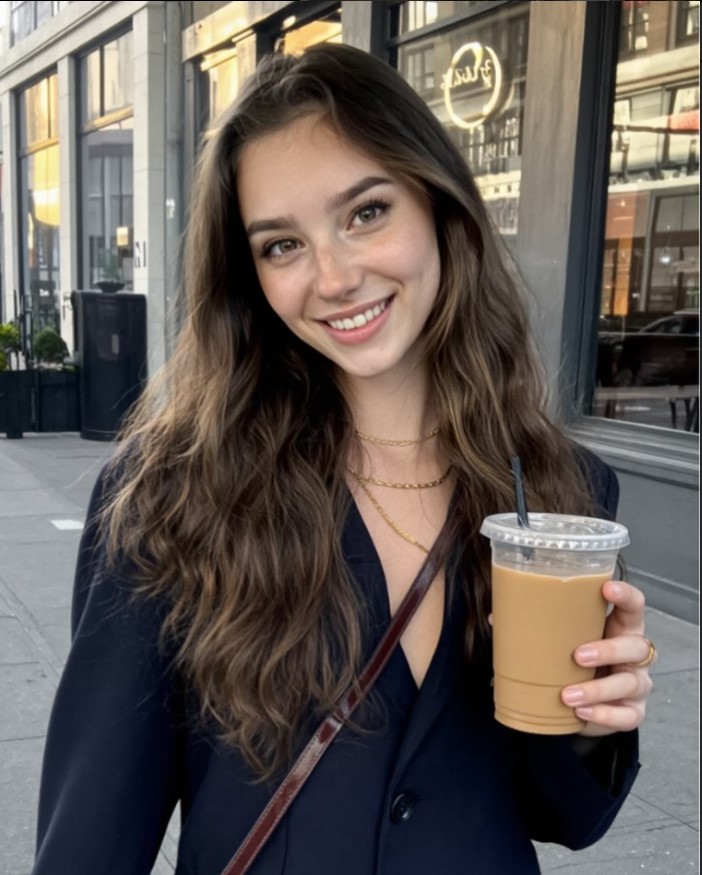
Norwood first appeared on Instagram in May, presented as a fresh-faced actor on the verge of a career breakthrough. The feed shows everyday lifestyle shots – drinking coffee, browsing racks in a clothing store, lounging at a desk – alongside staged ‘showreels’ where Norwood appears in period dramas, superhero epics and even comedy sketches.
In one reel, it quips: ‘In 20 seconds I fought monsters, fled explosions, sold you a car, and nearly won an Oscar. All in a day’s work … literally!’
But as reported in The New Daily, it’s the recent announcement that talent agents are showing serious interest in representing Norwood that has shaken the industry to its core.
Bruce Isaacs, film professor at The University of Sydney, sees problems. ‘Previously, agencies represented a Scarlet Johansson or Tom Cruise for what made them distinctive, which is a lifetime of infinitesimal experiences and biological determinants,’ he says. ‘What Tilly promises is not a new actor but an actor that can mimic any form of humanity, which is quite concerning.’
‘Hollywood’s fear isn’t just about losing jobs, it’s about losing control of the image,’ Isaacs continues. ‘The actor has always been central to cinema’s emotional power. If studios can replicate that with code, what happens to the craft?’
Industry backlash to Tilly Norwood
Tilly Norwood’s arrival has been met with near-instant condemnation. When shown an image of Norwood by Variety, actor Emily Blunt reacted: ‘Good Lord, we’re screwed. That is really, really scary. Come on, agencies, don’t do that. Please stop. Please stop taking away our human connection.’
Other stars including Sophie Turner, Whoopi Goldberg, Kiersey Clemons and Melissa Barrera have also voiced concerns. Goldberg told The View that AI actors risk blending together traits from thousands of past performers: ‘It’s got Bette Davis’ attitude. It’s got Humphrey Bogart’s lips. It’s got my humour. And so it’s a little bit of an unfair advantage.’
For Professor Isaacs, ‘AI-generated characters like Tilly are a tipping point. They’re a challenge to the idea of performance itself. What does it mean to act if your face and voice can be simulated without you?’
The Screen Actors Guild in the United States has issued a strongly worded statement: ‘“Tilly Norwood” is not an actor. It’s a computer-generated character trained on the work of countless professional performers – without permission or compensation. It has no life experience to draw from, no emotion, and jeopardises performer livelihoods by devaluing human artistry.’
Aesthetic and ethical concerns surrounding Tilly Norwood
The unease isn’t just about lost jobs. Writing in The Guardian, critic Peter Bradshaw argued that AI actors plagiarise the creative labour of generations of real performers while feeding into a broader cultural ‘blandification’.
The risk, Bradshaw suggested, is that human performances could increasingly be staged to match AI’s flat aesthetic, creating a seamless but lifeless uncanny valley in mainstream screen culture.
Bradshaw urged the industry to follow the example of Dogme 95 – the Danish filmmaking collective that rejected artifice in favour of stripped-back realism – by returning to ‘real actors who look real in real situations’.
Van der Velden has defended Tilly as a creative experiment. In statements reported by Forbes, she compared AI characters to animation, puppetry and CGI: ‘AI is another paintbrush. Like other technologies, it opens up fresh possibilities without taking away from live acting.’
Professor Isaacs says this idea is conceptually erroneous: ‘The creator/tool dichotomy doesn’t, for me, work at all in the case of AI. And an AI is not a paintbrush – even a photo isn’t a painting!’
This controversy comes on the heels of the 2023 Hollywood writers and actors’ strike, where digital replication was one of the main concerns brought to the picket line.
Already, films like Alien: Romulus have experimented with AI recreations of deceased actors, with mixed responses. The arrival of a fully synthetic performer escalates those concerns from hypothetical to immediate.
‘This isn’t science fiction anymore,’ adds Isaacs. ‘It’s happening and it’s forcing the industry to rethink everything from contracts to ethics to the very nature of storytelling.’
As reported in Yahoo News, the union SAG-AFTRA has warned studios that any use of synthetic performers without negotiation would breach union contracts. For now, Tilly Norwood has not been cast in any major film or series – and if the California laws work as they’re intended, Norwood won’t ever appear in a California-made film – but the arrival of this technology signals that the push to normalise AI ‘actors’ is well underway.
Is it time to crack each other’s heads open and feast on the goo inside?
The debate over Tilly Norwood is not just about one AI-generated face. It is a test case for how the screen industry will define creativity and authenticity in the age of machine learning.
‘I think we’re already seeing degrees of acceptance of synthetic artefacts,’ says Professor Isaacs, pointing to TikTok videos of deepfakes. ‘The question for me is less whether we’ll accept AIs – but more, what shape will AI take to enable a form of acceptance?’
‘Can an AI star in a two-hour narrative film?’ asks Isaacs. ‘Maybe, but perhaps not for some time. But AIs are popping up all over social media already and facilitating healthy revenues for their producers.’
If AI performers are built on unlicensed datasets of human work, critics argue it amounts to large-scale plagiarism. If it begins to replace human talent, it could reshape labour markets in an industry already marked by unstable, inconsistent work. And if audiences accept AI, we are in dangerously wobbly territory when it comes to distinguishing reality vs fiction.
As Bradshaw noted, the solution may not be panic, but resistance – in other words, a recommitment to live human performance, even as technology grows more persuasive.