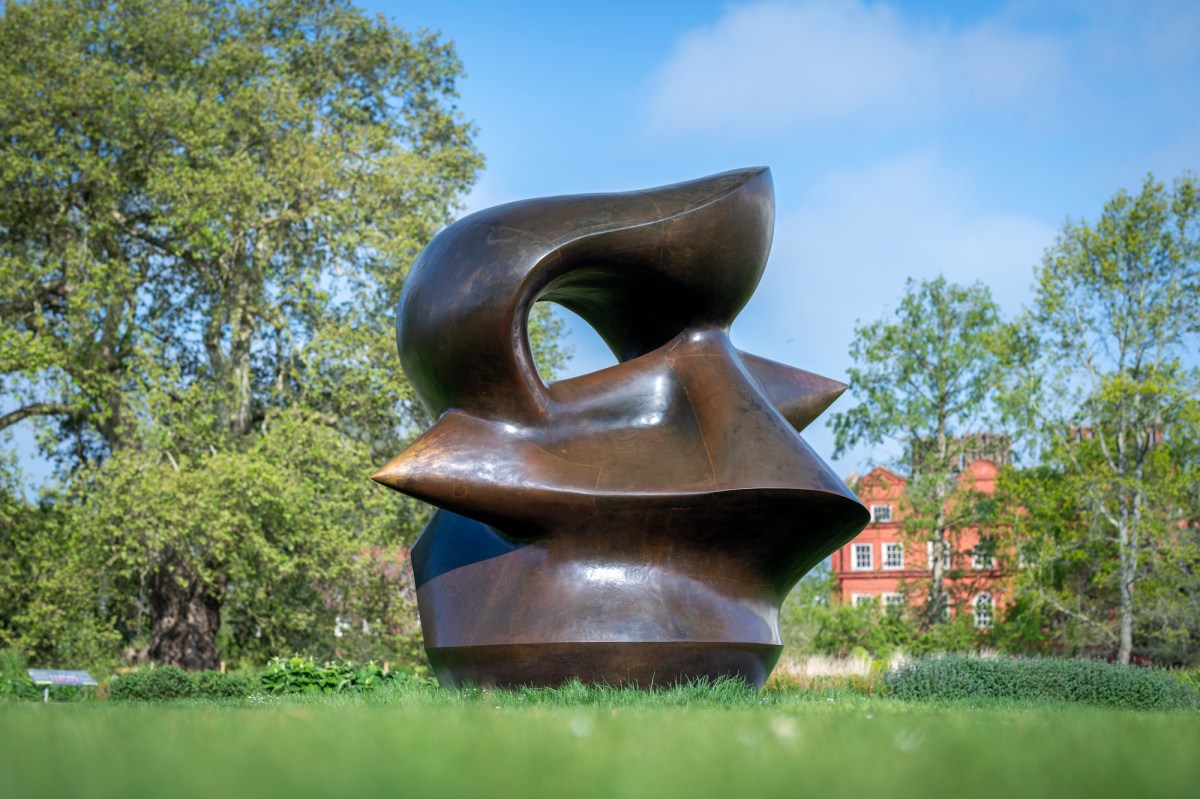
‘Sculpture,’ Henry Moore once observed, ‘is an art of the open air.’ Sprawling across 320 acres of manicured lawn and historic woodland, Kew Gardens doesn’t merely host his work – it sets it free.
This ethos underpins Henry Moore: Monumental Nature, a major collaboration with the Henry Moore Foundation that rejects the idea of landscape as a passive backdrop. Instead, it establishes a dynamic, living dialogue between form and environment, breathing fresh life into some of the artist’s most celebrated masterpieces.
Henry Moore review – quick links
Peepholes into nature
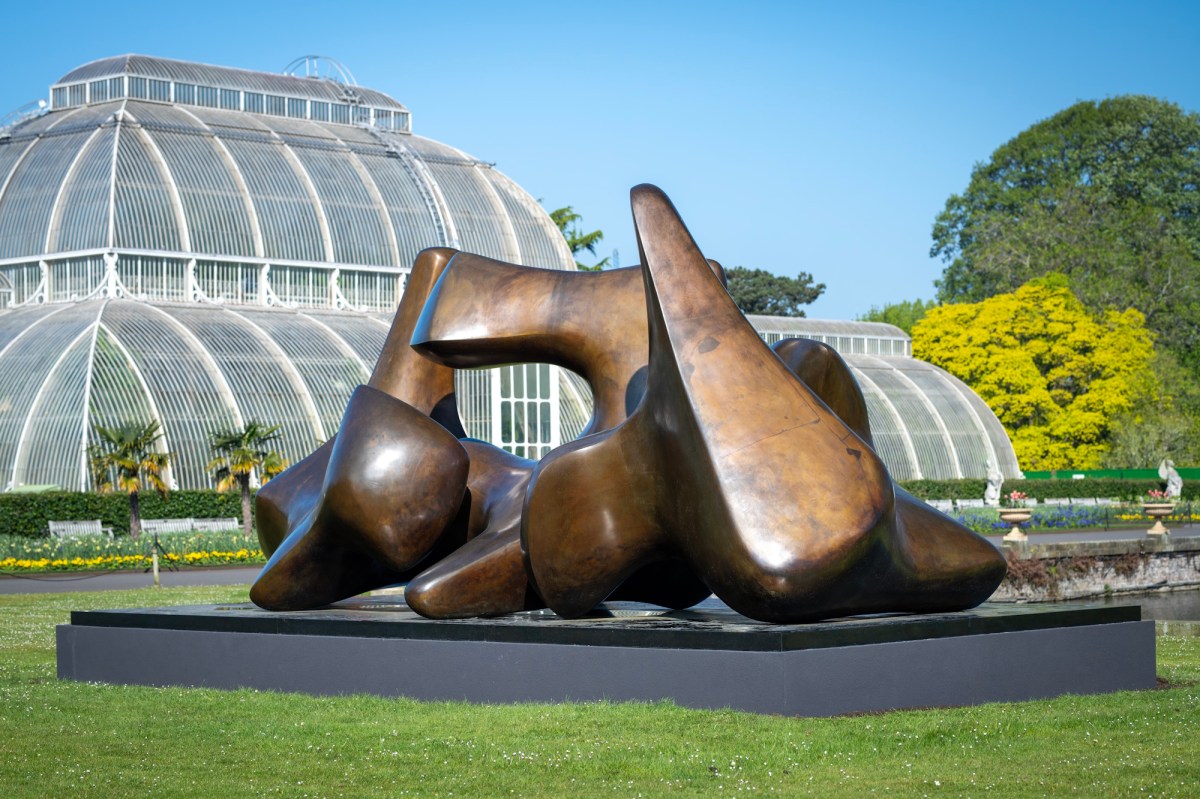
Across Kew’s sweeping lawns, celebrated works such as Sheep Piece and Three Piece Sculpture: Vertebrae stand like prehistoric monuments. The curatorial placement creates an immediately compelling contrast: the dense, opaque mass of Moore’s cast forms set against the delicate iron-and-glass lattice of the iconic Victorian glasshouses rising in the distance.
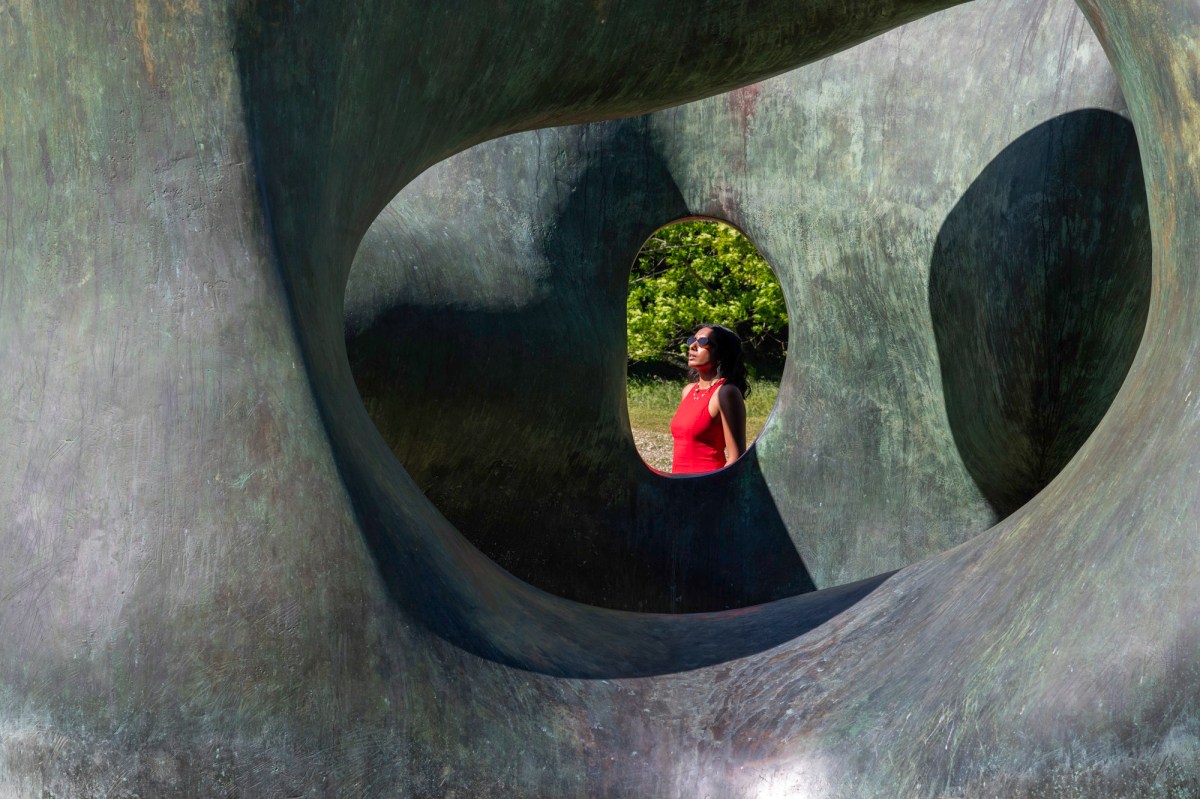
In its best moments, the exhibition feels like an ode to Moore’s pioneering use of negative space. Works such as Oval with Points and Double Oval feature vast openings carved through the centre of the bronze, making absence as significant as the material itself.
As visitors move around each piece, these hollows become picture windows onto the gardens, framing a patch of sky, a passing cloud or the canopy of a distant tree. Rather than obscuring the landscape, the sculptures actively direct the eye towards it, creating natural peepholes that feel both playful and contemplative.
Changing with the weather
Admittedly, encountering these works requires a degree of stamina. The exhibition is a physically demanding trek, far too ambitious for even the keenest enthusiast to see everything in a single visit. Yet the exhibit’s generous run – spanning the fullness of summer, the turning leaves of autumn and the stark silhouettes of winter – encourages return visits rather than exhaustive completion.
Moore believed his sculptures should respond to the shifting conditions of the natural world, and Kew allows that philosophy to unfold beautifully. While the summer sun currently catches the ridges of the bronze, autumn rains will soon slicken the surfaces to mirror the grey sky. As the foliage drops away and the light shifts to the low angles of winter, the visual dialogue will completely transform, ensuring that no single visit offers a definitive reading.
From monumental sculpture to maquettes
While the outdoor sculptures provide the immediate spectacle, the exhibition’s narrative is completed inside the Shirley Sherwood Gallery of Botanical Art. Stepping into this moody, red-walled sanctuary offers an intimate counterpoint, bringing together smaller sculptures, maquettes and drawings, including archival works that are rarely accessible to the public.
Here, the Transformation Drawings reveal the genesis of the monuments outside, demonstrating how Moore’s massive forms emerged from the close observation of pebbles, bones and flint.
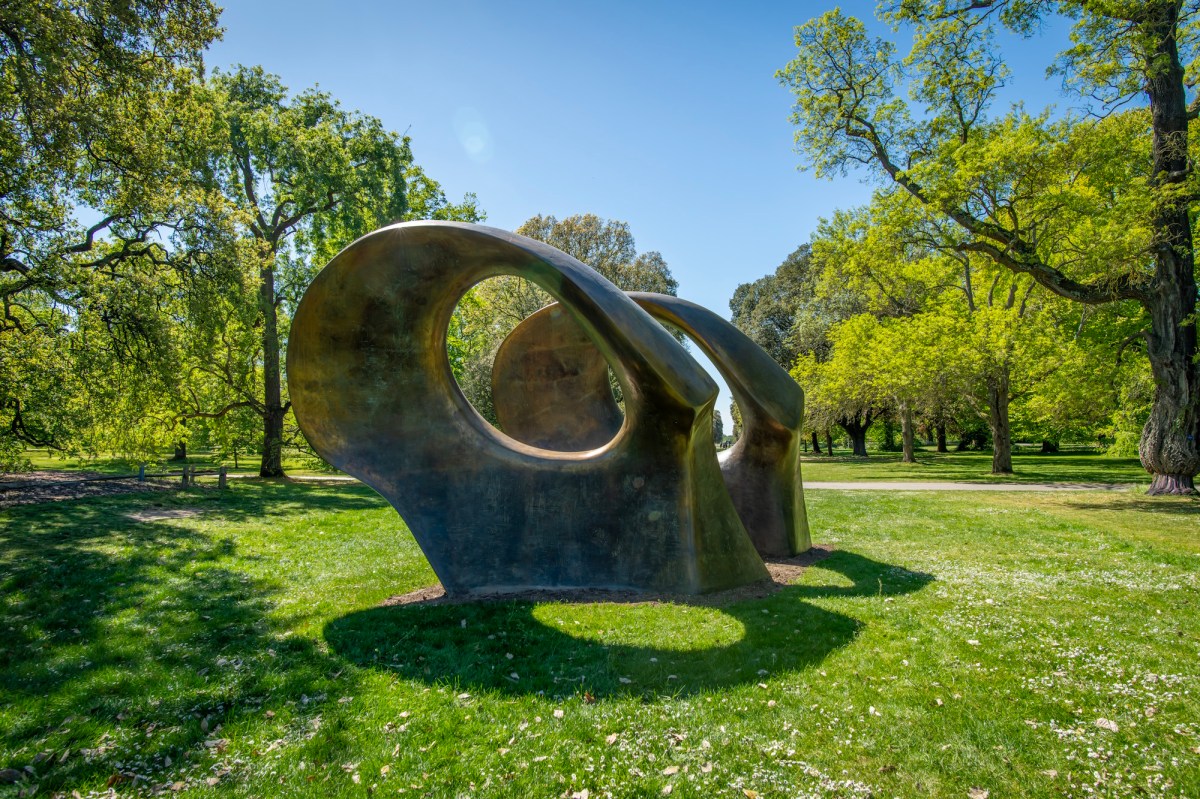
For many, both Kew Gardens and Moore’s masterpieces are deeply familiar cultural touchstones, yet encountering them here together creates an entirely fresh experience. Embedded within these historic grounds, the negative spaces of his sculptures act as lenses onto an ever-changing world, ensuring that as the seasons shift, so too does the experience of the art.
It is a fitting testament to an artist whose work has always invited us to look at nature not simply as a subject, but as an active collaborator.
